The Complete Bike Commuter Setup: Everything You Need to Carry More, Sweat Less
Learn how to commute by bike without arriving sweaty or sore. A complete setup covering bags, carrying systems, clothing, and the gear that makes it stick.
Why Learn How to Commute by Bike?
- Why Learn How to Commute by Bike?
- Step 1: Get the Right Bike (You Probably Already Have It)
- Step 2: Get the Weight Off Your Back
- Step 3: Solve the Sweat Problem
- Step 4: Plan for Weather
- Step 5: Carry More Than You Think You Need To
- Step 6: Build the Habit
- A Sample First-Week Setup
- Frequently Asked Questions
- The Bottom Line
Learning how to commute by bike is less about fitness and more about logistics. The riders who stick with it aren’t the fastest or the fittest — they’re the ones who solved the boring problems: where the laptop goes, how to not arrive drenched in sweat, what to do when it rains, and how to carry groceries home. Solve those once and bike commuting stops being a heroic effort and becomes the easiest, cheapest, most reliable part of your day.
This is the complete setup guide. We’ll walk through how to commute by bike step by step — the bike, the carrying system, the clothing, and the small habits that make it stick — so you can carry more and sweat less from your very first ride.
Disclosure: this article contains affiliate links. If you buy through them we may earn a commission at no extra cost to you.
Why Learn How to Commute by Bike?
Before the how, a quick why — because motivation is what gets you out the door on day three. A bike commute is the only one that pays you back: it’s free after the gear, it doubles as exercise so you skip the gym, it’s immune to traffic jams, and it reliably arrives within the same five-minute window every single day. The barrier was never the riding. It’s the setup. Let’s fix that.
Step 1: Get the Right Bike (You Probably Already Have It)
You do not need a special commuter bike. Almost any roadworthy bike works: a hybrid, an old mountain bike, a gravel bike, or a city bike. The two upgrades that actually matter for commuting are:
- A rear rack. This is the single most important addition, because it’s what lets you move weight off your body and onto the bike. We’ll come back to this in Step 2 — it’s the foundation of the whole setup.
- Reliable tyres. Puncture-resistant commuter tyres turn “I might get a flat” anxiety into a non-issue.
Fit fenders if your climate is wet, add lights for visibility, and that’s genuinely it. Don’t let “I need a better bike” become the excuse that delays you. The bike you have plus a rack is enough.
Step 2: Get the Weight Off Your Back
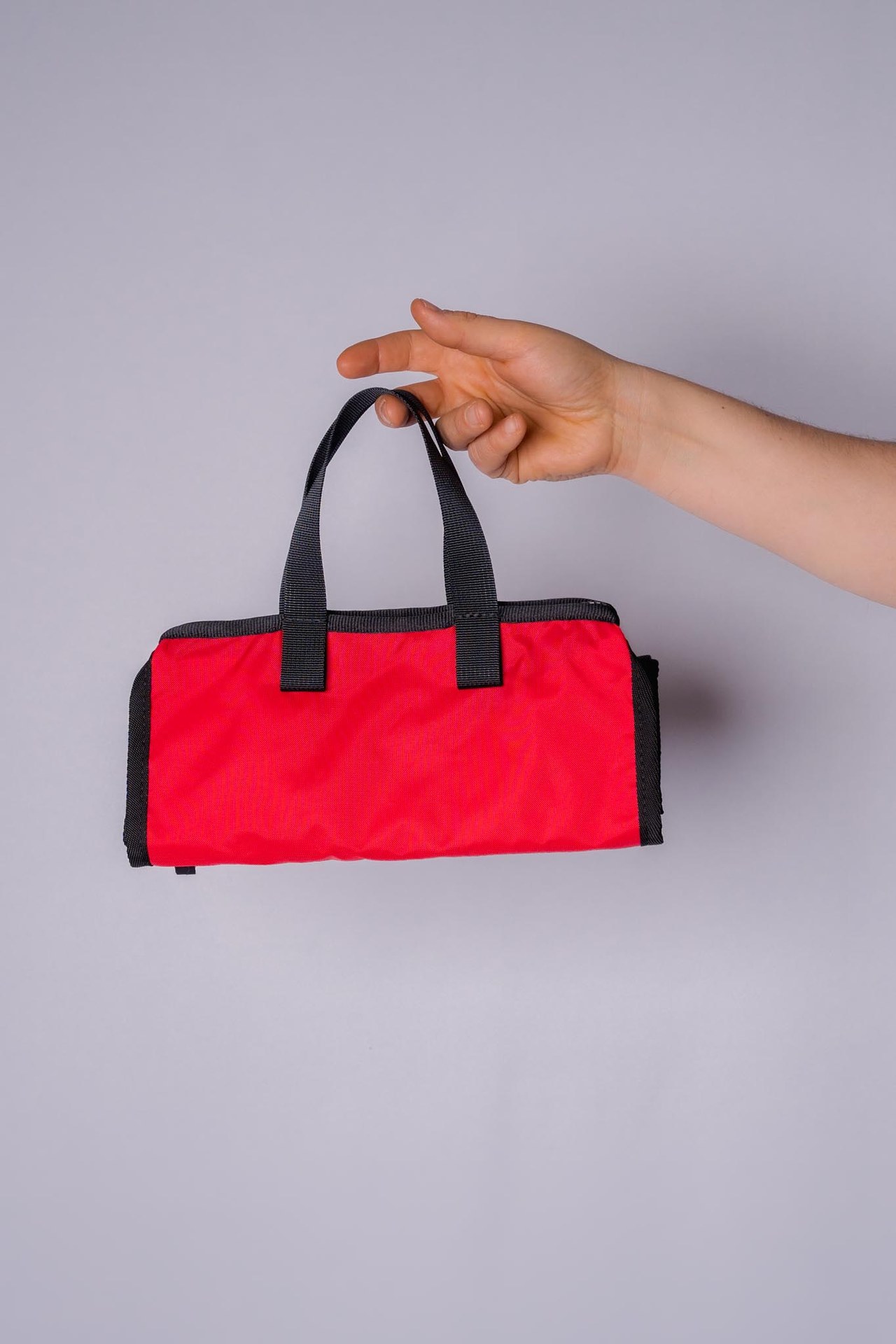
This is the step that separates people who try bike commuting from people who keep bike commuting. If you carry a backpack with a laptop, lunch, and a change of clothes, your back sweats, your shoulders ache, and you arrive looking like you swam to work. The fix is simple physics: put the load on the bike, not on your body.
A rack-mounted bag transfers all that weight to the frame. You pedal cooler, your spine thanks you, and the bag does the carrying. The best versions use a quick-release system so the bag clicks on when you leave and lifts off in one hand when you arrive — no fumbling, no scratched frame.
The bag I recommend for this is the Red Rebane Easy EXO, a German-made rack carrier that holds up to 10 kg and converts from rack bag to hand-carry to backpack. Mount it, ride, lift it off, walk inside. Pair it with the FLEXbag extension and you’ve got 20 extra litres for the grocery run home. It’s the centrepiece of our best bike commuter bags list for exactly this reason — and you can read the full Red Rebane review if you want the deep dive.
If you’d rather keep carrying on your back, at least use a bag designed for cycling — a rolltop daypack with a proper laptop compartment and load straps — instead of a generic office backpack. But for anything over about 5 kg, the rack wins every time.
Step 3: Solve the Sweat Problem
The “I’ll arrive sweaty” fear stops more would-be bike commuters than anything else. Here’s how the regulars beat it:
- Ride at conversation pace. Commuting is not a race. Slow down enough that you could hold a conversation and you’ll barely break a sweat on most routes.
- Move the load to the rack (see Step 2). A huge amount of commute sweat is just a hot backpack against your spine. Remove it and the problem mostly disappears.
- Dress for the destination, not the ride. Wear breathable layers you can shed. In cold weather, deliberately under-dress for the first five minutes — you’ll warm up fast.
- Keep a kit at work. A clean shirt, deodorant, and a small towel in your bag (or stashed at the office) turns a warm ride into a non-event. This is where a bag with real capacity earns its place.
Step 4: Plan for Weather
Weather is a logistics problem, not a deal-breaker. Rain commuters stay dry with three things:
- Fenders to stop road spray up your back.
- A packable rain jacket for you.
- Rain protection for your cargo. Either a water-resistant bag or a deployable rain cover. The Easy EXO, for example, includes an optional rain cape that stows in an internal pocket and pulls over the bag in seconds — so your laptop stays dry without carrying a heavy waterproof bag on sunny days.
For cold weather, the rule is layers plus warm extremities: gloves, a headband under the helmet, and windproof outer layers. You’ll be surprised how cold you can comfortably ride once the core is sorted.
Step 5: Carry More Than You Think You Need To
Once your bike carries the weight, a whole category of errands opens up. Grocery runs, library books, a packed lunch plus gym kit, picking up parcels — all of it becomes trivial when you’ve got 20–30 litres on the rack and an expansion option for the big hauls. This is the moment bike commuting flips from “transport” to “this is just easier than driving.” A modular system like the Easy EXO with its FLEXbag extension is built precisely for this: small footprint on light days, big capacity when you need it.
Step 6: Build the Habit
Gear gets you started; habit keeps you going. Three tactics that work:
- Prep the night before. Pack the bag, lay out clothes, check the tyres. Morning-you will thank night-you.
- Commit to a streak, not perfection. Aim for three rides the first week, not five. Missing a day isn’t failure; quitting is.
- Make the bike the default. Park the car keys somewhere annoying. Lower the friction on riding and raise it on driving.
Within two weeks the logistics become automatic and the commute becomes the part of the day you look forward to.
A Sample First-Week Setup
Putting it all together, here’s a no-overthinking starter kit:
- Bike: whatever you own, plus a rear rack
- Carrying: a quick-release rack bag like the Red Rebane Easy EXO (add the FLEXbag for groceries)
- Weather: fenders, a packable jacket, a rain cover for the bag
- Clothing: breathable layers; a clean shirt and deodorant kept at work
- Safety: front and rear lights, plus a reflective element on the bag
- Maintenance: puncture-resistant tyres and a mini-pump
That’s the entire system. Nothing exotic, nothing that requires being “a cyclist.”
Frequently Asked Questions
How do I start commuting by bike without arriving sweaty?
Ride at conversation pace, move your load to a rack bag instead of a backpack, dress in breathable layers you can shed, and keep a clean shirt at work. Most commute sweat comes from going too hard and from a hot backpack against your spine — fix both and the problem largely disappears.
Do I need a special bike to commute?
No. Almost any roadworthy bike works. The two upgrades that matter most are a rear rack (to carry weight off your body) and puncture-resistant tyres. Add lights and fenders for safety and weather.
What’s the best way to carry a laptop on a bike?
On the rack, not your back. A rack-mounted bag with a structured profile, like the Red Rebane Easy EXO, protects a laptop and keeps the weight off your shoulders. If you must use a backpack, choose one with a padded laptop compartment designed for cycling.
How do I commute by bike in the rain?
Use fenders to block road spray, wear a packable rain jacket, and protect your cargo with a water-resistant bag or a rain cover. Many modular bags include a deployable rain cape so you only add weather protection when you need it.
Is bike commuting worth it?
For most people, yes. It’s free after the initial gear, doubles as daily exercise, avoids traffic, and arrives within a predictable time window. The key to making it stick is solving the logistics — bike, carrying system, weather, and habit — which this guide walks through.
The Bottom Line
Knowing how to commute by bike comes down to six steps: get a rack on your bike, move the weight off your back, manage sweat and weather, carry more than you expect, and build the habit. Nail the carrying system and the rest falls into place — which is why a quick-release, modular rack bag like the Red Rebane Easy EXO is the upgrade that turns bike commuting from an experiment into your default. Start this week, keep it simple, and let the bike do the carrying.
More Home & Outdoor Gear guides
 Kit Solare per Camper: Guida 2026 al Dimensionamento
 Best CKG Sand Scoop Guide: Pick the Right One (2026)
 Paddle North Gear Guide 2026: Best Kayaks, SUPs & Floats
 Pecron Portable Power Station Guide: 7 Best LFP Models (2026)
 ONTAP Portable Camping Shower Review: 2 Best 12V Models
 Grill Replacement Parts Guide: 5 Signs & Safe Fixes (2026)