ONTAP Products Review: Australian 12V Portable Camping Shower and Jerry Can Holders
ONTAP Products builds two Australian-made portable camping shower systems: the vehicle-powered ORIGINAL and the battery-powered ROAM. Here's how their tanks, pumps, runtime, jerry can holders and warranty compare.
How a 12V Portable Camping Shower Works
- How a 12V Portable Camping Shower Works
- ONTAP ORIGINAL vs ONTAP ROAM: Which Model Fits Your Trip
- How Much Water You Actually Need for a Camp Shower
- Heating Options: Solar, Propane or None
- Battery vs Vehicle Power: Runtime and Reliability
- ONTAP Jerry Can Holders and Australian Mounting Rules
- Durability: UV-Stabilised HDPE and Powder-Coated Steel
- Warranty, Returns and Support
A portable camping shower gives you real rinse pressure off-grid, and ONTAP Products, a 100 percent Australian-made and owned brand, builds two very different takes on the idea: the vehicle-powered ORIGINAL and the battery-powered ROAM. This guide breaks down how each one works, how much water you actually need, and how ONTAP's jerry can holders fit into an Australian 4WD or caravan setup.
- How a 12V Portable Camping Shower Works
- ONTAP ORIGINAL vs ONTAP ROAM
- How Much Water You Actually Need
- Heating Options: Solar, Propane or None
- Battery vs Vehicle Power: Runtime and Reliability
- ONTAP Jerry Can Holders and Australian Mounting Rules
- Durability: UV-Stabilised HDPE and Powder-Coated Steel
- Warranty, Returns and Support
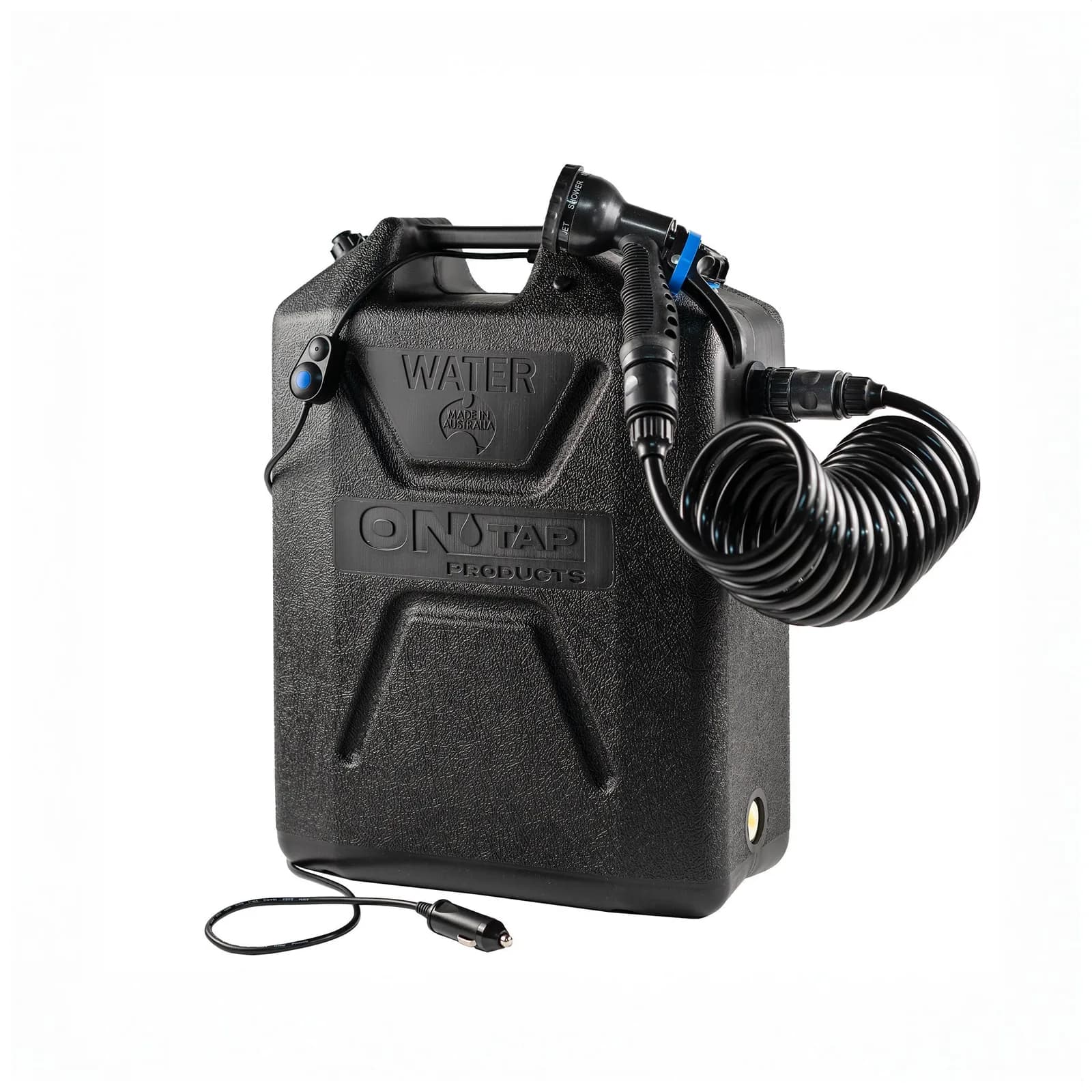
ONTAP builds a straightforward, Australian-made portable camping shower system for 4WD and caravan travel: pick ORIGINAL for the longest continuous flow off the car battery, or ROAM for cordless, battery-powered rinsing away from the vehicle.
If you already run power off your vehicle at camp, ORIGINAL's 4.4 L/min pump and 22-litre tank give the longest single rinse. If you need a shower away from the car, at a remote track pull-up or a beach stop, ROAM's built-in 3200 mAh battery frees you from the vehicle entirely.
Check current price at ONTAP Products- ONTAP ORIGINAL: 22-litre UV-stabilised HDPE tank, 4.4 L/min pump, up to 5 minutes of continuous shower time from a 12V socket.
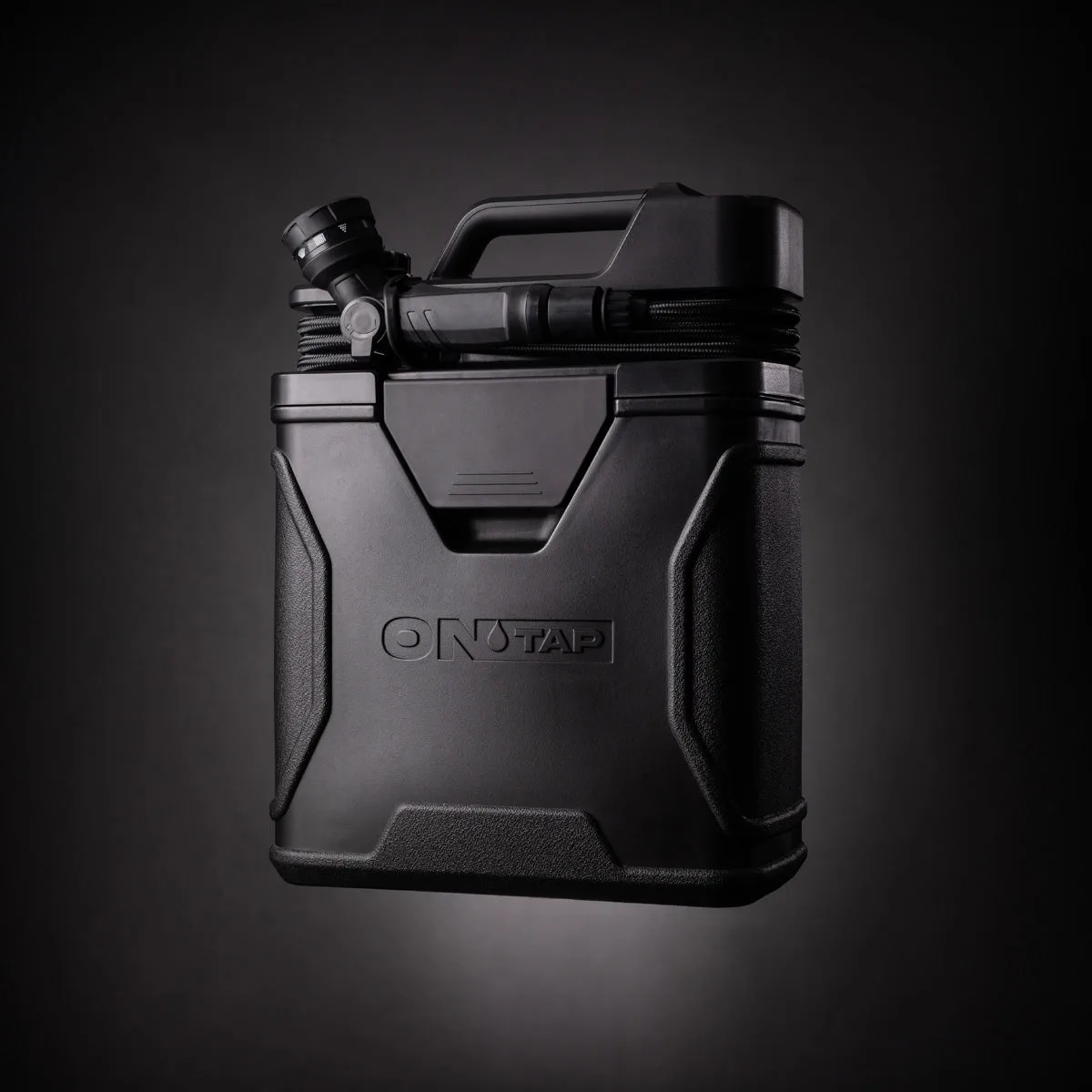
- ONTAP ROAM: 16-litre tank with a built-in 3200 mAh lithium battery, 40 PSI pressure at 2.6 L/min, roughly 6 minutes of rinse time and USB-C charging.
- Both models carry a 24-month warranty against manufacturing defects and a 30-day return window.
- ONTAP's jerry can holders are made from powder-coated steel and are designed to fit multiple vehicle models without custom brackets.
How a 12V Portable Camping Shower Works
A 12V portable camping shower uses a diaphragm pump to push water from a tank through a hose and spray gun, typically generating 30–65 PSI of pressure. Flow rates on this category of pump generally range from 1.5 to 2.8 GPM (roughly 5.5–10.6 L/min), and the motor draws a modest 4–5 amps, light enough to run off a vehicle's cigarette lighter socket or a compact battery pack. Runtime is simply tank size divided by flow rate, which is why a 22-litre tank paired with a 4-plus L/min pump lands around 5 minutes of continuous pressure.
ONTAP applies this same pump technology across its range but splits the power source: ORIGINAL draws from the vehicle, while ROAM carries its own lithium battery so it can operate away from the car entirely.
ONTAP ORIGINAL vs ONTAP ROAM: Which Model Fits Your Trip
Both systems share the same food-grade HDPE tank construction and multi-function spray gun approach, but they solve different problems: one prioritises maximum single-tank flow, the other prioritises freedom from the vehicle.
ONTAP ORIGINAL
What We Like
- Highest continuous flow rate in the ONTAP range for a full-tank rinse
- Black tank finish doubles as passive solar water warming
- Simple 12V plug-and-play setup with no charging step
What to Consider
- Needs the vehicle's 12V socket or an auxiliary battery running
- No built-in heating element: warmth depends on sun exposure
ONTAP ROAM
What We Like
- No vehicle connection needed: fully self-contained
- Modular shape fits standard jerry can holder dimensions
- Fast USB-C charging keeps it ready between trips
What to Consider
- Smaller 16-litre tank than ORIGINAL
- Battery run time still finite: plan charging around trip length
| Feature | ONTAP ORIGINAL | ONTAP ROAM |
|---|---|---|
| Tank capacity | 22 litres | 16 litres |
| Power source | 12V vehicle socket | Built-in 3200 mAh lithium battery |
| Pump output | 4.4 L/min | 40 PSI at 2.6 L/min |
| Runtime | Up to 5 minutes | Up to 6 minutes |
| Charging | Not applicable (vehicle powered) | USB-C, ~75 minutes |
| Warranty | 24 months | 24 months |
How Much Water You Actually Need for a Camp Shower
A quick rinse-off (sand from the beach, dust from a hike) needs about 2–3 gallons, or 7.5–11 litres. A more thorough wash with hair rinsing and mud removal needs 4–5 gallons, roughly 15–19 litres. Left running continuously at 4.4 L/min, a 5-minute shower uses close to the full 22-litre tank, but cycling the tap on and off between soap and rinse steps can bring per-person consumption down to just 2–3 litres.
That math is why ONTAP's tank sizes land where they do: 22 litres comfortably covers one thorough wash or two quick rinses, and most portable outdoor shower units on the market settle around 20 litres as the practical standard.
Heating Options: Solar, Propane or None
Portable camping showers rely on one of three heating approaches. Passive solar heating, a black tank left in direct sun, can warm water to roughly 40–45°C in 3–6 hours, with no fuel or electricity required, but it depends entirely on weather. ONTAP's ORIGINAL uses this method: its black tank finish is designed to absorb heat through the day.
Propane instant water heaters can deliver hot water up to 75°C almost immediately, but they add cartridge management and ongoing fuel logistics to a trip. Battery-powered systems like ROAM prioritise pressure and portability over independent heating. Water temperature relies on solar pre-warming or ambient conditions rather than a built-in heater. If reliable hot water matters more than portability, weigh that trade-off before choosing a model.
Battery vs Vehicle Power: Runtime and Reliability
ROAM's lithium-ion battery reflects a broader shift in portable power. LiFePO4 lithium batteries weigh about 50 percent less than a lead-acid equivalent of similar capacity and deliver 4,000–6,000 charge cycles versus 300–1,000 for lead-acid, roughly ten times the lifespan. Lithium also charges faster and holds voltage more consistently through the discharge cycle, while lead-acid output drops as it depletes. Lead-acid remains cheaper up front but needs regular maintenance and tolerates a wider temperature range.
Vehicle-powered systems like ORIGINAL avoid the battery question entirely: they draw current whenever the engine or auxiliary battery is running, which suits an established campsite where the vehicle sits nearby. Battery-powered systems like ROAM trade that convenience for cordless freedom on remote touring days when the vehicle isn't parked next to the shower spot.
ONTAP Jerry Can Holders and Australian Mounting Rules
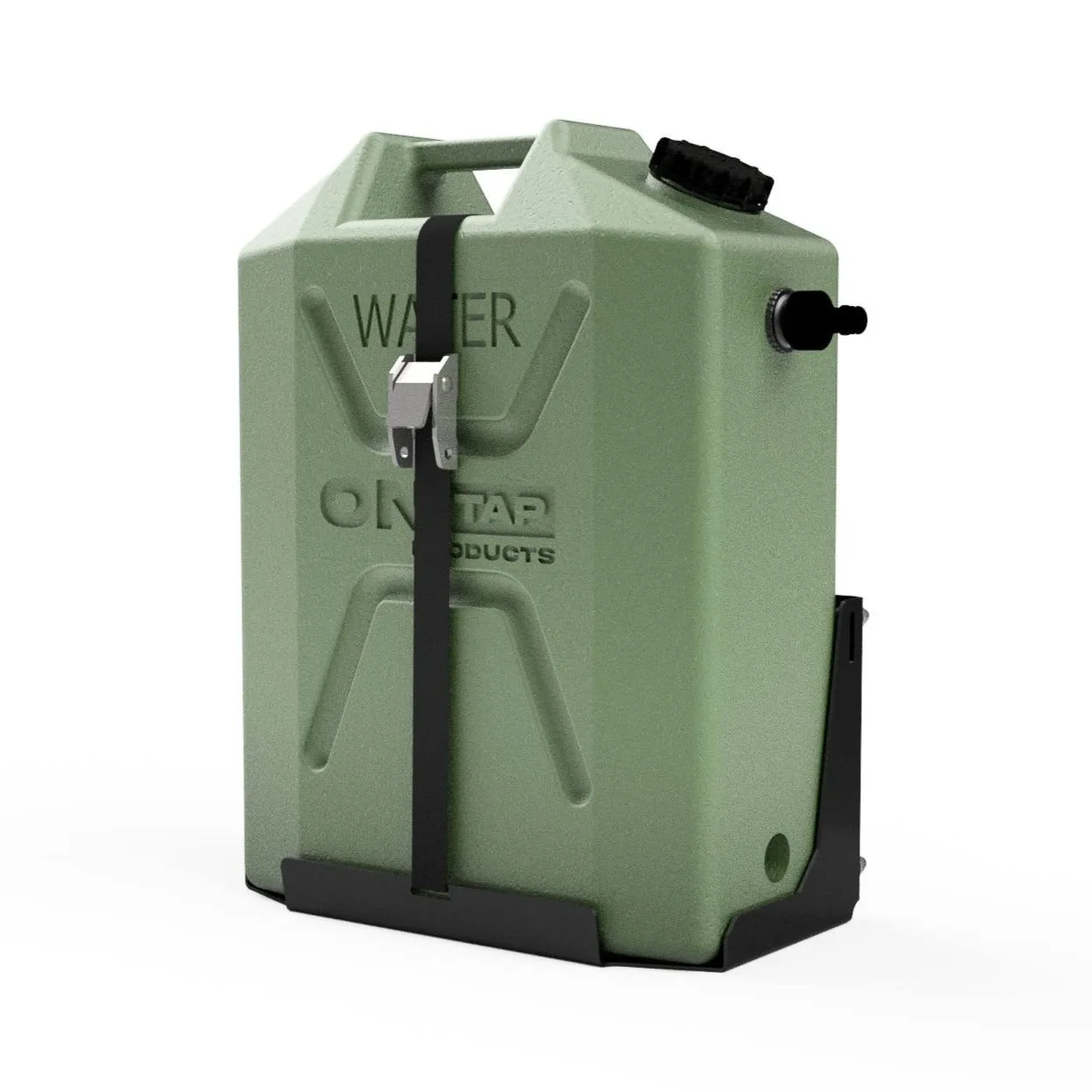
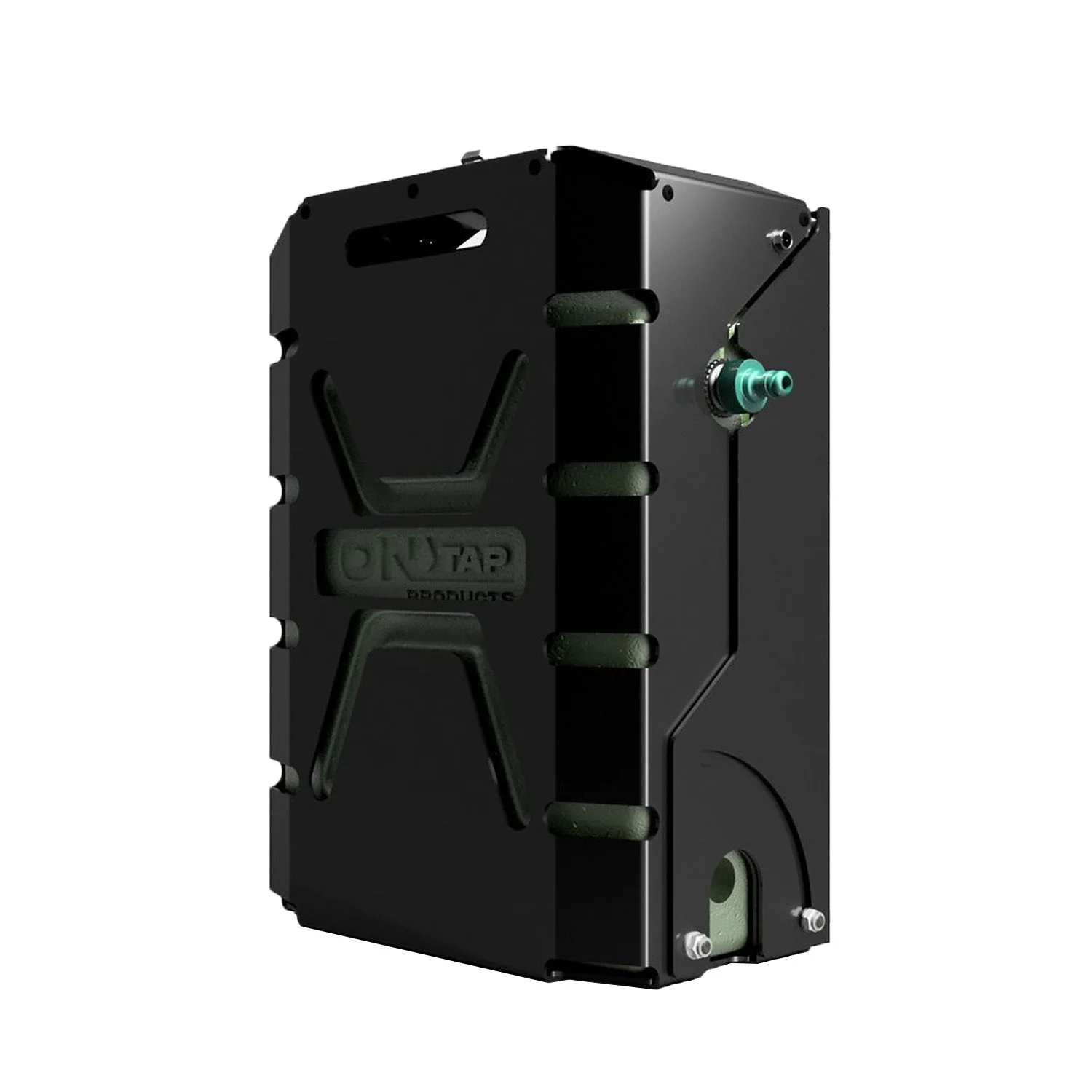
If you're building a full off-grid water setup around a portable camping shower, a dedicated jerry can holder matters as much as the pump. ONTAP's Multi-fit 22L Jerry Can Holder is made from satin black powder-coated metal, weighs 3.5 kg empty, and is engineered with a dual-access design that fits standard 22-litre jerry can dimensions across multiple vehicle models without custom brackets. ONTAP also offers a lockable version at 525mm tall and 5.3 kg, with a power-cord pass-through for security-conscious remote touring.
Australian regulations restrict where fuel-filled jerry cans can be mounted. Petrol containers can't sit in front or rear impact zones, inside the cab, or on rear caravans/campers, and total on-vehicle fuel quantity is capped at 250 litres. Water-filled jerry can holders, like the ones ONTAP builds for camp shower tanks, bypass those fuel-specific restrictions, but the same practical rules still apply: containers must sit upright, stay leak-proof, and be secured so they can't shift, and total mounted weight must stay within your vehicle's and tow bar's rated load.
Durability: UV-Stabilised HDPE and Powder-Coated Steel
Materials matter for anything mounted outside a vehicle for days at a time. ONTAP's shower tanks use UV-stabilised food-grade HDPE, a plastic chosen specifically to resist degradation from prolonged sun exposure. The jerry can holders use a satin black powder-coated steel finish, which is more corrosion-resistant against weather exposure than bare or painted metal. Both material choices are specifically called out by the Australian jerry can safety guidance as important for gear that stays mounted outdoors long-term.
Warranty, Returns and Support
ONTAP backs its portable shower systems and accessories with a 24-month warranty covering manufacturing defects in materials, seams, pump components, and electrical connections. Customers also get a 30-day risk-free return window on domestic orders and access to 24-hour dispatch on in-stock products, with support handled directly through ONTAP's contact channel. That combination, Australian manufacturing plus a two-year defect warranty, is worth weighing against imported alternatives that often carry shorter or more limited coverage.
If you're assembling a broader off-grid water kit, it's worth pairing a portable camping shower with a dedicated off-grid watermaker for longer trips, and checking your cooler setup and general camping gear so water, food, and washing all run off the same power plan.
Final Verdict
For most Australian campers, the choice comes down to how you camp: if you park near your shower spot and want the longest single-tank flow, ONTAP ORIGINAL's 22-litre tank and 4.4 L/min pump deliver the most water per session. If you range further from the vehicle, ONTAP ROAM's built-in battery and USB-C charging make it the more flexible portable camping shower for remote touring.
See ONTAP Products current lineupReferences
This article is for general informational purposes only and reflects publicly available manufacturer specifications and third-party research current as of the last reviewed date. Always confirm current vehicle load ratings, towing regulations, and product specifications directly with ONTAP Products and your vehicle manufacturer before mounting any accessory.
More Home & Outdoor Gear guides
 Jackery Power Stations: Best 2026 Sizing Guide for Outages, RVs
 Space-Saving Home Gym Equipment: 5 Best Compact Picks (2026)
 Selk'bag SWYTCH Review 2026: Best Wearable Sleeping Bag?
 Wuben Flashlight Guide 2026: EDC, Tactical & Spotlight Models
 Jakiper Battery Guide: 6 LiFePO4 Systems Compared (2026)
 Crown Shades Canopy Guide 2026: Best Pop-Up Models Compared