Grill Replacement Parts: Finding the Right Burners, Grates and Heat Plates
A practical guide to finding the right grill replacement parts: how to read your model number, spot a failing burner, choose grates, and reinstall safely.
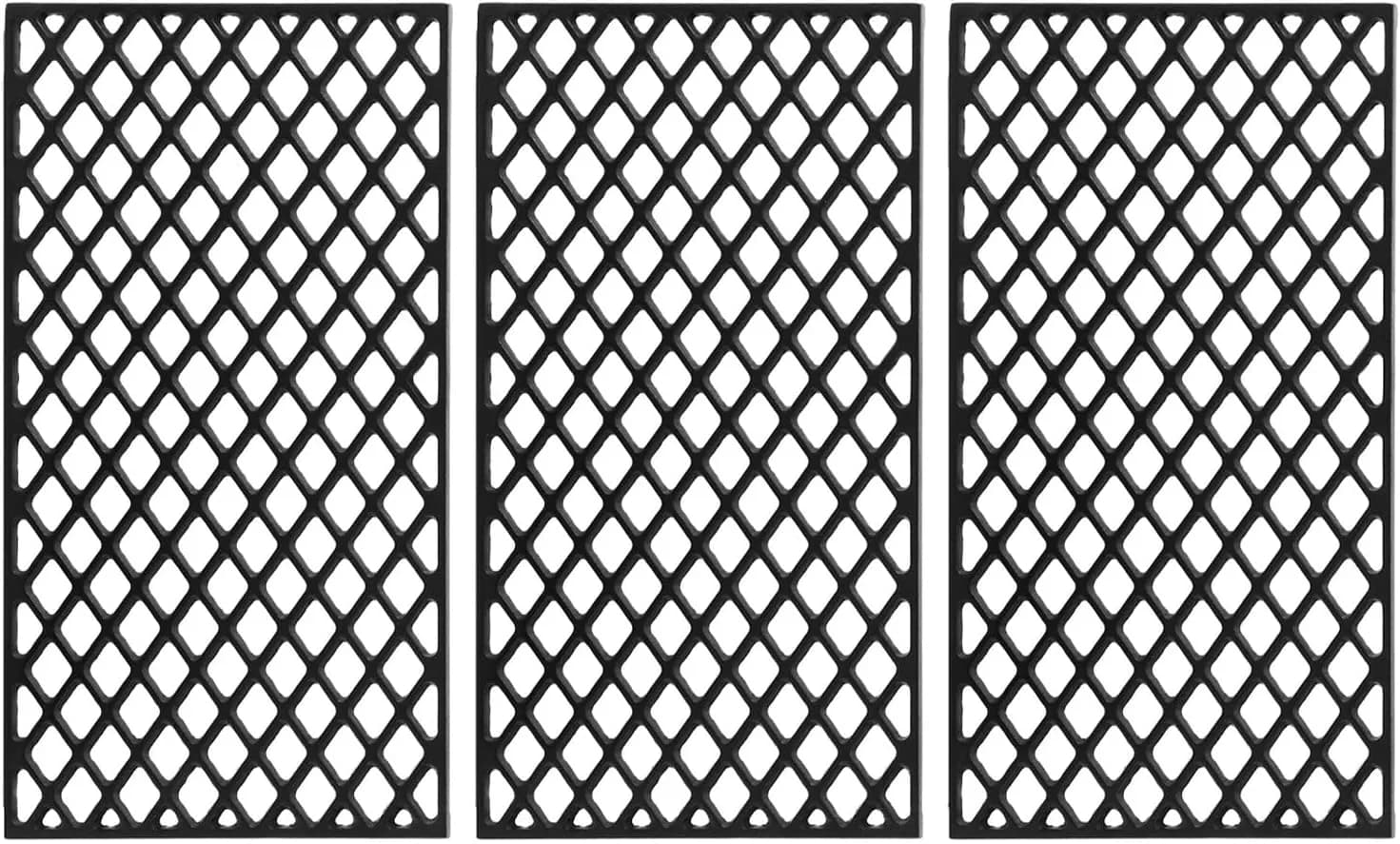
Find your grill's model number before you buy grill replacement parts
- Find your grill's model number before you buy grill replacement parts
- Signs you need grill replacement parts
- Grill grates 101: cast iron vs stainless steel vs porcelain-coated
- Measuring burner tubes for a correct fit
- OEM vs aftermarket grill replacement parts
- Gas safety checklist before you reinstall
- Fire glass and other fire-feature replacement parts
If your gas grill is flaring up unevenly, flaking rust onto your food, or just isn't heating the way it used to, the fix usually isn't a new grill. It's the right grill replacement parts. Swapping a worn burner, a warped grate, or a rusted-through heat plate can restore full performance for a fraction of the cost of replacing the whole unit, as long as you order the correct fit for your exact model.
Match your exact model number, then shop grill replacement parts by brand and category
Most grills can be restored to like-new cooking performance by replacing three wear items (burners, grates, and heat plates) rather than the whole appliance. Identify your model, diagnose which part failed, and choose OEM or aftermarket based on how critical the component is.
Shop grill replacement partsKey highlights
- Your model number, not the grill's brand name alone, determines which parts will actually fit.
- Rust-through, yellow flames, and uncontrollable flare-ups are the clearest signs a burner has failed.
- Grate material affects heat retention, searing, and how much upkeep the grate needs long term.
- Always run a soapy-water leak test on gas connections after reinstalling any part.
Find your grill's model number before you buy grill replacement parts
Ordering grill replacement parts by brand name alone is the single most common mistake owners make. Dimensions and mounting points shift between model years, so the model number is what actually determines fit. On Weber grills, the serial number is two letters followed by seven numbers; on gas and pellet models it's on the interior of the tank panel, and on charcoal models it's stamped into the lid damper. Char-Broil grills print the model number on a small white label attached to one of the legs, and Char-Broil model numbers are always nine digits starting with a 4.
Once you have the exact model number, cross-reference it against the retailer's compatibility listing before adding anything to your cart. This one step eliminates most return-and-reorder headaches with grill replacement parts.
Search GrillPartsReplacement by brand and model
The catalog covers 25+ brands with model-based navigation, so you can filter straight to parts confirmed to fit your grill.
Browse parts by modelSigns you need grill replacement parts
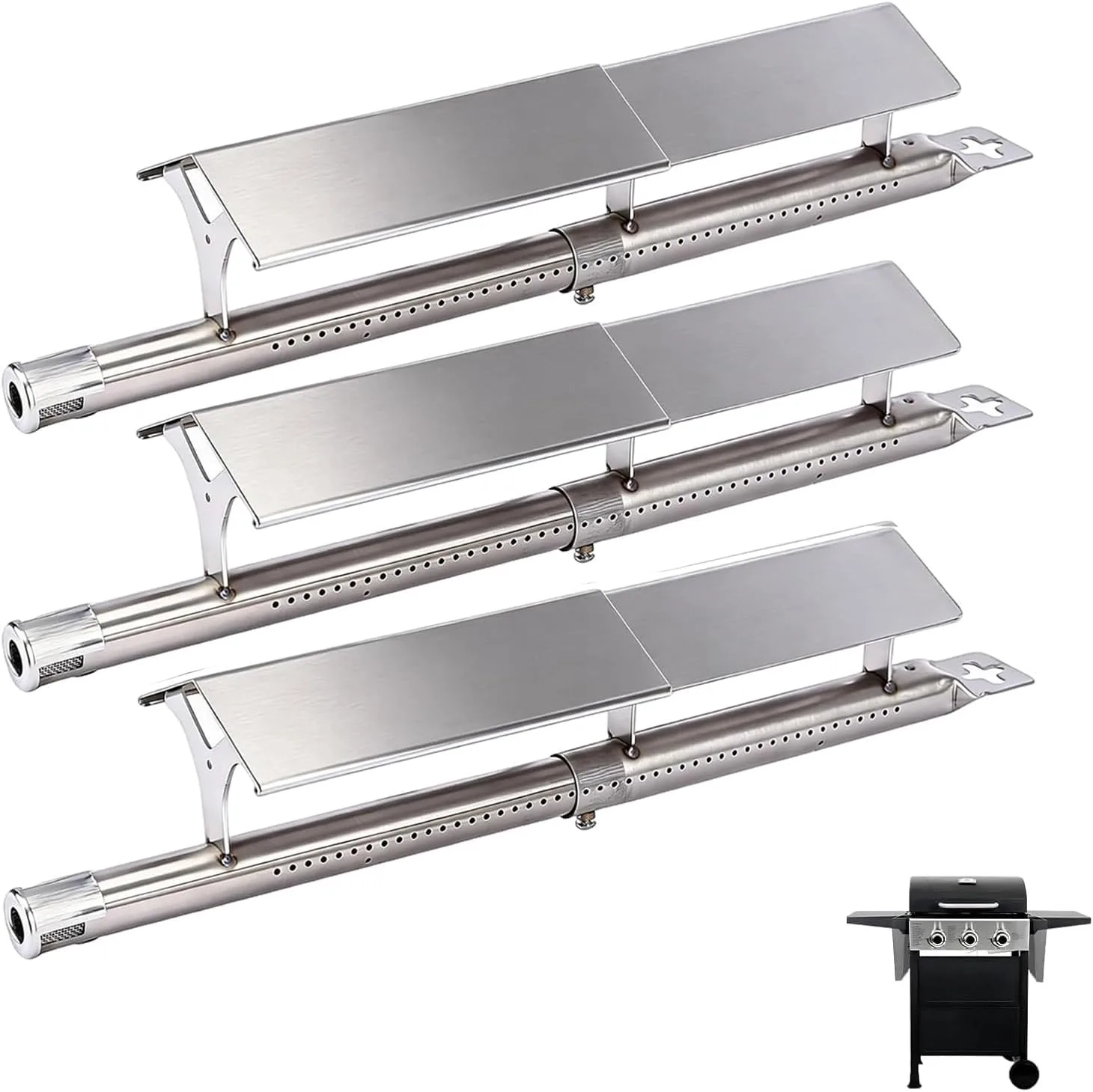
Burners are usually the first component to fail on a gas grill, and the warning signs are visible before a full breakdown. Watch for visible rust or corrosion with holes or flaking metal, uneven flame distribution where one side cooks noticeably hotter, yellow or orange flames instead of blue (a sign of clogged ports or poor air mixing), uncontrollable flare-ups from grease pooling on a deteriorating surface, and a progressively weakening flame that signals the tube is failing.
Any one of these on its own is worth investigating. Two or more together usually means the burner has reached the end of its service life and needs to be swapped rather than patched.
- Rust holes you can see light through. Replace immediately, this is also a safety issue.
- Persistent yellow flame after cleaning the ports, often points to a burner or regulator problem.
- Hot spots that move around the cook surface: check the burner and the heat plate above it.
Grill grates 101: cast iron vs stainless steel vs porcelain-coated
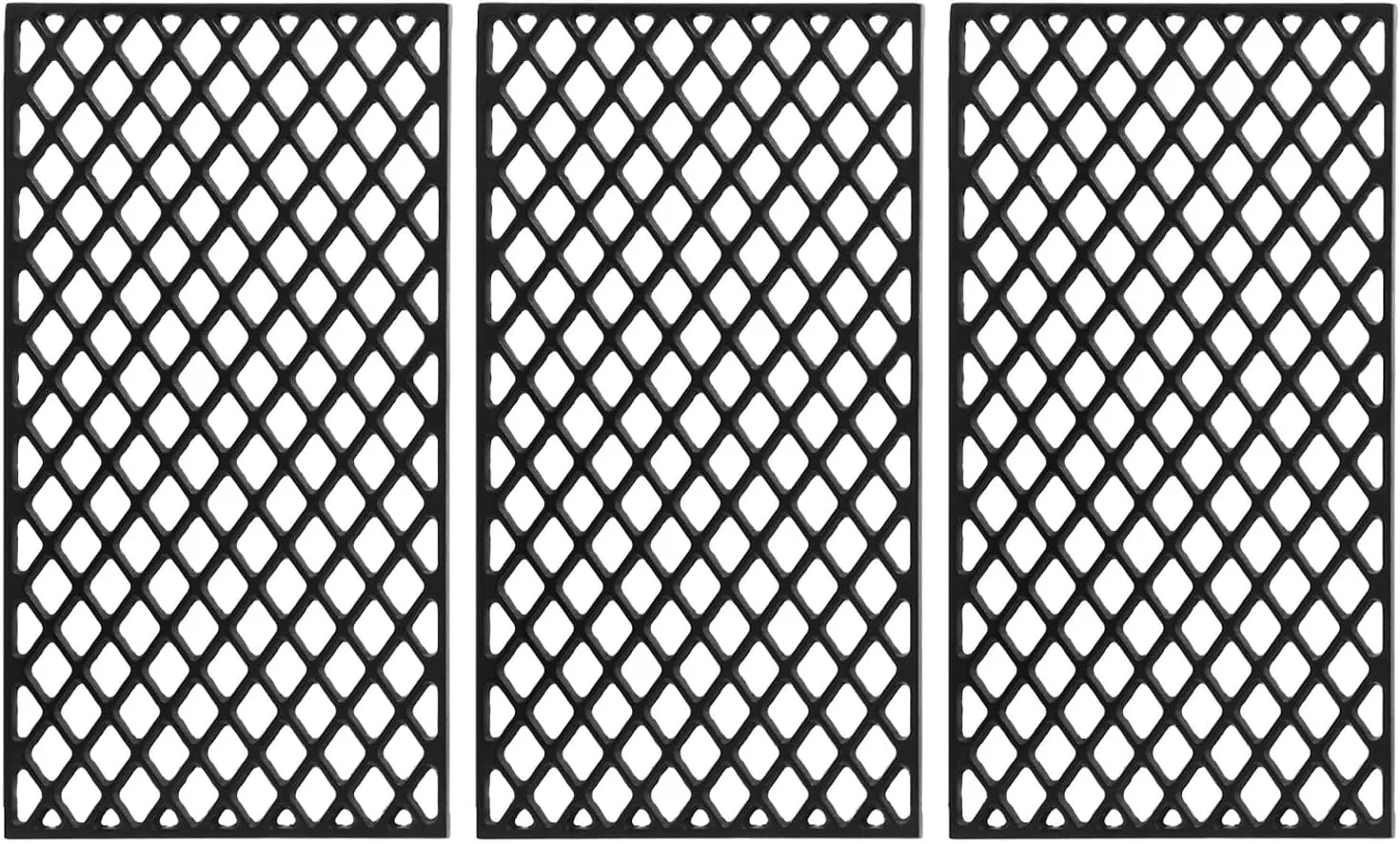
The grate material you choose affects sear quality, upkeep, and how long the grate lasts. Porcelain-coated cast iron offers strong heat retention for sear marks and resists rust while the coating is intact, but the coating can chip from metal tools and once compromised the underlying iron needs regular maintenance. Stainless steel is rust-resistant, needs no seasoning, cleans easily with a brush, and won't chip or crack. It heats quickly but doesn't hold heat as long, which can affect searing. Uncoated cast iron delivers the best heat retention for searing and improves with seasoning, but requires oiling after every cook and must be dried immediately to prevent rust.
| Grate type | Heat retention | Maintenance | Best for |
|---|---|---|---|
| Uncoated cast iron | Highest | Oil after every cook, dry immediately | Cooks who prioritize sear quality |
| Porcelain-coated cast iron | High | Avoid metal tools; watch for chips | Sear quality with less rust risk |
| Stainless steel | Moderate | Low: brush clean, no seasoning | Everyday grilling and easy upkeep |
Measuring burner tubes for a correct fit
Even with the right model number, a burner replacement should be double-checked by physical measurement before you order. Remove the burner by unbolting or unhinging it, there's typically a hitch pin or screw at the rear, then measure the full length from the front end, where the large hole fits over the valve, to the back end. For flanged burners, measure end-to-end including the flange, and note whether the flange has a centered hole or multiple holes, since that affects how the part attaches.
If the tube isn't straight, measure it in sections (from the top to the bend point, then from the bend to the edge) and for sloped or bent mixer tubes, measure from the top to the center line after the bend and from the end to the center line. These measurements confirm the replacement will seat correctly in your grill's existing mounting brackets.
OEM vs aftermarket grill replacement parts
Once you know what's failed and what size you need, the next decision is OEM versus aftermarket. OEM parts are made by the original grill manufacturer and fit exactly to specification, at a premium price that reflects engineering precision and guaranteed fitment, best for critical components like controllers and thermostats. Aftermarket parts come from third-party manufacturers and typically run 40–60% lower than OEM; quality varies by brand, but for non-critical wear items like grates and drip trays, aftermarket often offers excellent value, provided you confirm the exact model compatibility and mounting hole pattern before ordering.
| Factor | OEM parts | Aftermarket parts |
|---|---|---|
| Fit guarantee | Exact to spec | Varies: verify model compatibility |
| Relative cost | Premium | Typically 40–60% lower |
| Best used for | Controllers, thermostats, critical parts | Grates, drip trays, wear items |
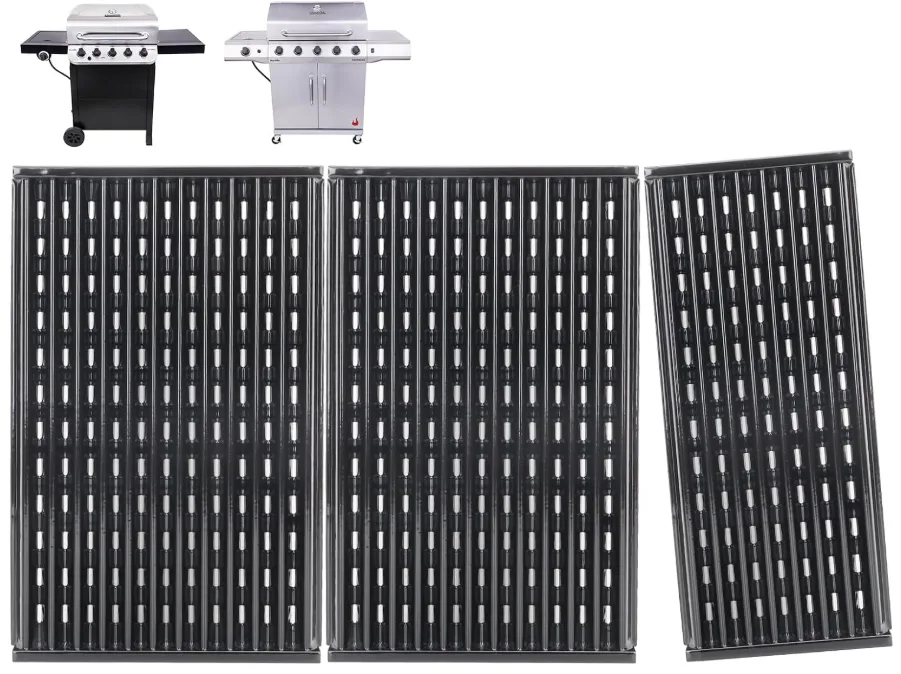
GrillPartsReplacement Burner, Grate & Heat Plate Catalog
What We Like
- Model-based catalog navigation reduces compatibility guesswork
- Both OEM and aftermarket options listed side by side
- Covers gas, pellet, charcoal, griddle and kamado grills
What to Consider
- You still need your exact model number before ordering
- Some aftermarket parts vary in gauge/thickness by manufacturer
For readers replacing a worn burner, a rusted heat plate, or a cracked grate, the practical path is to identify the model number, diagnose the failed component using the warning signs above, then search this catalog by brand and model to confirm fitment before checkout.
Gas safety checklist before you reinstall
Any time you disconnect and reconnect a gas line (to swap a burner, hose, or regulator) treat the leak check as mandatory, not optional. Mix a 50:50 solution of washing detergent and water in a spray bottle, turn all gas regulators off, then open the propane tank valve to pressurize the system. Spray the solution on the gas valve, regulator, hose connections, and every visible joint, if a component is leaking, soap bubbles will form immediately at that site.
Perform this test outdoors in a well-ventilated area only, and never use an open flame, lighter, or match to check for a gas leak, that creates a severe fire hazard. Inspect the regulator face seal for cracks, twisting, or damage, and check all hoses for cracks, abrasions, holes, or tears, with connections tight and no sharp bends in the line. If you see bubbles anywhere, stop, shut the tank valve, and do not use the grill until the leaking part is replaced.
Common mistakes when installing grill replacement parts
Most failed repairs trace back to skipping a basic step rather than a defective part. Order against the model number, not just the brand: a Weber part that fits one Weber generation may not fit another. Double-check mounting hole patterns on aftermarket grates and heat plates before installing, since a near-fit still won't seat flush. And always run the soapy-water leak test after any gas-line work, even on parts that look correctly seated.
Fire glass and other fire-feature replacement parts
Grill replacement parts extend beyond the cook box: fire pits and outdoor fireplaces use the same category of wear items. Decorative fire glass is 100% tempered heatproof glass rated to withstand temperatures up to 1400°F, available in colors like black, cobalt blue, clear, bronze, red and amber. Fill fire glass no more than 1–2 inches above the burner top, going deeper forces the flame to work harder and reduces the visual effect, and never substitute ordinary decorative glass, river rock, or wet media in the burner area.
For readers building out a full outdoor cooking and entertaining setup, pairing grill maintenance with the right accessories keeps everything running smoothly through the season. See our blue cooler roundup for keeping drinks and food cold trackside, or our Ozzi outdoor gear review for camp-kitchen essentials that travel alongside your grill.
The bottom line on grill replacement parts
Most grills don't need to be replaced: they need three things fixed: the burner, the grate, and the heat plate underneath. Confirm your exact model number, diagnose the failure using the warning signs above, and choose OEM for critical controls or aftermarket for wear items once you've verified the fit. Always finish any gas-line work with the soapy-water leak test before you cook.
Shop grill replacement parts nowReferences
This article is for general maintenance guidance only and is not a substitute for your grill manufacturer's owner's manual or professional gas-appliance service. Gas leaks and improperly seated components are safety hazards, if you smell gas, see damaged hoses or regulators, or are unsure about any step, stop and consult a qualified technician before using the grill again.
More Home & Outdoor Gear guides
 Jackery Power Stations: Best 2026 Sizing Guide for Outages, RVs
 Space-Saving Home Gym Equipment: 5 Best Compact Picks (2026)
 Selk'bag SWYTCH Review 2026: Best Wearable Sleeping Bag?
 Wuben Flashlight Guide 2026: EDC, Tactical & Spotlight Models
 Jakiper Battery Guide: 6 LiFePO4 Systems Compared (2026)
 Crown Shades Canopy Guide 2026: Best Pop-Up Models Compared