CKG Sand Scoops: How to Choose the Right Beach Detecting Scoop
CKG builds hand-welded stainless steel and titanium sand scoops for beach metal detecting. This guide compares materials, hole sizes, and CKG's full lineup to help you pick the right scoop.
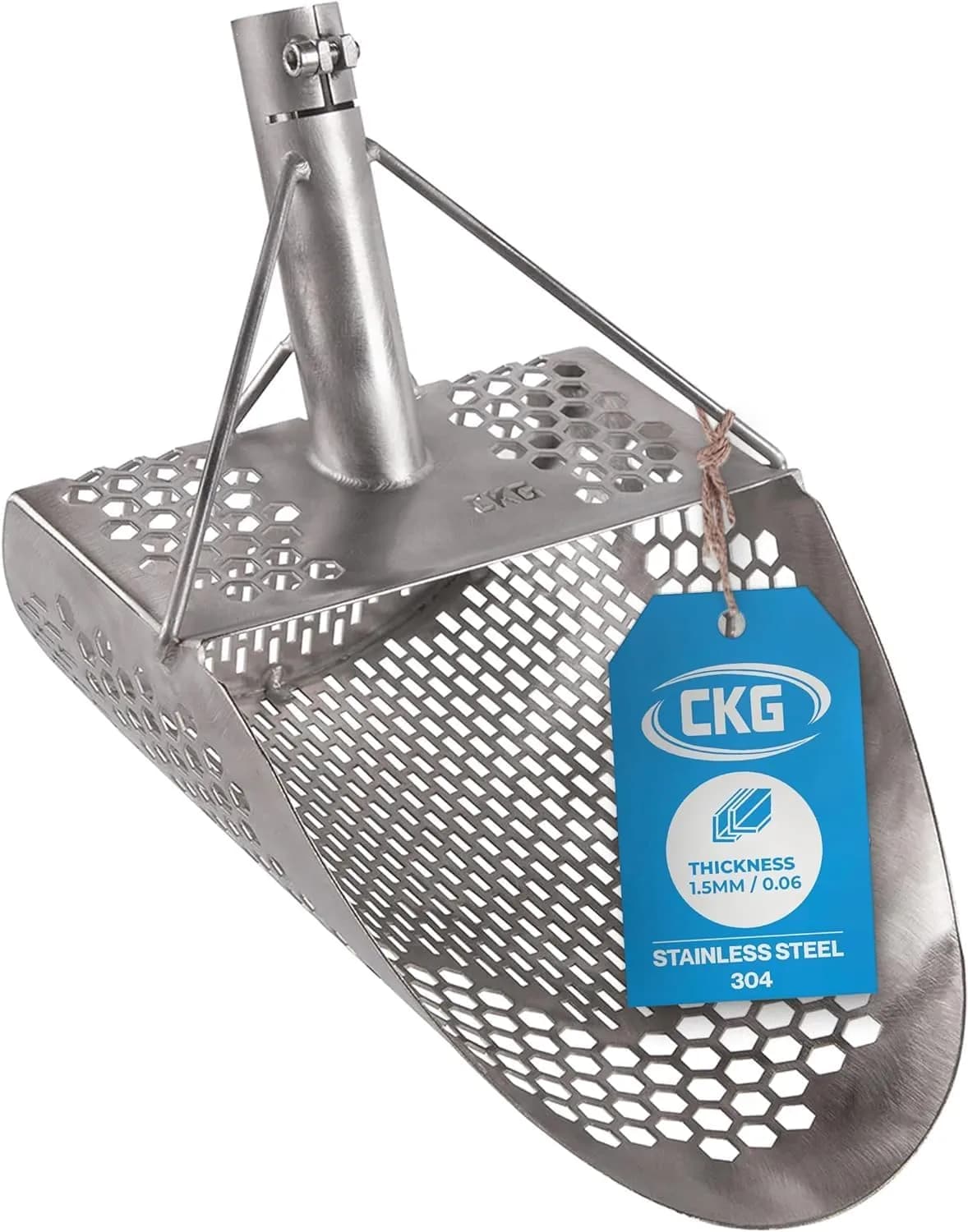
What a sand scoop does: and why it matters
Picking the right sand scoop is the difference between a beach detecting session full of finds and an afternoon of aching shoulders and lost targets slipping back through the sand. CKG builds hand-welded, marine-grade stainless steel and titanium scoops for treasure hunters working saltwater beaches, so this guide breaks down materials, hole size, and handle style to help you match the right CKG scoop to how you actually hunt.
- What a sand scoop does, and why it matters
- Stainless steel vs titanium sand scoops
- Choosing the right hole size
- Hand scoop vs long-handle scoop
- Best CKG sand scoop models
- CKG sand scoop comparison table
- Caring for a saltwater sand scoop
- Common sand scoop mistakes and how to fix them
- Buying guide: what to look for
Key highlights
- CKG is a Florida-based metal detecting equipment maker serving over 200,000 hunters across 29 countries since 2017 (founded 2017).
- Titanium scoops trade a premium price for the best strength-to-weight ratio and top saltwater durability; 304/316 stainless is heavier but more affordable and still corrosion-resistant (material comparison).
- Hole size drives what you keep: wider hexagonal holes drain sand fastest, tighter 7mm holes hold onto rings and fine jewelry (Hex-7 7mm holes).
- Every CKG scoop and digging tool ships with a 1-year manufacturer's warranty and a 30-day returns policy.
The CKG 11×7 Stainless Steel Sand Scoop is the best all-round CKG sand scoop for most beach detectorists
If you hunt the wet sand and shallow surf on most weekends and don't need to shave off every ounce, the 11×7 gives you the biggest basket, the toughest build, and the lowest cost of entry into CKG's range. Hunters chasing fine jewelry or long all-day sessions should look further down this guide.
Check CKG 11×7 Sand Scoop priceWhat a sand scoop does: and why it matters
A sand scoop is a perforated basket, either hand-held or mounted on a long handle, that lets a metal detectorist dig a signal, scoop the plug into the basket, and shake the loose sand out through the holes while the target stays trapped inside. It replaces a shovel for wet sand and shallow water work, where digging a target by hand means it can slip away in the surf before you find it. Getting the basket size, hole pattern, and material right matters more in this category than almost any other detecting accessory, because those three factors decide how fast you recover a target and how long the tool survives saltwater exposure.
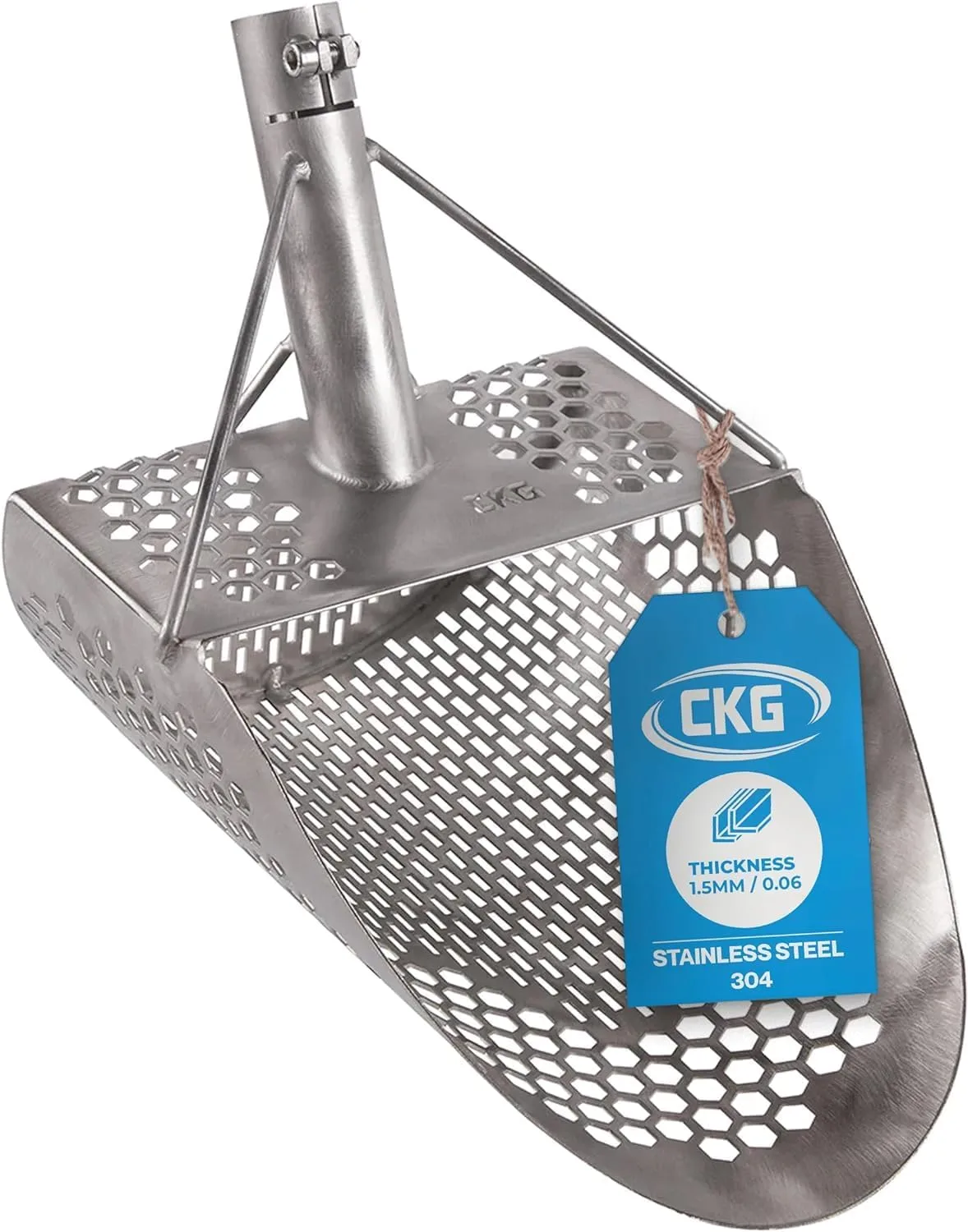
CKG is a metal detecting equipment brand based in Sunrise, Florida, that has served over 200,000 hunters across 29 countries since 2017 (brand heritage). Its scoops and digging tools are hand-welded rather than stamped, a construction method the brand positions as more durable for repeated saltwater use, and products are described as developed in the field rather than at a desk (hand-welded construction).
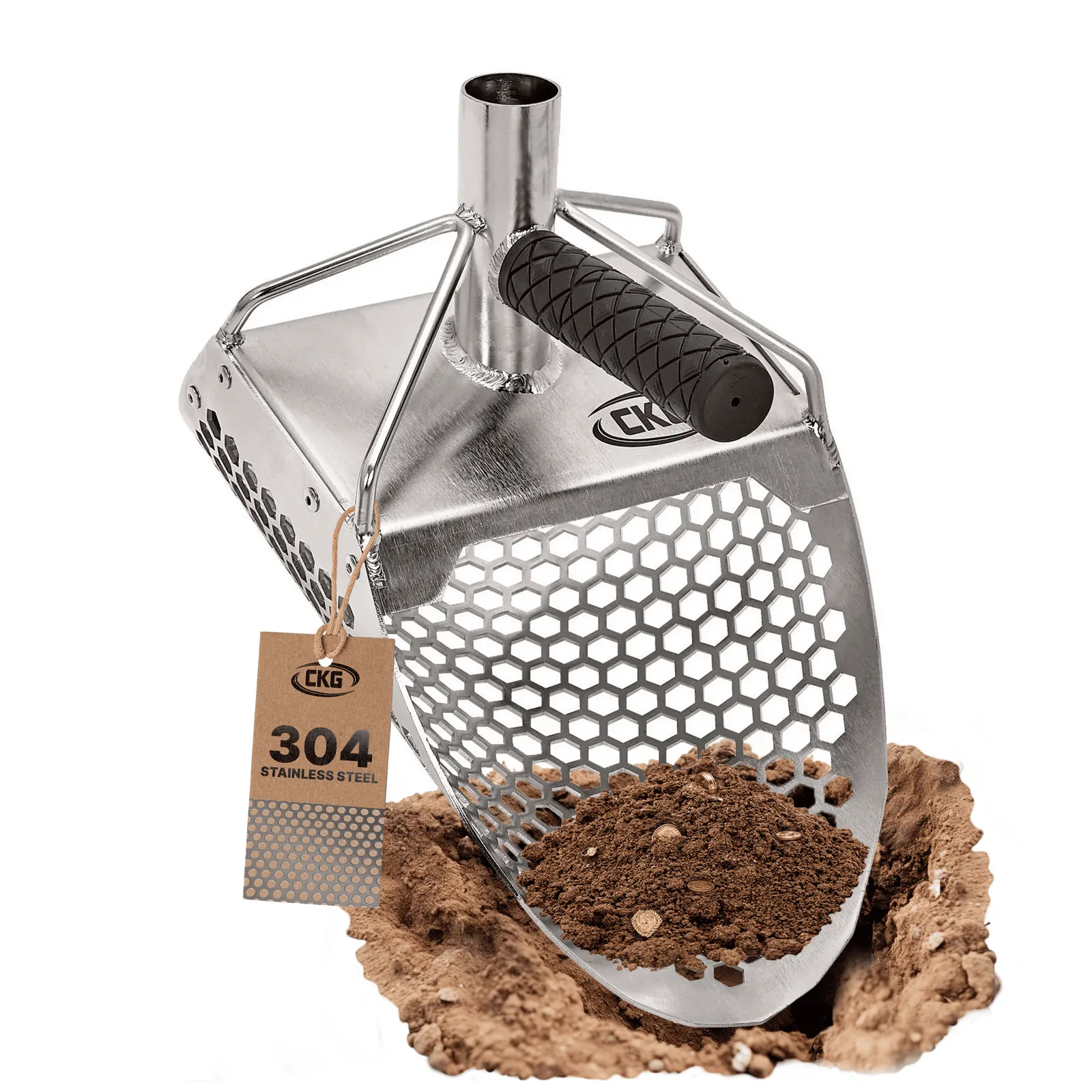
CKG 11×7 Stainless Steel Sand Scoop
304 stainless steel, 10mm hexagonal drainage holes, roughly 3 lbs: CKG's bestselling all-round beach scoop (11×7 spec).
Check current priceStainless steel vs titanium sand scoops
The single biggest decision when buying a sand scoop is material. Stainless steel (304 or 316 grade) offers exceptional corrosion resistance and durability for saltwater beach detecting, though it's heavier than the alternatives; 304 is tough and good value, while 316 adds molybdenum for superior coastal protection. Titanium provides the best strength-to-weight ratio with superior durability in both freshwater and saltwater, at a noticeably lower weight than stainless, but it carries a premium price that's typically justified only for frequent detectorists or hunters with specific weight concerns. Aluminum scoops are lightweight and affordable but less robust in demanding saltwater conditions, so they're less often recommended by professional beach hunters (material comparison).
In practice: if you hunt a handful of weekends a month, 304 stainless like the CKG 11×7 or 9×6 will outlast the investment. If you're on the beach several days a week, or you swing a long-handle scoop for hours at a time, the CKG PRO Titanium's lighter weight and carbon-fiber shaft reduce fatigue enough to justify the higher cost (PRO Titanium spec).
Choosing the right hole size for your sand scoop
Hole size is the second major spec that separates CKG's models, and it's often overlooked by first-time buyers. A wider hexagonal hole pattern, like the 10mm holes on the CKG 11×7, 9×6, and PRO Titanium, drains wet and dry sand fastest, which matters most when you're working through heavy, waterlogged sand and want the biggest coins and rings to sift out quickly (10mm drainage). A tighter hole pattern, like the 7mm holes on the CKG Hex-7, drains more slowly but securely retains small treasures: thin rings, fine chains, and small stud earrings that would otherwise slip through a wider hole and get lost back into the surf (Hex-7 7mm holes).
Match hole size to your target and your sand
If you mostly hunt for coins, larger jewelry, and general relics, a 10mm hole scoop clears sand fastest and keeps your recovery rhythm quick. If you specifically hunt beach jewelry (rings lost in the surf, chains, and studs) the Hex-7's 7mm holes are worth the slower drain time, since a scoop with holes too wide simply lets your best finds wash straight back out. Fine, dry beach sand also tends to clog wider holes less than coarse or shell-heavy sand, so hunters on shell-heavy beaches often prefer the mid-size hole pattern for a balance of drainage and retention.
Hand scoop vs long-handle scoop
CKG's range covers both formats. The CKG Hand Sand Scoop is a compact, heavy-duty stainless steel scoop built for hand-held use without a shaft, ideal for shallow water, quick spot-checking, or as a lightweight backup to a full-size scoop (hand scoop spec). Long-handle models like the 11×7, 9×6, Hex-7, and PRO Titanium mount to a shaft, letting you scoop targets without bending or kneeling in the surf for hours at a time, which matters most on longer sessions or in deeper wading water.
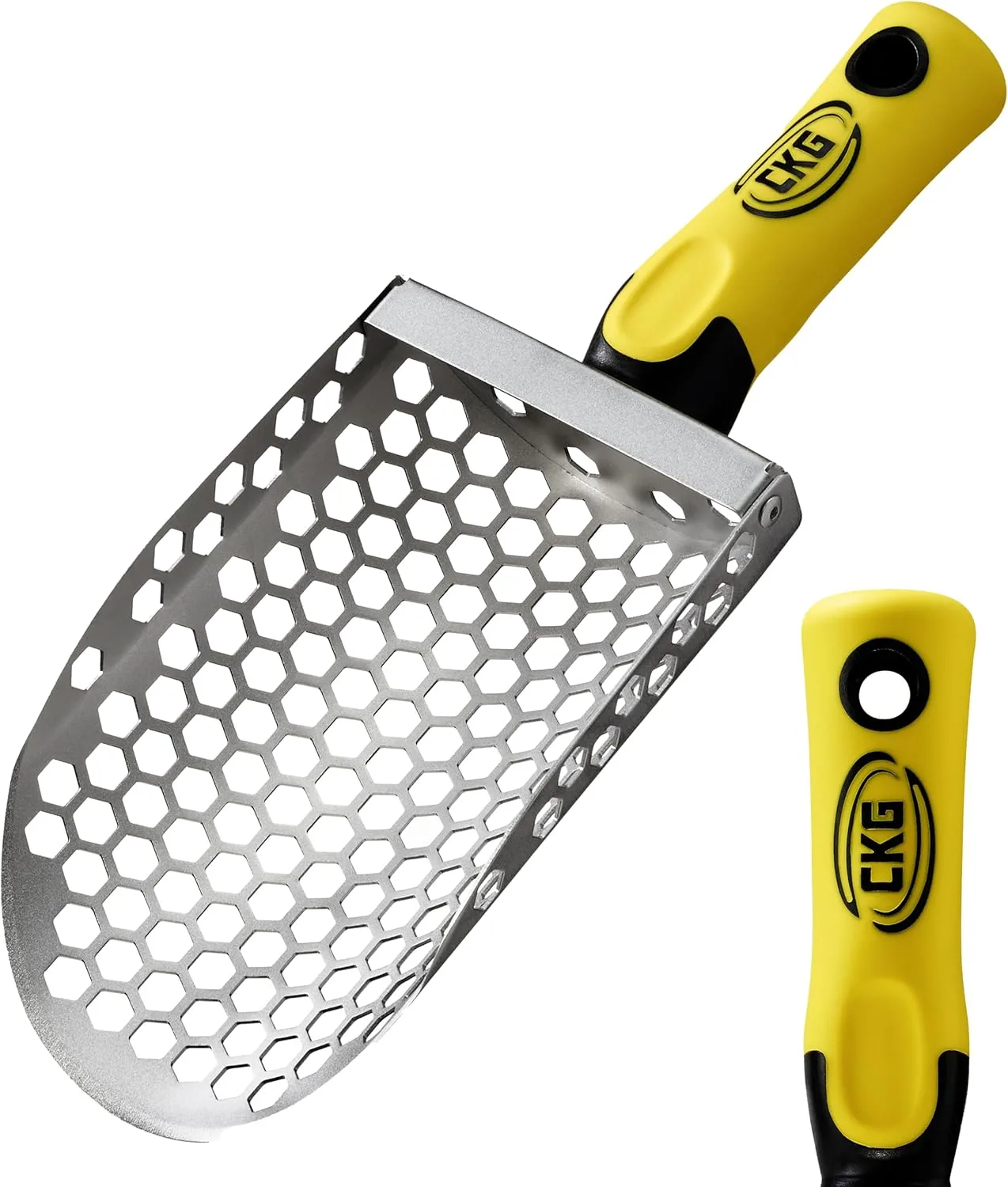
A practical rule: if you mostly hunt dry sand or shallow tide lines within arm's reach, a hand scoop keeps your kit light and cheap. If you wade into the surf, hunt for hours, or want to avoid repeated bending, a long-handle scoop on a shaft is worth the extra size and cost, and it's the format CKG builds most of its lineup around, including the carbon-fiber shaft bundled with the PRO Titanium (carbon-fiber shaft).
Best CKG sand scoop models
CKG's current lineup spans a heavy-duty stainless all-rounder, a titanium lightweight option, and a fine-hole jewelry specialist. Here's how the three main long-handle scoops compare, plus the wider CKG kit that pairs with them.
CKG 11×7 Stainless Steel Sand Scoop
What We Like
- Bestselling, heavy-duty build for serious beach hunters
- Large basket clears more sand per scoop
- 304 stainless resists saltwater corrosion
What to Consider
- Heavier than the titanium PRO model
- 10mm holes let very fine jewelry slip through
CKG's 11×7 is the brand's bestselling model, built from 304 stainless steel with a 10mm hexahedron hole pattern engineered for rapid sand drainage while retaining coins, rings, and jewelry. At roughly 3 lbs, it's built for serious beach hunters and water detectorists who prioritize durability and basket capacity over ultralight weight.
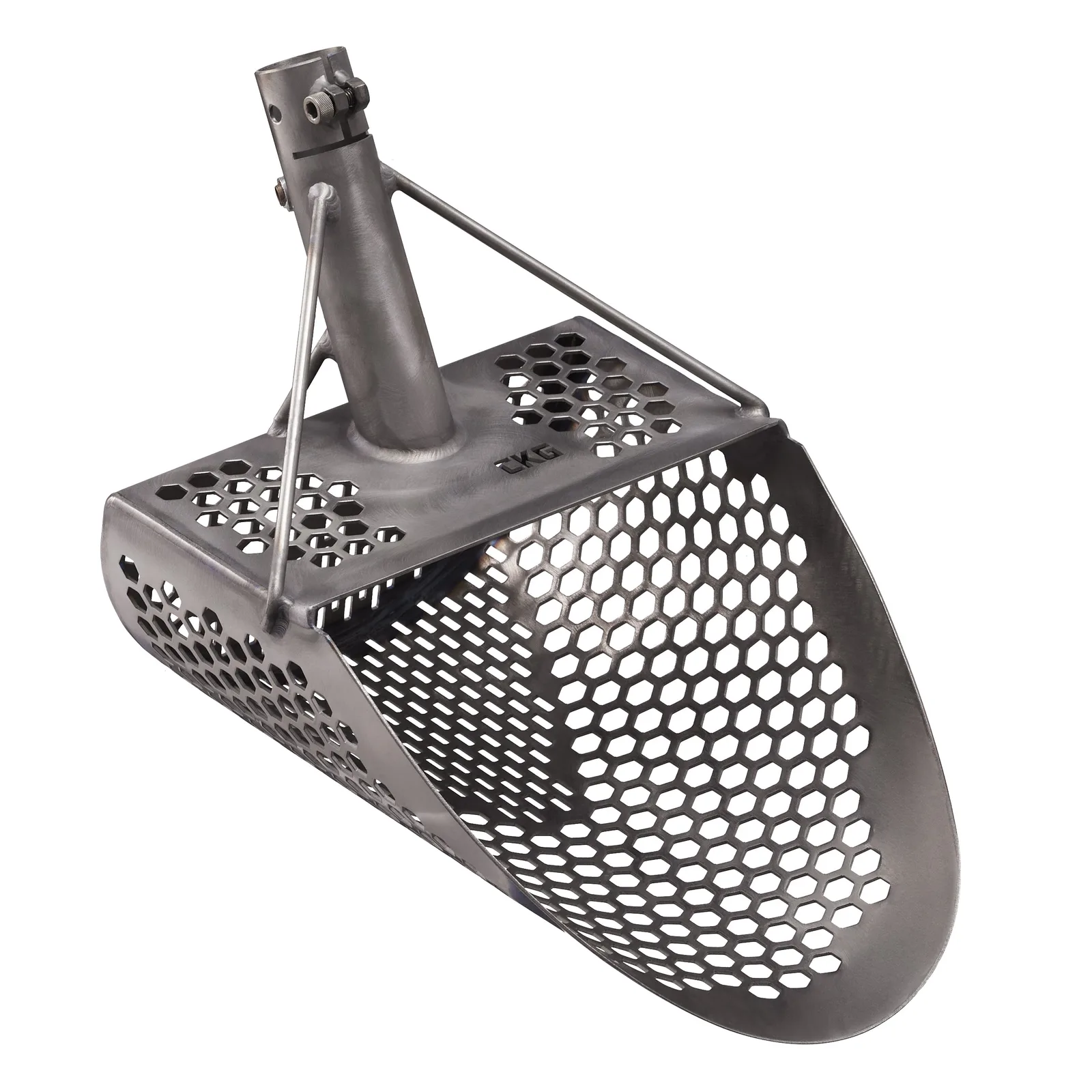
CKG PRO Titanium Sand Scoop 11×8
What We Like
- Extremely light for extended underwater and beach searches
- Titanium resists rust in marine environments
- Includes a 45.5in carbon-fiber shaft
What to Consider
- Premium price point vs the stainless models
- Best value only for frequent detectorists
The PRO Titanium is CKG's premium lightweight option, using 1.5mm titanium for an unmatched strength-to-weight ratio and superior saltwater resistance. At approximately 1 lb 8 oz including the bundled carbon-fiber shaft, it's designed for extended underwater and beach searches without the hand and shoulder fatigue a heavier stainless scoop causes over a full day.
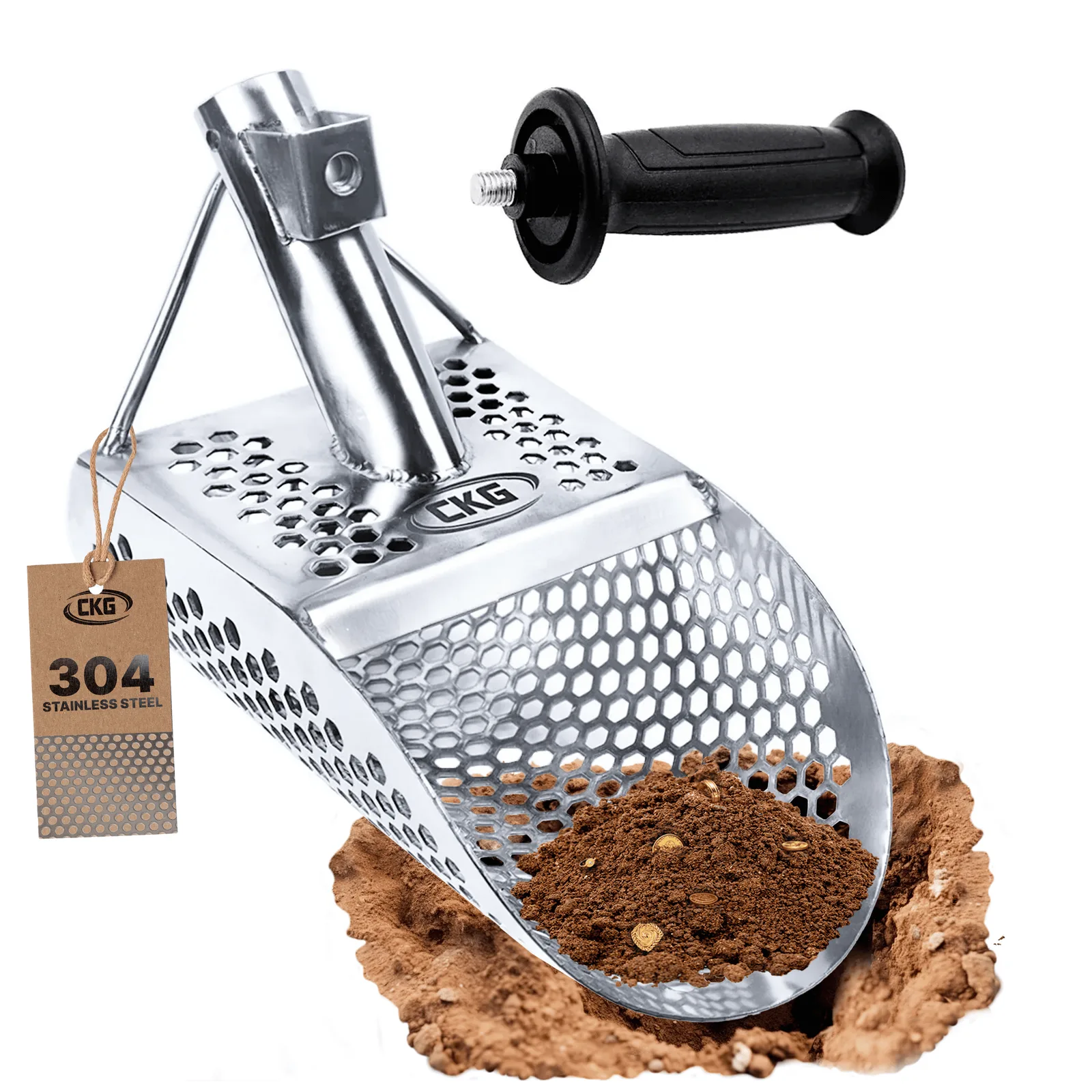
CKG Hex-7 Sand Scoop
What We Like
- Tight 7mm holes hold onto rings and fine chains
- Ergonomic plastic grip included
- Strong verified-review satisfaction
What to Consider
- Smaller basket than the 11×7
- Slower drainage in heavy wet sand
The Hex-7 features tightly spaced hexagonal holes engineered for efficient drainage of wet and dry sand while securely retaining small treasures like coins, rings, and fine jewelry. Customers report 4.8 out of 5-star satisfaction across 52 verified reviews, particularly praising durability in saltwater environments and efficient drainage.
CKG also sells the compact 9×6 Sand Scoop (sometimes called the Recover Sand Scoop), a smaller-footprint 304 stainless model that trades basket volume for a lighter, faster swing during long recovery sessions. Customer satisfaction sits at 4.9 stars from 57 verified reviews (9×6 spec). For hunters who prefer a hand-held format, the CKG Hand Sand Scoop is a heavy-duty stainless option built for shallow water and quick spot-checking without a shaft (hand scoop spec).
Two accessories round out the CKG kit: the CKG Metal Detector Pinpointer 360°, an IP68 waterproof handheld tool rated to 3 meters for verifying a target's exact location before you scoop (pinpointer spec), and the CKG Carbon Metal Detecting Shovel, a carbon-fiber digging tool for cutting clean plugs in grass or hard-packed ground before you switch to the scoop for sifting (carbon shovel spec). Pairing a scoop with a pinpointer and a digging tool is the standard three-piece kit most experienced detectorists carry to the beach.
| Model | Material | Weight | Hole Size | Best For |
|---|---|---|---|---|
| CKG 11×7 | 304 stainless steel | ~3 lbs | 10mm hex | Everyday saltwater beach detecting |
| CKG PRO Titanium 11×8 | 1.5mm titanium | ~1 lb 8 oz | 10mm hex | All-day hunts, underwater searches |
| CKG Hex-7 | Marine-grade stainless | ~1.6 lbs | 7mm hex | Fine jewelry and small finds |
| CKG 9×6 | 304 stainless steel | ~1.8 lbs | 10mm hex | Fast, low-fatigue recovery |
| CKG Hand Scoop | Stainless steel | Compact, no shaft | Standard | Shallow water, backup scoop |
Caring for a saltwater sand scoop
Both stainless steel and titanium sand scoops are chosen specifically for their corrosion resistance in saltwater, but neither material is entirely maintenance-free. Stainless steel's corrosion resistance comes from a passive oxide layer that saltwater and sand can gradually wear down at welds and joints over repeated use, which is part of why CKG emphasizes hand-welded (rather than stamped) construction for its scoops (hand-welded construction). Titanium is more inherently rust-resistant even under repeated saltwater exposure, one reason it commands a premium price for frequent detectorists (titanium saltwater resistance).
A simple after-hunt routine extends any scoop's life: rinse the basket and shaft thoroughly in fresh water as soon as you're done, let it air-dry completely before storing it, and periodically check welds and hinge points for early signs of pitting. If you're packing a full beach-day kit, a good cooler for keeping drinks and finds cold and a packable outdoor chair for breaks between sweeps round out the setup alongside your scoop, pinpointer, and digging tool.
Common sand scoop mistakes and how to fix them
- Buying hole size for the wrong target. A wide-hole scoop bought for general coin hunting will lose thin rings and small studs; buyers chasing jewelry specifically should choose a tighter hole pattern like the Hex-7 (7mm hole retention).
- Choosing weight without considering session length. A heavier stainless scoop feels fine for an hour but adds up over a full day of swinging; frequent, long-session hunters should weigh the titanium option's lighter carry (PRO Titanium weight).
- Skipping the rinse-and-dry routine. Leaving a scoop wet with salt residue in a car trunk or garage accelerates wear at welds and hinges even on corrosion-resistant materials.
- Treating a scoop as a shovel. A scoop is built to sift, not dig hard-packed ground or cut sod plugs; pair it with a dedicated digging tool like the CKG Carbon Shovel for tougher ground (carbon shovel purpose).
How We Chose
This guide compares CKG's current sand scoop lineup against independent material-selection research for beach metal detecting, cross-checking manufacturer specifications with third-party retailer listings for the models covered.
What to look for in a sand scoop
Before buying, weigh these four factors against how and where you actually hunt: material (stainless for value and toughness, titanium for weight and premium saltwater resistance), hole size (wider for fast drainage of general targets, tighter for fine jewelry retention), format (hand scoop for shallow, close-range work vs long-handle for standing, all-day sessions), and warranty coverage: CKG backs every scoop and digging tool with a 1-year manufacturer's warranty, replacement parts kept in stock, and a 30-day returns policy on unused items (warranty terms).
Verdict: which CKG sand scoop should you buy?
For most beach detectorists hunting a few sessions a month in typical saltwater conditions, the CKG 11×7 Stainless Steel Sand Scoop is the best all-round pick. It's the brand's bestseller, offers the biggest basket, and costs the least to get started. Frequent hunters doing long, all-day sessions or underwater searches should step up to the PRO Titanium for the lighter carry. Anyone specifically hunting lost rings and fine jewelry should skip straight to the Hex-7 for its tighter hole retention. Whichever model fits your hunting style, none of them are a fit for hunters who only need an occasional hand scoop for shallow spot-checks. The compact CKG Hand Scoop covers that case at a lower cost.
Shop CKG Sand ScoopsReferences
This article is an independent buying guide. Gearova may earn a commission if you purchase through the links above, at no extra cost to you. Product specifications, ratings, and policies are drawn from CKG and authorized-retailer listings current as of the last-reviewed date; always confirm current price, availability, and warranty terms directly with the retailer before purchasing.
More Home & Outdoor Gear guides
 Jackery Power Stations: Best 2026 Sizing Guide for Outages, RVs
 Space-Saving Home Gym Equipment: 5 Best Compact Picks (2026)
 Selk'bag SWYTCH Review 2026: Best Wearable Sleeping Bag?
 Wuben Flashlight Guide 2026: EDC, Tactical & Spotlight Models
 Jakiper Battery Guide: 6 LiFePO4 Systems Compared (2026)
 Crown Shades Canopy Guide 2026: Best Pop-Up Models Compared