Paddle North Gear Guide: Inflatable Paddle Boards, Kayaks and Lake Floats
A Paddle North gear guide covering the Karve inflatable kayak, Portager paddle board, and lake floats: specs, capacities, safety rules, and how to choose.
Inflatable vs rigid: why Paddle North bets on air
Paddle North gear turns any lake day into an adventure, from the Karve inflatable kayak to the Portager paddle board and lounge-ready floats. This guide breaks down specs, capacities, and how to pick the right piece from the lineup.
Key Highlights
- Paddle North's Karve kayaks come in a 10-foot solo and a 12-foot tandem model, both inflatable and backed by a 4-year warranty.
- The Portager inflatable SUP ships in three lengths so paddlers can match board size to how and where they paddle.
- Lake floats and water hammocks like the Hive, Lake Snake, and Loons Nest are built for lounging, not paddling. Know the difference before you buy.
- Drop-stitch construction is what lets inflatable gear hold high pressure and feel nearly as rigid as a hard-shell board or kayak.
Most paddlers do best starting with the Portager SUP for all-around versatility, or the Karve Kayak 10' if seated paddling and tracking matter more than standing.
Paddle North's inflatable lineup trades a few minutes of setup for easier storage, transport, and, according to industry testing, durability that now rivals rigid boards.* Pick a kayak for distance and tracking, a SUP for versatility, and a float when the goal is simply floating.
Shop Paddle North GearInflatable vs rigid: why Paddle North bets on air
Every piece in the Paddle North lineup (kayaks, paddle boards, and floats) is inflatable rather than rigid. That is a deliberate trade-off. Rigid boards can suffer dings, cracks, and delamination from impacts or UV exposure, and repairs typically require resin and curing time. Inflatable boards, by contrast, are covered by longer manufacturer warranties in general and have closed the durability gap with hard-shell construction for most recreational paddlers.*
The trade-off is setup time: an inflatable needs a few minutes with a pump before launch, and it needs to dry out before it's packed away again. For paddlers who store gear in a closet or car trunk rather than a garage with wall racks, that trade-off usually favors inflatable gear like Paddle North's Karve and Portager lines.

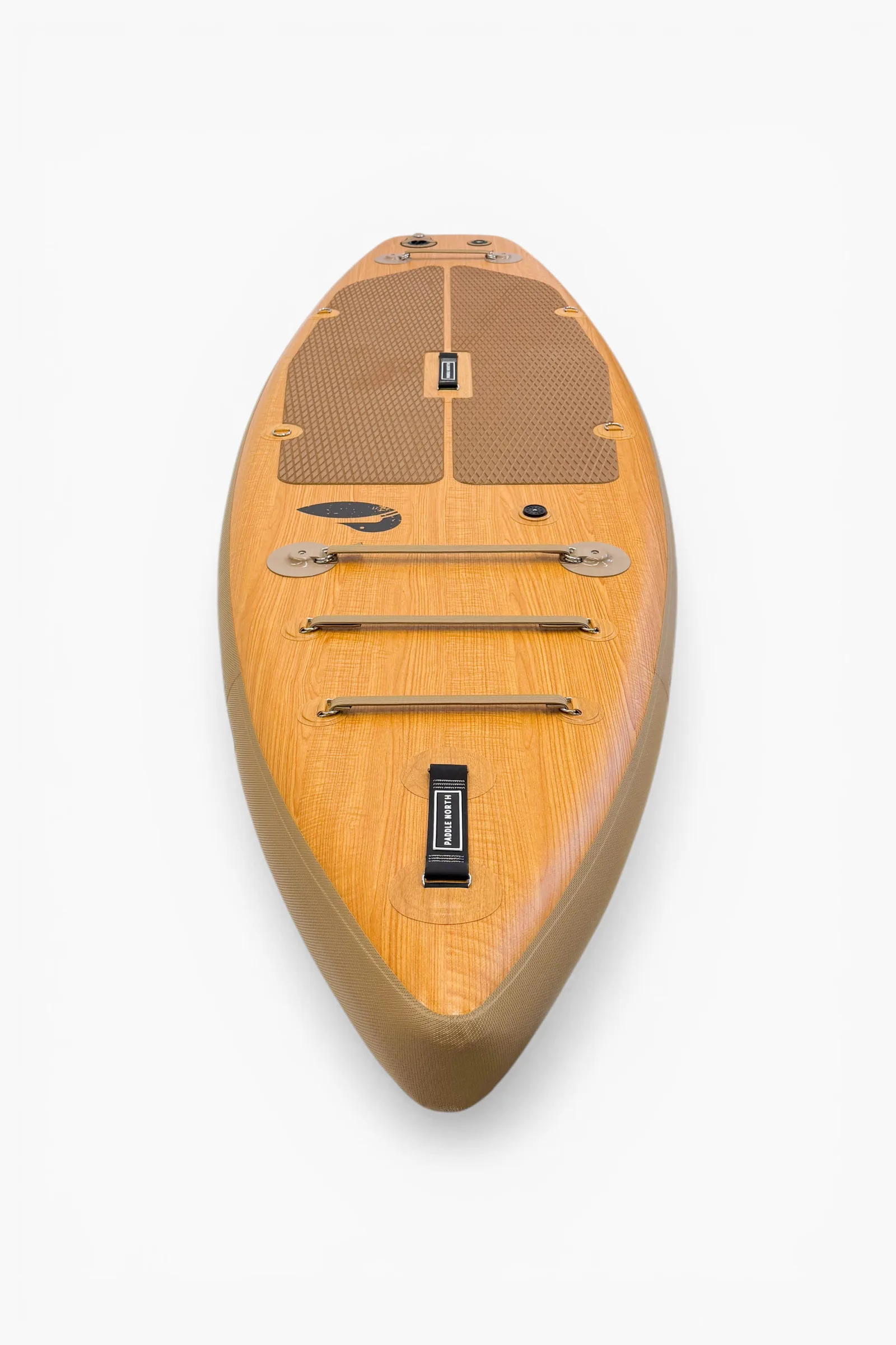
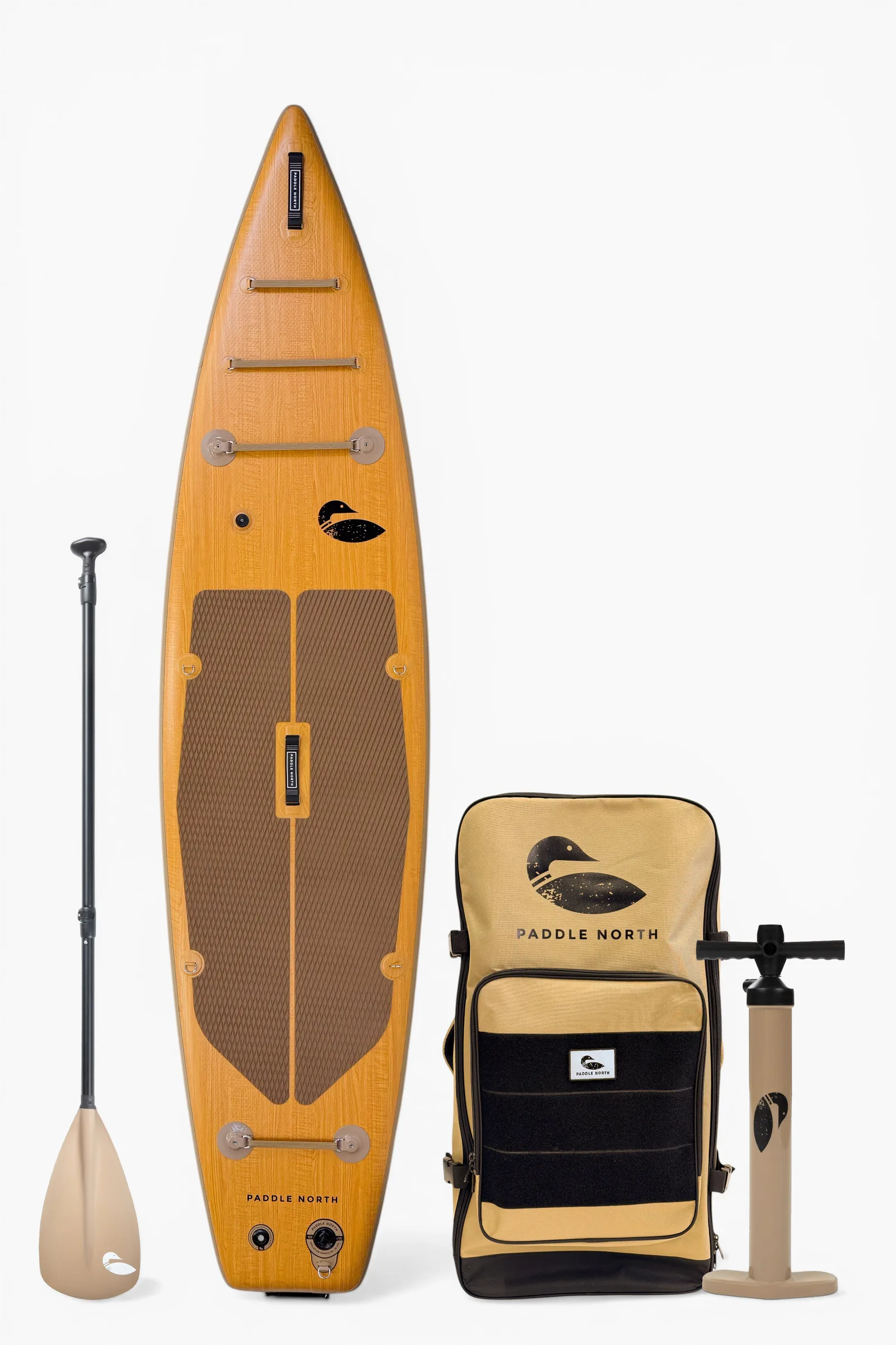
Portager Inflatable SUP
Paddle North's flagship all-around inflatable SUP, available in three lengths for different paddlers.*
Paddle North Karve kayaks
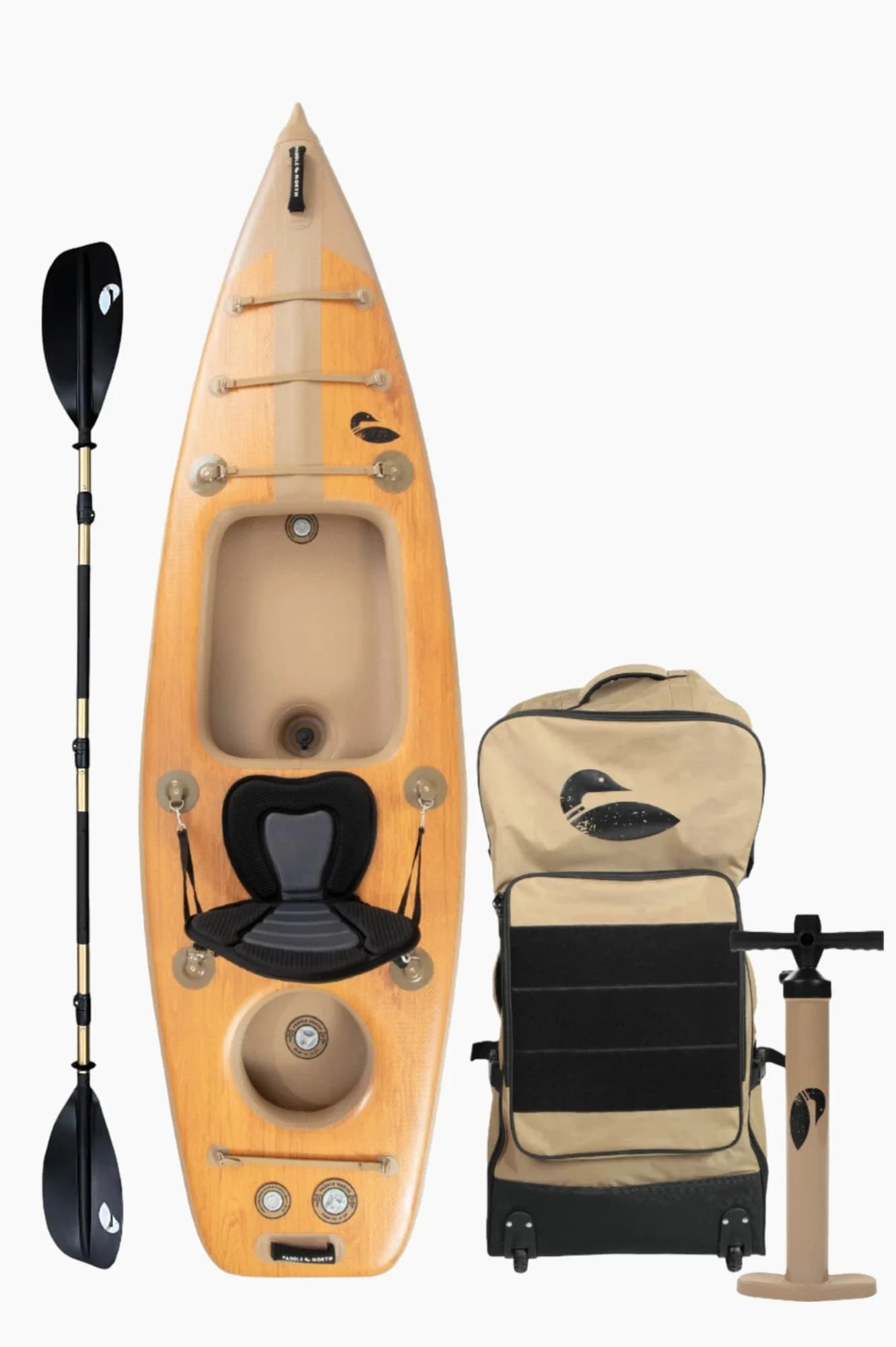
The Karve is Paddle North's inflatable kayak, sold in two lengths that suit different paddling plans. Both include a manual pump, kayak seat, and paddle, and both carry Paddle North's standard 4-year warranty and 30-day satisfaction guarantee.*
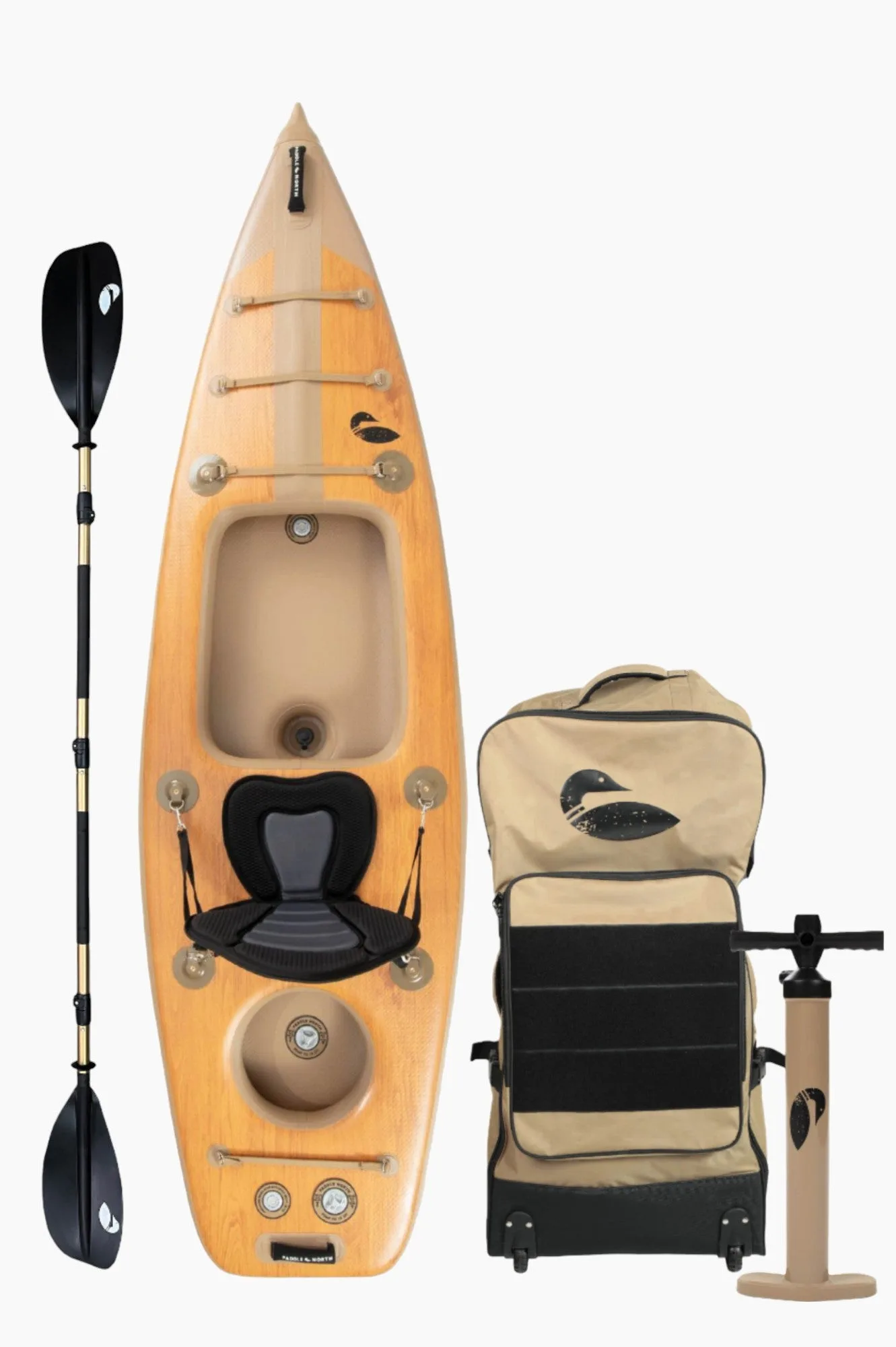
Karve Kayak 10'
What We Like
- Light enough (32 lbs) for one person to carry and load solo.
- Compact packed size fits in a trunk or closet once deflated.
What to Consider
- 350 lb capacity is solo-rider territory. Pair with the 12' for tandem trips.
The 10-foot Karve is built for one paddler who wants a stable, trackable inflatable kayak without the bulk of a hard shell. It's the easier of the two Karve models to strap to a roof rack or carry to the water solo.
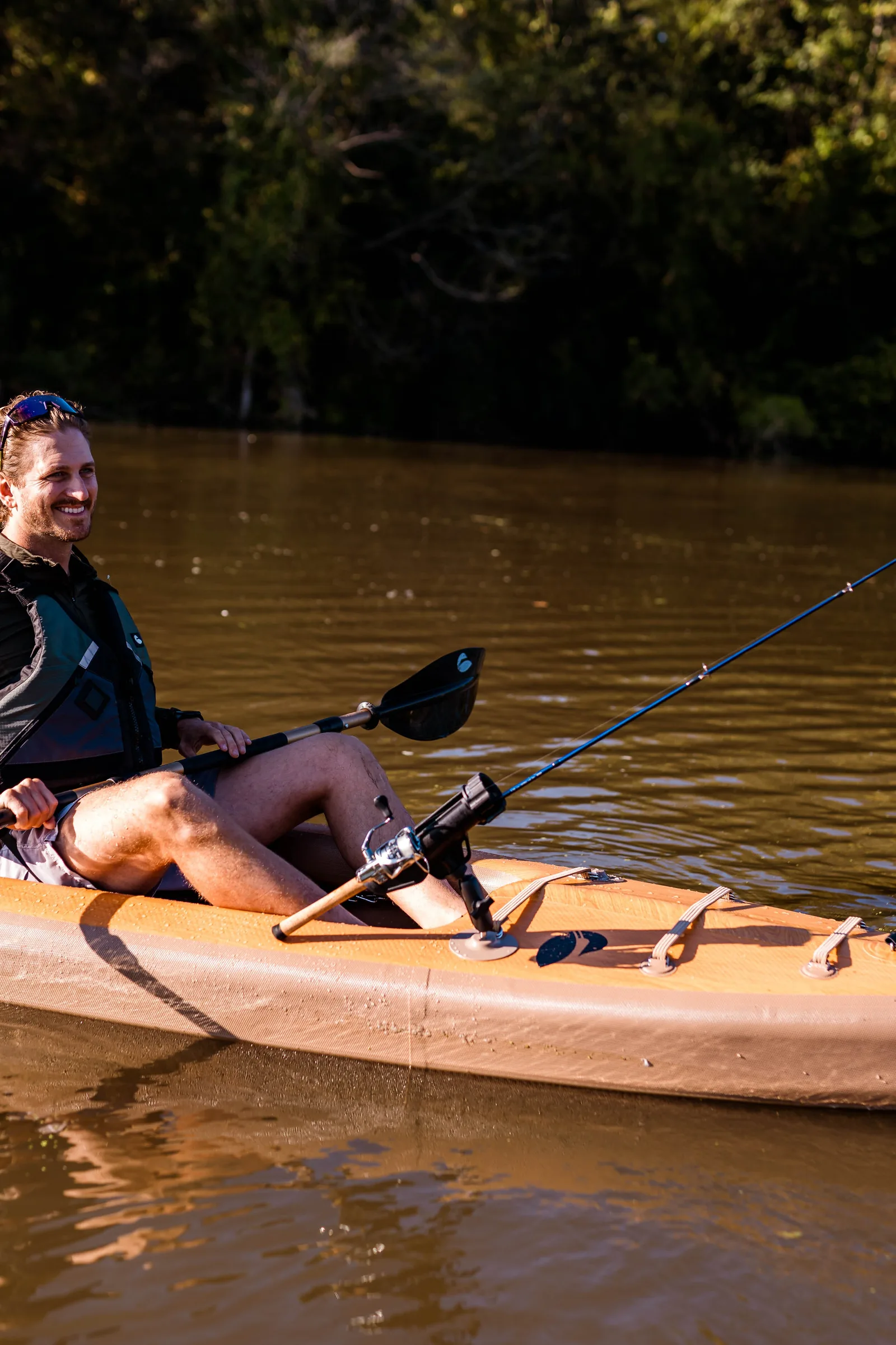
Karve Kayak 12'
What We Like
- 650 lb capacity covers two adults plus gear for a day trip.
- Same 4-year warranty coverage as the 10' model.
What to Consider
- At 40 lbs, it's noticeably heavier to carry solo than the 10' model.
The 12-foot Karve is the tandem option, built to carry a second paddler or a passenger and gear without crowding the cockpit. It's the pick for couples or a parent paddling with one child.
Portager inflatable paddle boards
The Portager is Paddle North's inflatable stand-up paddleboard and the brand's flagship all-around design. It's offered in three lengths (10', 11'6", and 12'6") so paddlers can match board size to their height, weight, and how they plan to use it, whether that's flatwater cruising or longer distance paddling. Paddle North reports over 1 million products sold globally with more than 4,000 five-star customer reviews across its catalog.*
Like the Karve kayaks, every Portager size carries the brand's 4-year warranty and 30-day satisfaction guarantee.* Shorter boards (10') tend to feel quicker and more maneuverable for beginners, while the longer 12'6" tracks straighter and carries more gear for all-day outings.
Lake floats and water hammocks
Not everything in the Paddle North catalog is meant for paddling. Water hammocks and floating docks are buoyant, cushioned floats built for relaxing on calm water. A traditional water hammock cradles a rider in a semi-submerged sling, while a floating dock is a larger, stiffer platform that can hold multiple people, coolers, and movement.*
Paddle North's float lineup includes the Hive water hammock, positioned as a premium single- or dual-lounger experience; the Lake Snake, a larger float built for extended group use; and the Loons Nest, available in multiple size options with removable backrests for different lounging configurations. Smaller entry-point floats, including a floating chair and a compact inflatable platform, round out the range. All of the floats carry the same 4-year warranty and 30-day satisfaction guarantee as the kayaks and SUPs.*
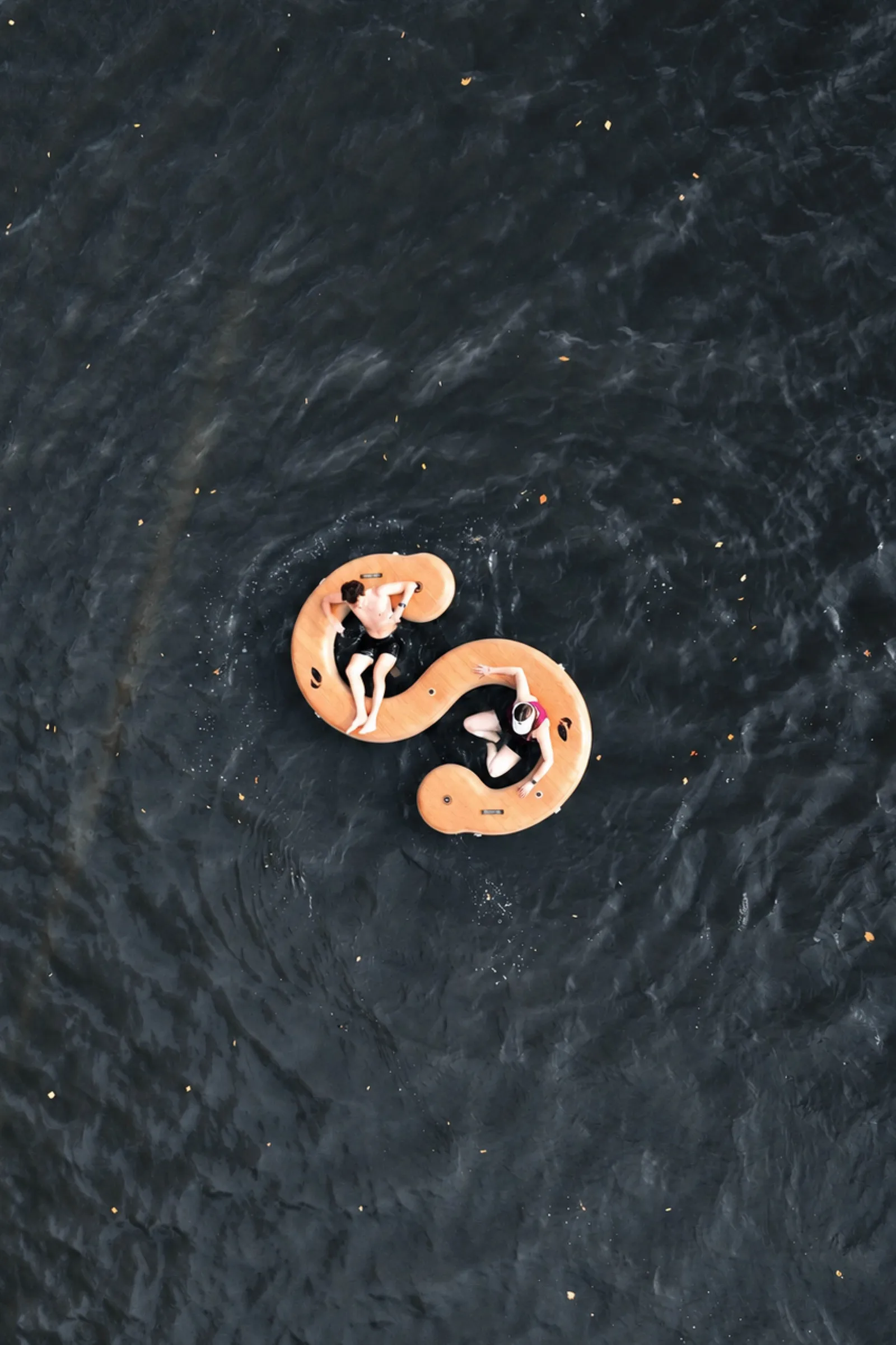
A float isn't a replacement for a kayak or SUP. It's not designed to be paddled any distance and isn't rated for the same open-water use. Pair a float like the Hive or Loons Nest with a cooler and a shade setup for a lakeside base camp, and save the Karve or Portager for actually covering water. Our roto-molded cooler review and outdoor lounger breakdown cover two pieces that pair naturally with a Paddle North float day.
Drop-stitch construction and PSI
Drop-stitch construction is the engineering behind why modern inflatable kayaks and SUPs can feel almost as rigid as hard-shell gear. Thousands of internal threads connect the top and bottom fabric layers, which lets the material hold much higher inflation pressures than older-style inflatables, up to 10–15 PSI, compared to roughly 2.0 PSI for a traditional inflatable kayak before seams risk bursting.*
At around 10 PSI, a drop-stitch floor approaches hard-shell stiffness, creating a rigid, standing-capable platform that resists flex and tracks better in wind and chop. The same multi-layer construction (reinforced bottoms, abrasion-resistant coatings, and ripstop-reinforced PVC) is also what makes drop-stitch kayaks notably puncture-resistant compared to single-layer inflatables.* When you're comparing an inflatable kayak or SUP against a rigid one, PSI rating is one of the clearest indicators of how stiff and stable it will actually feel on the water.
Life jacket and PFD requirements
Before launching a Karve kayak or a Portager SUP, check your state's personal flotation device rules. They apply to paddle craft, not just motorboats. The U.S. Coast Guard requires all children under age 13 to wear a USCG-approved life jacket aboard any moving recreational vessel, and on vessels under 16 feet, canoes, and kayaks of any length, everyone on board must wear one.*
As of January 2025, the USCG uses a performance-level system for PFDs: Level 70 is the minimum standard for calm-water recreational boating but is not designed to turn an unconscious wearer face-up, while Level 100 is intended for offshore or rough-water conditions and for non-swimmers or children.* Every recreational vessel, including an inflatable kayak or SUP, must carry at least one USCG-approved PFD per person on board even if it isn't worn the entire time.
Packing, storage and transport
The single biggest lifestyle difference between a Paddle North inflatable and a rigid board is how it travels between water sessions. A deflated inflatable kayak or SUP rolls down to roughly the size of a large duffel bag, fits in the trunk of a hatchback, and stores in a closet or under a bed rather than needing garage rack space.*
Inflatables typically ship with their own carry pack, which means a Karve kayak or Portager board can be checked as luggage on a flight or carried as a backpack to a trailhead lake. That portability opens up put-in spots (rivers, remote lakes, coastal coves) that are impractical to reach with a roof-racked hard shell, and it's also what makes the gear lighter and easier to handle for paddlers of different ages and strength levels.*
Paddle North lineup at a glance
| Model | Best For | Max Capacity / Sizes |
|---|---|---|
| Karve Kayak 10' | Solo touring and lakes | 350 lbs |
| Karve Kayak 12' | Tandem paddling | 650 lbs (1–2 riders) |
| Portager SUP | All-around paddling, beginners to intermediate | 10', 11'6", 12'6" options |
| Hive water hammock | Solo/dual lounging | Single or dual-lounger |
| Lake Snake float | Group lounging | Large-format, multi-person |
| Loons Nest float | Flexible group lounging | Multiple size options |
How to choose the right piece
Start with what you actually plan to do on the water. If the goal is covering distance, exploring a shoreline, or fishing from a seated position, a Karve kayak fits better than a SUP. The seated position and tracking hull make longer outings less tiring. If you want the flexibility to stand, kneel, or sit, and to use the same board for yoga, fitness paddling, or casual cruising, the Portager's all-around SUP shape is the more versatile pick.
Match rated capacity to the actual load you'll carry, not just your own body weight: a cooler, dry bag, dog, or second paddler all count against the kayak's or board's max capacity. Leave real headroom below the rated maximum rather than planning a trip that pushes right up against it; a kayak or SUP that's loaded near its ceiling handles less predictably and sits lower in the water. For couples or a parent-and-child pairing, the 650 lb Karve 12' has meaningfully more room to work with than the 350 lb solo model.**
If paddling isn't the point, you just want a comfortable spot to float, skip the kayaks and SUPs entirely and go straight to the float lineup. A portable watermaker and a Hive or Loons Nest float cover very different needs on the same lake trip, so think about the whole day, not just one piece of gear.
How We Chose
Selection criteria for this Paddle North gear guide were built from the brand's own published specifications, third-party paddle-sports testing sources on inflatable durability and drop-stitch construction, and current USCG personal flotation device regulations. No hands-on testing claims are made for this guide.
The Bottom Line
For most lake paddlers, the Portager SUP is the most versatile starting point in the Paddle North lineup, with the Karve kayaks a strong alternative for anyone who wants a seated, trackable ride. Save the Hive, Lake Snake, and Loons Nest floats for the days you just want to lounge.
Shop Paddle North GearReferences
- Glide Paddle Sports. Are Inflatable Paddle Boards Worth It? (2025).
- Can't Stop Kayaking. What Is Drop-Stitch Construction?
- Glide Paddle Sports. Life Jacket Laws for Paddle Boarding by State.
- Starboard North America. Packing Smart: Transporting Your Inflatable SUP.
- NIXY Sports. Best Inflatable Water Hammocks and Floating Decks (2025).
More Home & Outdoor Gear guides
 Jackery Power Stations: Best 2026 Sizing Guide for Outages, RVs
 Space-Saving Home Gym Equipment: 5 Best Compact Picks (2026)
 Selk'bag SWYTCH Review 2026: Best Wearable Sleeping Bag?
 Wuben Flashlight Guide 2026: EDC, Tactical & Spotlight Models
 Jakiper Battery Guide: 6 LiFePO4 Systems Compared (2026)
 Crown Shades Canopy Guide 2026: Best Pop-Up Models Compared