Varstrom Bafang Mid-Drive Conversion Kits: Buyer's Guide 2026
Everything to know before buying a Varstrom Bafang or Tongsheng mid-drive e-bike conversion kit: motor lineups, hub vs mid-drive tradeoffs, frame compatibility, and how to choose.
What is a mid-drive conversion kit?
- What is a mid-drive conversion kit?
- How Varstrom mid-drive kits work
- Benefits and who it helps
- Bafang vs. Tongsheng: choosing a motor family
- Hub motor vs. mid-drive: the real tradeoff
- Frame compatibility: what to check first
- Risks, myths, and common mistakes
- Alternatives and related approaches
- Getting started
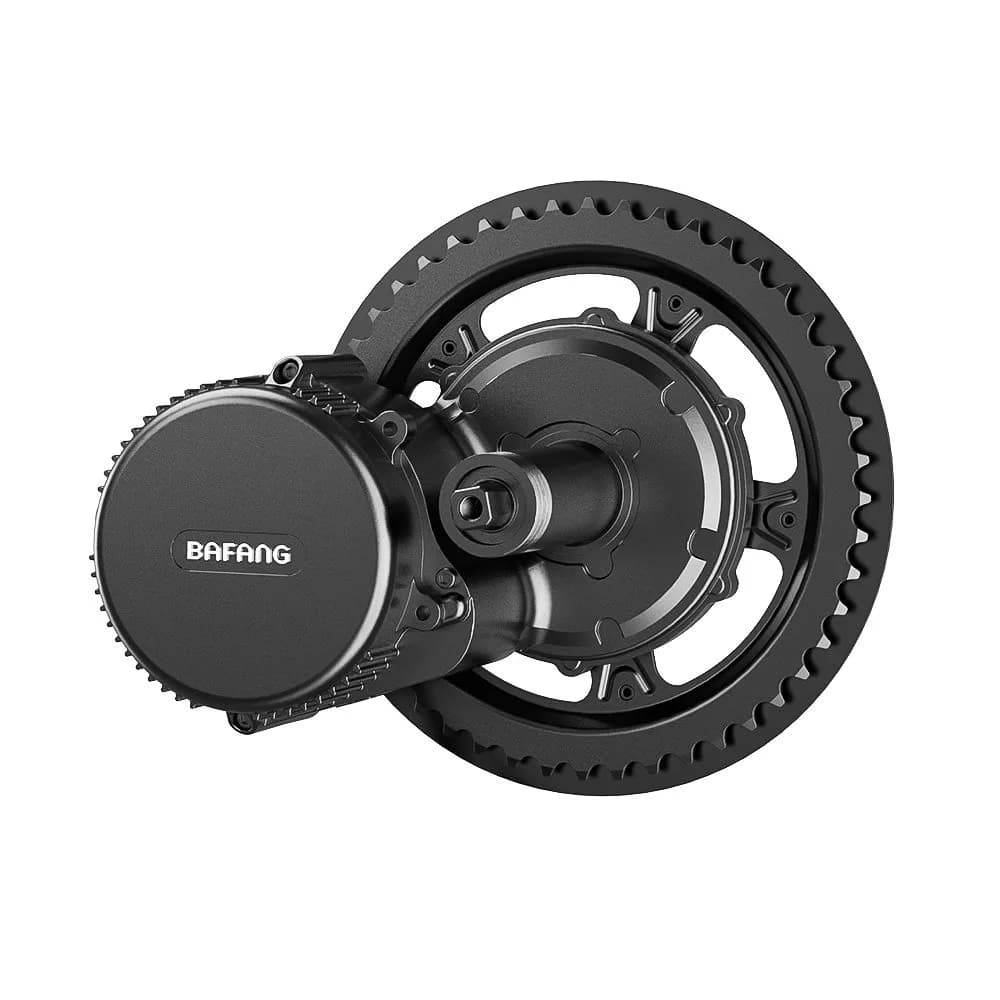
A Varstrom Bafang mid-drive kit converts a standard bicycle into an electric bike by mounting a torque-sensor motor at the pedals instead of swapping the whole bike out for a factory e-bike. If you already own a bike you like and just want pedal-assist power, a conversion kit is the cheapest, most flexible way to get there, and Varstrom (gearova.com's featured mid-drive supplier) has built its whole catalog around Bafang and Tongsheng motor technology. This guide walks through what these kits are, how they work, and what to check before you buy one.
- What is a mid-drive conversion kit?
- How Varstrom mid-drive kits work
- Benefits and who it helps
- Bafang vs. Tongsheng: choosing a motor family
- Hub motor vs. mid-drive: the real tradeoff
- Frame compatibility: what to check first
- Risks, myths, and common mistakes
- Alternatives and related approaches
- Getting started
Mid-drive kits suit riders who want hill-climbing power and a natural pedaling feel; hub kits suit riders who want the fastest, simplest install.
Read on for the full breakdown of motor options, hub-vs-mid-drive tradeoffs, and how to confirm your frame will fit before you order.
What you'll learn
- What a mid-drive conversion kit is and how it differs from a hub motor kit
- The Bafang and Tongsheng motor lineups Varstrom builds its kits around
- How to check whether your bike frame can accept a mid-drive motor
- Common mistakes first-time converters make and how to avoid them
- Where to go next if you'd rather buy a complete e-bike instead
What is a mid-drive conversion kit?
A mid-drive conversion kit replaces (or adds alongside) your bike's bottom bracket with a motorized crank unit that drives the existing chain and gears, the same way your legs already do. This is the core idea behind every Varstrom Bafang mid-drive kit: instead of spinning a wheel directly, the motor multiplies the torque you put into the pedals, so the bike still feels like a bike, just with help on hills and long rides.
Varstrom has operated as an official Bafang Cooperation Brand since 2018, building close manufacturing partnerships with Bafang, Tongsheng (TSE), and AIKEMA. That relationship is why the catalog leans so heavily on Bafang and Tongsheng hardware rather than generic, unbranded motors.
How Varstrom mid-drive kits work
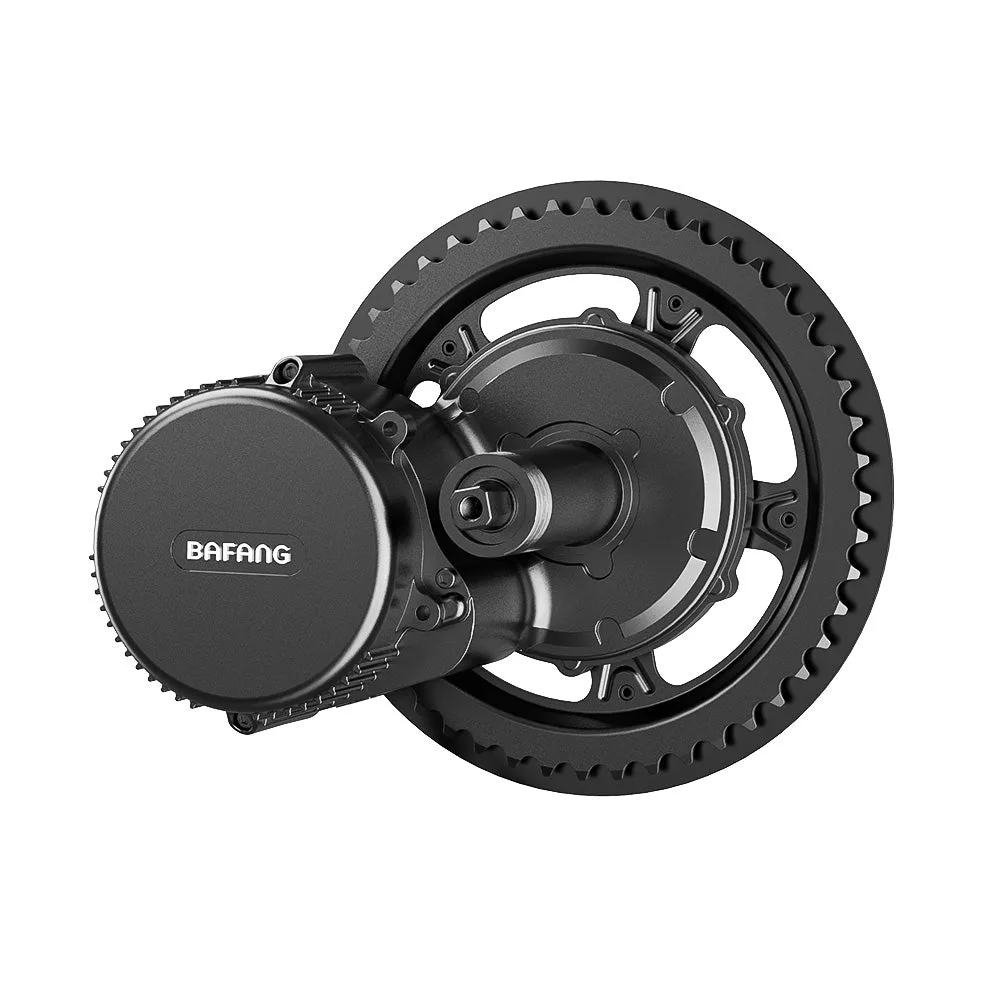
Every Varstrom mid-drive kit is built around a torque-sensor motor that measures how hard you're pedaling and adds proportional power through the crank. Varstrom's Bafang M-series lineup spans the M215 (250W urban), M315 (750W eMTB), M615 (1000W performance), and the newer M625, available in 500W, 750W, and 1000W variants, all of which integrate directly with standard cranks and chainrings.
Alongside Bafang, Varstrom supplies Tongsheng TSE mid-drive motors, including the TSDZ16 (48V 1000W UART), TSDZ8 (48V 750W UART), and TSDZ2B (36V 250W or 48V 500W). Tongsheng motors use cadence or torque-sensor technology, which Varstrom's own product documentation describes as delivering a smoother, more natural pedaling feel than a comparable hub motor.
Power comes from a downtube-mounted or rear-rack battery, available across three voltage tiers: 36V, 48V, and 52V, with higher-voltage packs delivering more torque and top speed at the cost of some range per charge. Matching the battery to the motor controller is what determines real-world performance, so this is worth double-checking against the specific kit's listed compatibility before ordering.
Benefits and who it helps
A conversion kit makes the most sense for riders who already own a bike they like the fit and geometry of, and simply want pedal-assist power added rather than buying a whole new e-bike. Commuters climbing hills on the way to work, cargo haulers, and anyone converting a mountain bike for technical trail riding are the clearest use cases for a mid-drive kit specifically, since the motor sits low and central, keeping the bike's weight distribution close to how it rides unpowered.
Varstrom backs its kits with a 1-year free warranty on motors, batteries, and displays, plus 2 years of after-sales maintenance service, a 6-month warranty on accessories, and a 10-day no-reason return policy (the buyer covers return shipping). For international buyers, Varstrom maintains regional warehouses across North America, Europe, the UK, Canada, Australia, and several Asian markets, with standard delivery in 2–8 business days depending on location.
Bafang vs. Tongsheng: choosing a motor family
Both motor families use torque or cadence sensing rather than the throttle-only feel of a simple hub motor, but they come from different manufacturers with slightly different personalities. Here's how the category-level choice breaks down before you look at a specific kit.
| Category | Bafang M-series | Tongsheng TSDZ |
|---|---|---|
| Power range | 250W–1000W (M215 to M625) | 250W–1000W (TSDZ2B to TSDZ16) |
| Sensor type | Torque sensing via crank | Cadence or torque sensing (model-dependent) |
| Typical use case | Urban commuting to eMTB performance | Smooth, natural-feel assist |
| Warranty (via Varstrom) | 1-year motor warranty + 2-year service | 1-year motor warranty + 2-year service |
Neither family is universally "better". The practical decision usually comes down to which specific kit's power rating and mounting hardware match your bike and riding goals, not the badge on the motor casing.
Hub motor vs. mid-drive: the real tradeoff
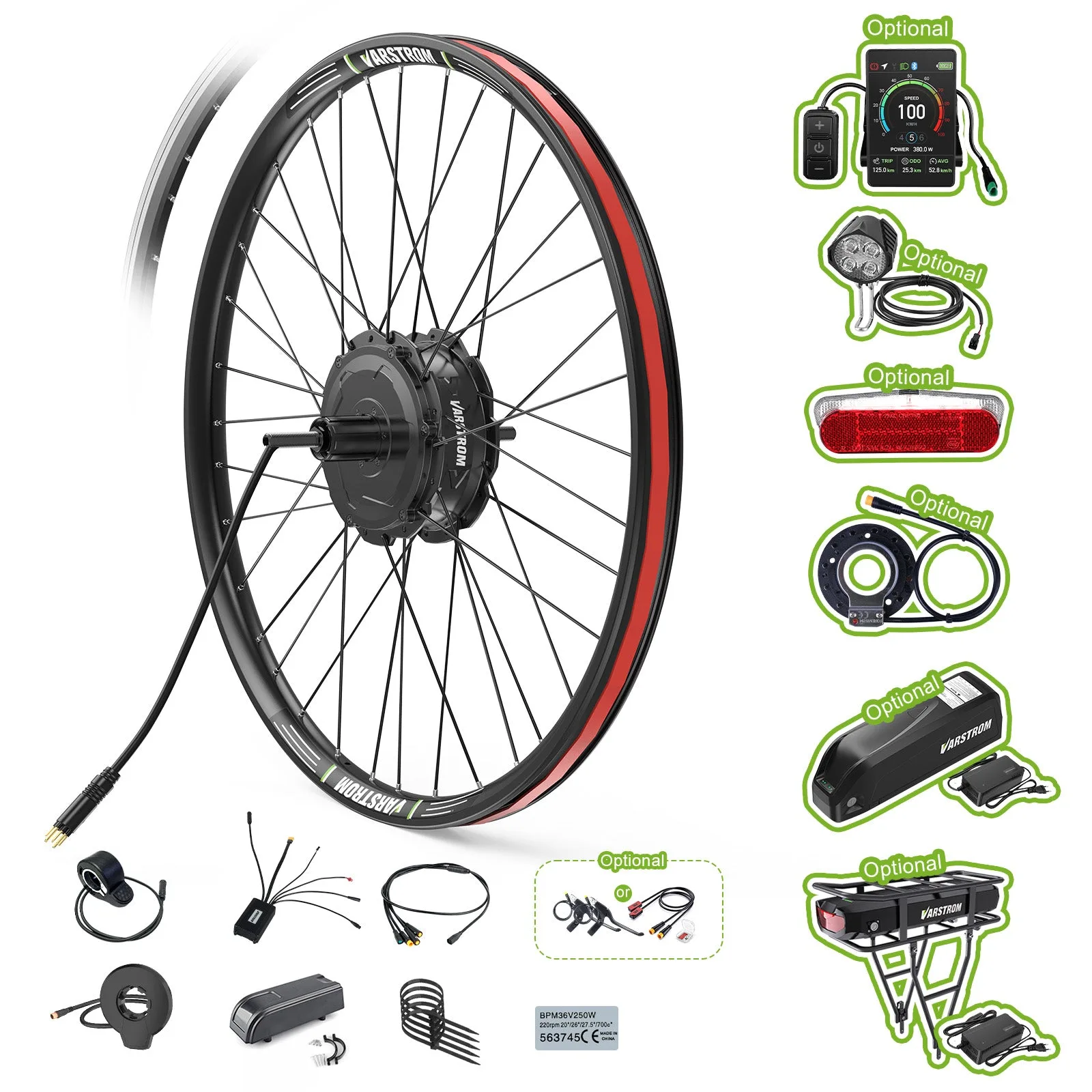
Varstrom also sells Bafang and AIKEMA-branded hub motors as an alternative to mid-drive, and the choice between the two motor types matters more than which brand you pick. Hub motor conversions install directly into the existing wheel dropout with no frame compatibility checks required, making them the faster install, while mid-drive motors mount at the pedals, requiring frame compatibility but preserving the bike's natural geometry and weight distribution. Hub motors can also lift the front wheel on hard acceleration or slightly affect steering feel, something mid-drive kits avoid because the power still routes through the chain and gears.
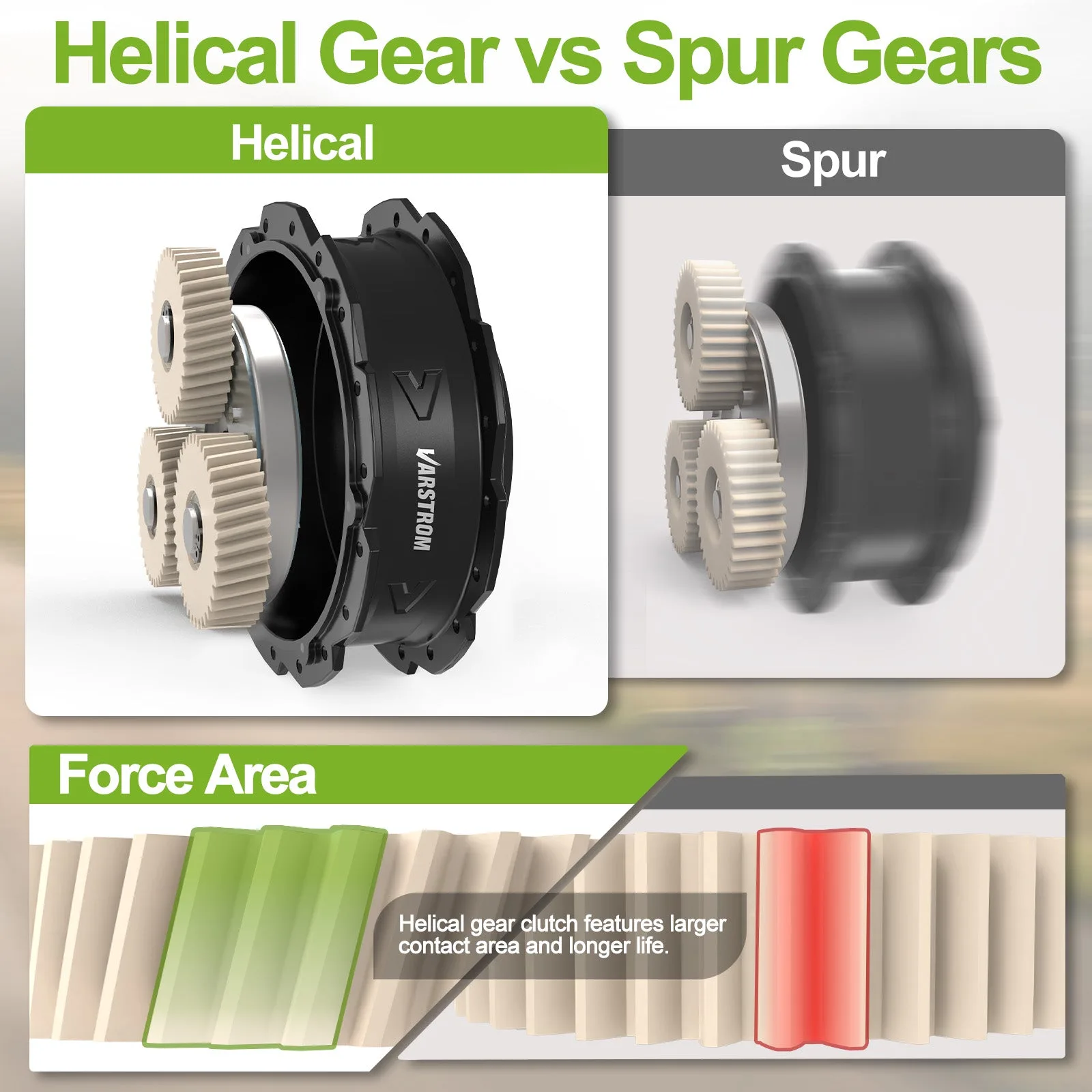
Varstrom's hub lineup spans 48V 500W up to 48V 1500W, across 20\", 26\", 27.5\", and 700C wheel sizes, in both disc-brake and V-brake configurations. The AIKEMA rear hub, for example, delivers 65N.m of torque at rated power with over 75% efficiency, while the front hub variant reaches a top speed of 44 km/h. Newer AIKEMA hub kits also use helical gears instead of spur gears, which Varstrom's technical documentation credits with quieter operation that meets EU, UK, and US noise regulations and over 60% longer motor lifespan versus spur-gear designs.
If you're not sure which type fits your riding, treat it as a simple filter: pick hub for the easiest possible install on almost any bike, pick mid-drive if you want the ride feel and hill performance closer to a factory-built e-bike.
Frame compatibility: what to check first
Because a mid-drive motor mounts at the bottom bracket, frame fit is the single most important thing to verify before ordering a Varstrom Bafang mid-drive kit. Bottom bracket shell diameter and crank arm length must match the motor's specifications, and the frame needs adequate clearance from the chain stays, drop-outs, and crank arms; full-suspension bikes, very small frames, or frames with rear disc brakes can sometimes create fit problems.
Before buying, measure your bottom bracket shell and compare it against the kit's published compatibility chart, and physically check chain-stay clearance around where the motor housing will sit. If your frame is a full-suspension mountain bike or has an unusual bottom bracket standard, a hub motor kit sidesteps this compatibility question entirely, since hub kits arrive as a complete pre-assembled wheel with the motor, controller, spokes, and rim already built, plus the chain ring, throttle, brake sensors, and wiring harness included, and simply bolt into the existing dropout.
Risks, myths, and common mistakes
The most common conversion-kit mistake is ordering a mid-drive motor without measuring the bottom bracket first, then discovering it doesn't clear the frame. A close second is mismatching battery voltage to the motor controller. A 36V pack on hardware expecting 48V (or vice versa) will underperform or may not be supported by the manufacturer at all, so always confirm compatibility against the specific kit listing rather than assuming any battery works with any motor.
It's also a myth that hub motors are always "worse" than mid-drive. They're simply optimized for a different job: fast installation on almost any bike, without any frame-compatibility risk. And it's a myth that all mid-drive kits ride identically; torque-sensing response, wattage, and gear-noise levels vary meaningfully between the Bafang and Tongsheng lineups described above, so matching the specific model to your use case matters more than the brand name.
Finally, don't skip reading the warranty terms before buying. Varstrom's coverage is solid on paper, but knowing exactly what's covered (motor, battery, display) versus what carries a shorter accessory warranty helps set realistic expectations if something needs replacing later.
Alternatives and related approaches
A conversion kit isn't the only path to an electric ride. If you don't already own a bike worth converting, or you'd rather skip the install entirely, a complete factory e-bike may be the simpler option. See our guide on how to buy your first electric bike for a broader framework on choosing between a conversion and a ready-built model.
Riders comparing conversion kits against other budget-friendly kits should also look at the YOSE POWER A3 Pro, a lower-cost conversion option worth weighing alongside Varstrom's Bafang and Tongsheng lineups. And if you decide a complete e-bike fits your budget better than a DIY conversion, our roundup of the best budget electric bikes of 2026 and our SMLRO dual-motor fat-tire brand guide cover ready-to-ride alternatives at a range of price points.
Getting started
If you've confirmed your frame is compatible (or decided a hub kit sidesteps that question), the practical next steps are: measure your bottom bracket and wheel size, decide on 36V/48V/52V battery voltage based on how much range and torque you want, and pick disc or V-brake hardware to match your current setup. Varstrom's product pages list these specifications per kit, so cross-checking your measurements against the listing before ordering saves the most common return-and-reorder headache.
If you're ready to start comparing specific kits, Varstrom's current mid-drive and hub lineup is worth a look as a trusted starting point for either path.
Where to go next
A Varstrom Bafang mid-drive kit is worth considering if you already have a bike you like and want hill-climbing, natural-feeling pedal assist without buying a whole new e-bike. Just measure your bottom bracket and frame clearance first. If your frame doesn't fit a mid-drive motor, or you'd rather skip the compatibility check altogether, a hub motor kit or a complete e-bike are both solid fallback paths.
Browse Varstrom conversion kitsSources
This guide is for general educational purposes and reflects manufacturer-published specifications at the time of writing. E-bike conversion involves mechanical and electrical work; if you're not comfortable with bicycle maintenance, have the installation checked by a qualified bike mechanic, and always follow local regulations for e-bike power and speed limits.
More E-Bikes & Scooters guides
 Revibikes Models Compared: 5 Best Picks by Rider Type (2026)
 Varstrom E-Bike Conversion Battery: Voltage & Capacity Guide (2026)
 Asiwo MAKO Review 2026: Best Entry-Level Sea Scooter?
 Soleil Supplies Review 2026: Best Tuttio & Yozma Upgrade Parts
 KuKirin Electric Scooters: Safe Buyer's Guide to All 14 Models (2026)
 ONESPORT Ebike Review 2026: 8 Models Compared, Best Picks