First E-Bike in 2026? Read This Before You Spend a Dollar
How to buy an electric bike in 2026: battery, motor, class, and brakes explained simply, plus the budget mistakes to avoid before your first e-bike purchase.
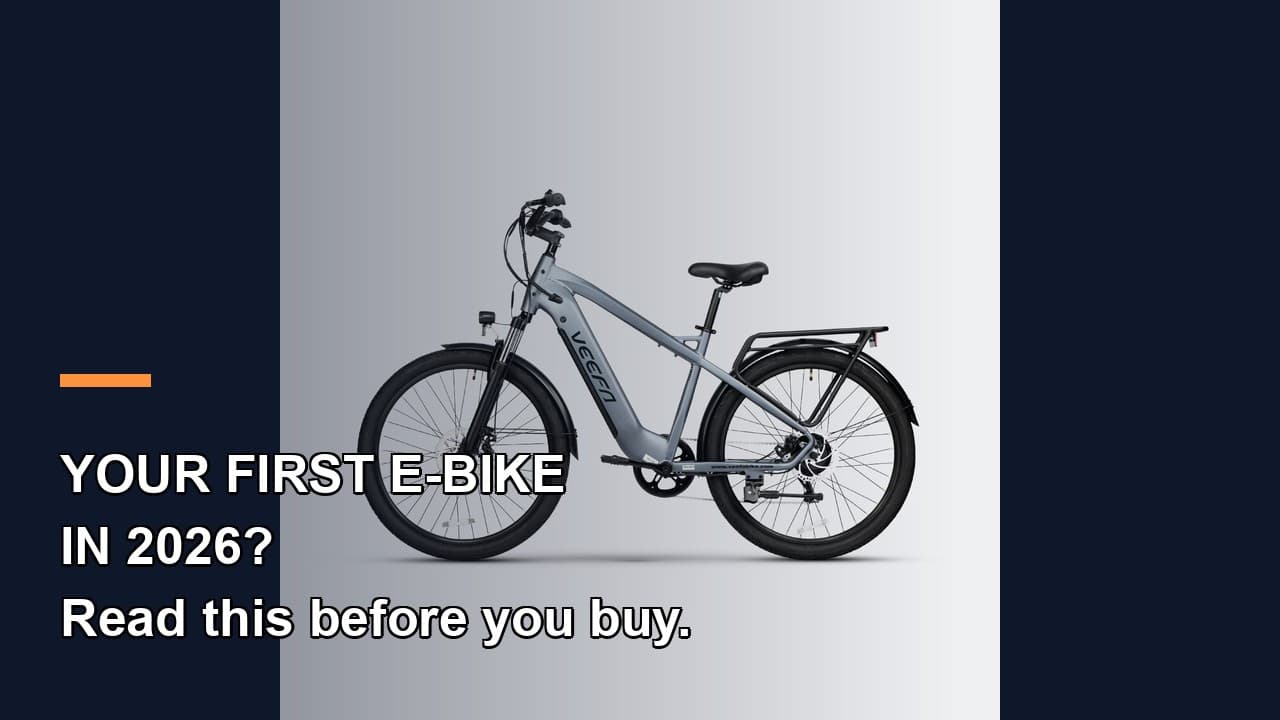
How to Buy an Electric Bike: Start With How You’ll Ride
- How to Buy an Electric Bike: Start With How You’ll Ride
- Step 2: The Battery — The Most Important Number
- Step 3: The Motor — Enough Power for Your Hills
- Step 4: Understand E-Bike Classes and Speed
- Step 5: Brakes, Tires, and Fit
- The Budget Mistakes First-Time Buyers Make
- Where to Buy: Direct-to-Rider vs Local Shop
- Frequently Asked Questions
Learning how to buy an electric bike is mostly about learning which four numbers actually matter and ignoring the marketing noise around everything else. If you’re buying your first e-bike in 2026, the good news is that the technology has matured: even budget bikes now ship with the battery, motor, and brake specs that used to be premium-only. The bad news is that the market is flooded, and a confident-sounding listing can still hide a 36V battery, sealed-in pack, or rim brakes behind a big “60 MILES!” banner.
This guide walks you through exactly what to evaluate — battery, motor, e-bike class, brakes, and fit — in plain language, then covers the budget mistakes that cost first-timers the most money. By the end you’ll be able to read any e-bike listing and know in 60 seconds whether it’s a real deal or a trap.
How to Buy an Electric Bike: Start With How You’ll Ride
Before any spec, answer this honestly: what is 80% of your riding going to be? The answer points you straight at a category and saves you from overpaying for capability you won’t use.
- Tight storage, short-to-medium commutes, multimodal (train/car/RV): a folding e-bike. Compact, storable, easy to carry one flight.
- Mostly pavement, daily commuting, errands, distance: a city/commuter e-bike with larger wheels for speed and range.
- Gravel, trails, cargo, heavier riders, maximum range: a fat-tire e-bike with a bigger motor and battery.
Matching the bike to your real riding is the single most important decision — more than brand, more than price. A 70 lb fat-tire bike is the wrong tool for a fifth-floor walk-up, and a folder is the wrong tool for a 20-mile gravel commute.
Step 2: The Battery — The Most Important Number
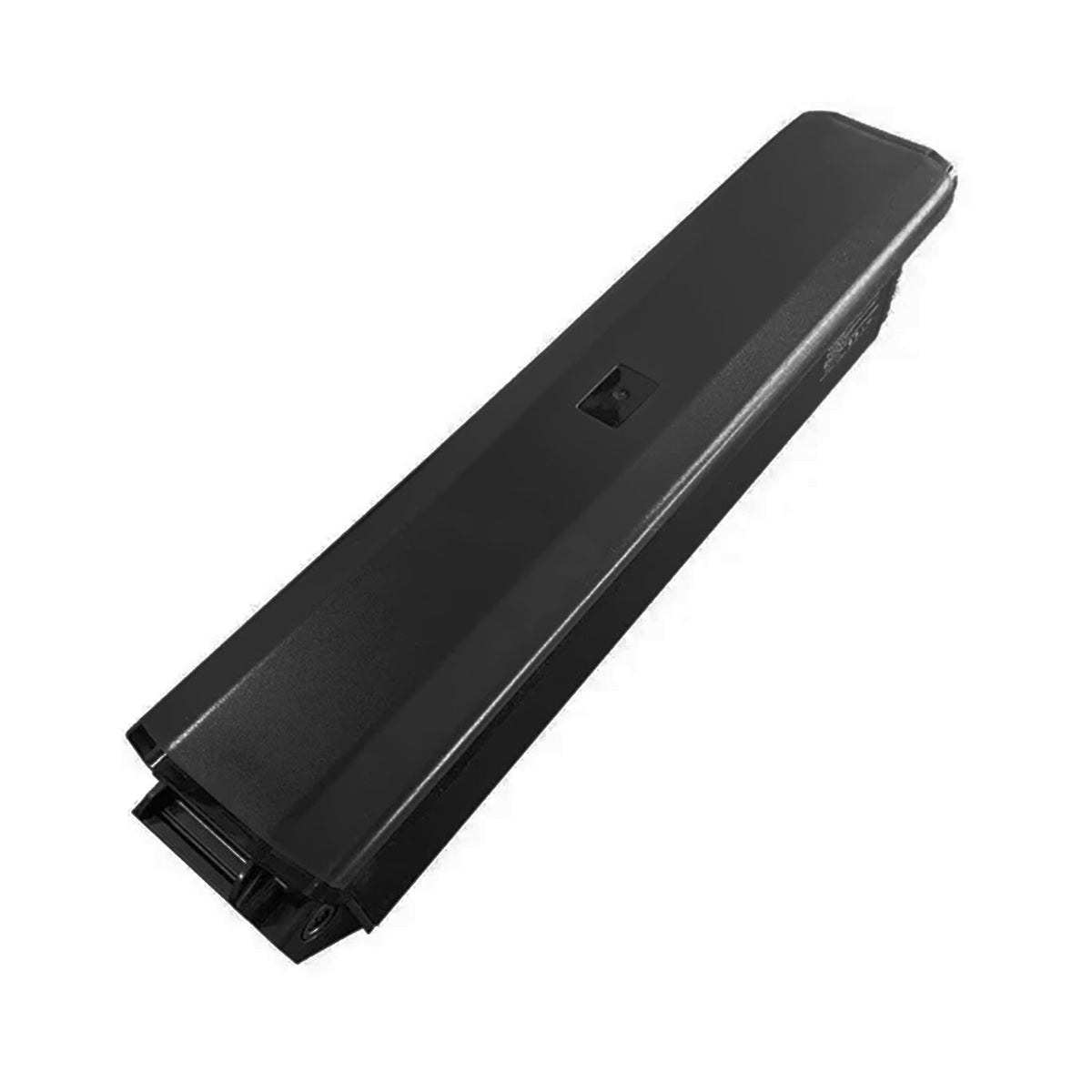
If you read one spec, read the battery. It determines range, longevity, and resale value. Here’s how to buy an electric bike battery without getting fooled:
- Voltage: insist on 48V. A 48V system delivers power efficiently and holds up on hills and in cold. 36V bikes look cheaper but their real-world range and torque disappoint. This is the line between a budget bike and a cheap one.
- Capacity: look at watt-hours (Wh), not just Ah. Wh = volts × amp-hours, and it’s the true “fuel tank” size. 480Wh or more is the floor for a usable commuter. For reference, a quality budget pack like Veefa’s is 499Wh (48V × 10.4Ah), and their fat-tire platform steps up to 720Wh (48V × 15Ah).
- Removable: non-negotiable. A removable battery lets you charge indoors (critical in winter — lithium hates charging in the cold) and means you can replace the pack in a few years instead of scrapping the bike.
Range reality check: take any advertised range and multiply by 0.6–0.75. That’s what you’ll actually get with hills, throttle, and a normal-weight rider. A bike rated “up to 80 miles” realistically does 50–65; one rated “30–40” does 24–30.
Step 3: The Motor — Enough Power for Your Hills
Motor power is quoted two ways, and you need both numbers. Nominal (continuous) wattage is what the motor sustains; peak is the short burst it can hit. For a first e-bike:
- 500W nominal is the practical minimum for confident riding on urban hills. It’s what bikes like the Veefa F1 and M2 use, and it climbs ~8% grades without bogging.
- 750W nominal (often paired with higher torque, e.g. 85 Nm) is what you want for fat-tire bikes, cargo, heavier riders, or steep terrain.
- Torque (Nm) matters more than peak watts for climbing. If a listing brags about peak watts but hides torque, be skeptical.
Don’t overbuy. A 500W bike is plenty for the vast majority of commuters and costs less. Save the 750W+ money for riders who genuinely face steep or loaded conditions.
Step 4: Understand E-Bike Classes and Speed
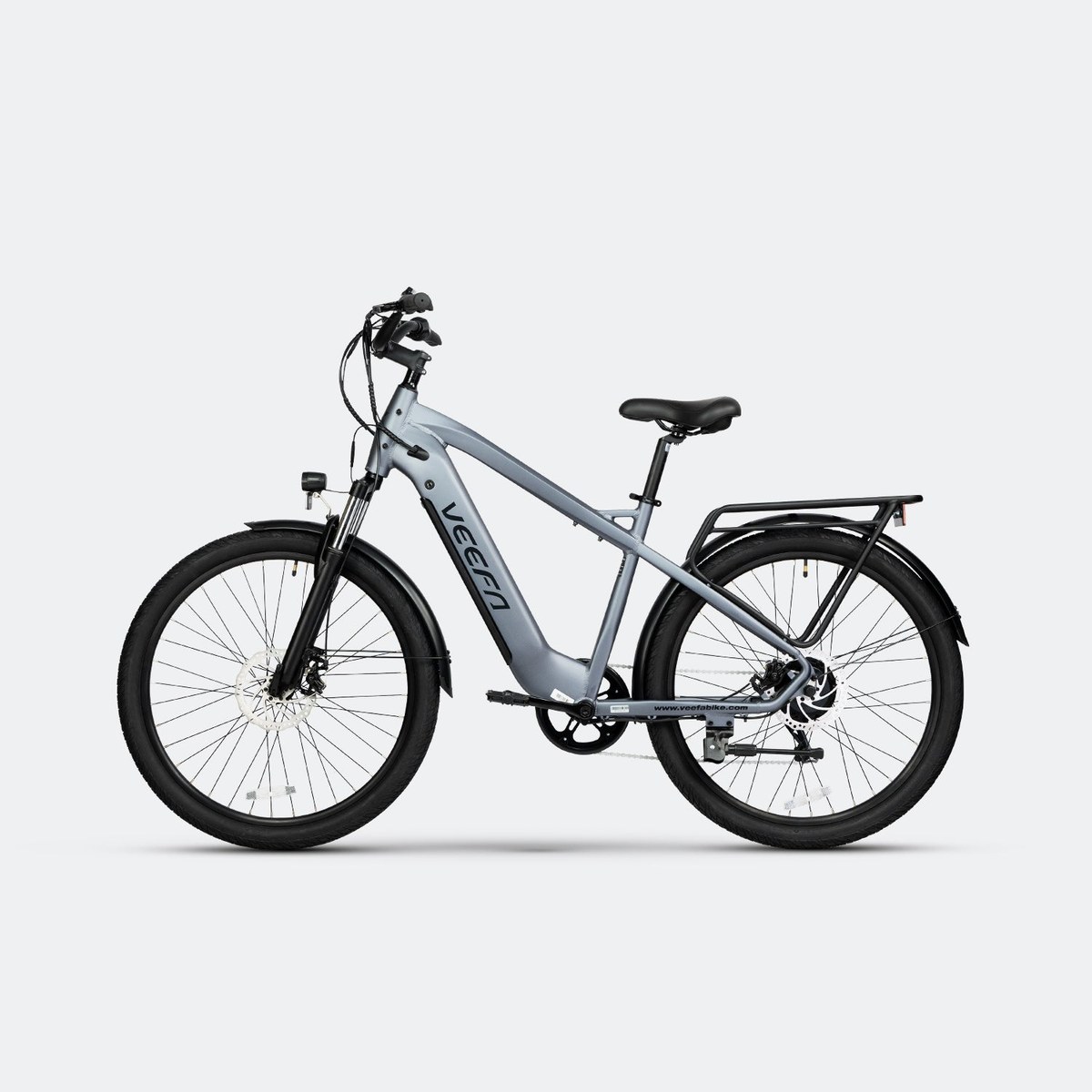
E-bike “class” determines where you can legally ride and how fast the motor will help you. In the U.S.:
- Class 1: pedal assist only, up to 20 mph. Allowed on most bike paths and trails.
- Class 2: pedal assist plus throttle, up to 20 mph. Most budget commuters (including the Veefa F1) are Class 2 — the throttle is great for starting from stops.
- Class 3: pedal assist up to 28 mph, usually no throttle. Faster commuting, but restricted from some paths.
Check your local rules before buying — some bike paths ban throttles (Class 2) or cap speed. For most first-time city riders, a Class 2 bike at 20 mph is the sweet spot of usable speed and broad legality. Bikes like the Veefa M2 offer up to 24 mph on pedal assist with a 20 mph throttle, giving you headroom without jumping to a restricted class.
Step 5: Brakes, Tires, and Fit
The components that keep you safe and comfortable:
- Brakes: Demand disc brakes, front and rear. On a 55+ lb bike at 20 mph, rim brakes are inadequate. Mechanical discs (cable) are easy to service yourself and totally fine on a budget; hydraulic discs feel nicer and cost more. Either beats rim brakes. A motor cut-off (power dies when you brake) is a must-have safety feature.
- Tires: Wider tires (3″+ or fat) add comfort and grip on rough surfaces; narrower 2.2–2.5″ tires roll faster on pavement. Match to your terrain.
- Fit and load: Check the max load rating (rider + cargo) — quality budget bikes rate around 297–300 lbs. Confirm the standover height and seatpost range fit your body.
The Budget Mistakes First-Time Buyers Make
These are the errors that turn a “great deal” into a money pit:
- Buying on range claims alone. The biggest banner number is the least reliable. Apply the 0.6–0.75 multiplier and judge by watt-hours, not the marketing figure.
- Ignoring the warranty and parts catalog. This is the difference between a budget bike and a disposable one. Before you buy, confirm the brand sells replacement parts — batteries, controllers, displays, tires. Veefa, for example, backs bikes with a 2-year warranty, free shipping to the lower 48, a 14-day return window, and a full parts store. A no-name bike with none of that is a gamble.
- Overpaying for a name. In 2026, direct-to-rider brands ship near-identical specs for $400–$1,000 less than legacy brands by cutting retail markup, not components. Our best budget electric bikes of 2026 roundup shows exactly where the value lands.
- Skipping the test of real ownership. Read a hands-on, high-mileage review before committing. Our 500-mile Veefa electric bike review is the kind of long-term test that reveals what a launch-day spec sheet can’t.
Where to Buy: Direct-to-Rider vs Local Shop
In 2026 you have two real paths. A local bike shop lets you test-ride and hands you a fully assembled bike with service on tap — you pay for that convenience in price and a thinner selection of budget models. Direct-to-rider brands ship the bike to your door (about 85% pre-assembled), skip the retail markup, and pass the savings to you — the trade is a 30-minute assembly and handling minor maintenance yourself or at a local shop.
For most budget buyers, direct-to-rider wins on price by a wide margin, as long as the brand backs it with a warranty and parts. Whichever path you choose, do the assembly check on arrival: torque the stem and seatpost bolts to spec, confirm both brakes engage firmly before the wheel locks, check tire pressure against the sidewall rating, and take a slow first lap somewhere traffic-free to feel out the throttle and assist levels.
Frequently Asked Questions
How do I buy an electric bike as a beginner?
Start by choosing a category (folding, city, or fat-tire) based on how you’ll ride, then verify four specs: a 48V removable battery of 480Wh+, a 500W+ motor, disc brakes front and rear, and a real warranty with available parts. Apply a 0.6–0.75 multiplier to any advertised range to estimate real-world distance.
What is the most important thing when buying an electric bike?
The battery. A 48V, 480Wh+, removable battery determines your real range, cold-weather performance, longevity, and whether the bike is repairable in a few years. It’s the line between a true budget bike and a cheap, disposable one.
How much should I spend on my first electric bike?
In 2026 you can get a fully-specced first e-bike for $599–$799 from direct-to-rider brands — for example, the Veefa F1 ($599) or M2 ($699). Spending more mainly buys brand name, hydraulic brakes, or premium finishing, not fundamentally better core specs.
What e-bike class is best for a beginner?
Class 2 (pedal assist plus throttle, up to 20 mph) is ideal for most first-time city riders — the throttle helps you start from stops and the 20 mph cap is legal on most paths. Check local rules, since some trails restrict throttles or higher speeds.
Do cheap electric bikes need a lot of maintenance?
A well-specced budget bike needs basic upkeep: occasional brake cable adjustment (for mechanical discs), tire pressure checks, chain lubrication, and charging the battery indoors. With a removable battery and an available parts catalog, ownership costs stay low.
Now that you know how to buy an electric bike, the buying decision comes down to matching a category to your ride and refusing to compromise on the battery and brakes. If you want a shortlist that already clears every box in this guide, see our best budget electric bikes of 2026 — or browse the full Veefa lineup and current pricing here.
#ad · This post contains affiliate links. We may earn a commission at no extra cost to you.
More E-Bikes & Scooters guides
 ONECNA GT7 Review 2026: Specs, Range and Real Repairability
 Tuttio Electric Bike Guide: 4 Models Compared Safely (2026)
 NIU Electric Scooter vs E-Bike: Best Model Guide (2026)
 A-Spadz CAVET Review: Moped-Style Electric Bike
 A-Spadz CAVET Buying Guide: 3 Models Compared for 2026
 Off-Road Electric Scooter: 6 Best Buying Criteria (2026 Guide)