Nanrobot Electric Scooters: A Complete Brand Overview
A complete overview of the Nanrobot electric scooters lineup: motor power, range, suspension, braking and warranty compared across the D4+MAX, D6+MAX, N6 72V and LS7+ 72V, plus who each model actually fits.
What are Nanrobot electric scooters
Nanrobot electric scooters are built for riders who want serious motor power, real off-road range, and componentry that holds up past the first season, not another lightweight commuter toy. Founded in South Korea in 2015, Nanrobot has spent a decade building dual-motor scooters that scale from 500W city runabouts to a 6,000W flagship, and this guide walks through what the lineup actually offers, how the models differ, and how to figure out if one fits the way you ride.
Nanrobot electric scooters are dual-motor, direct-to-consumer models built for power and range, not budget commuting
If you're comparing Nanrobot electric scooters against lighter commuter brands, the short version is this: Nanrobot trades portability for power, suspension travel, and range: a fit for riders who want a scooter that behaves more like a small vehicle than a folding gadget.
- What separates Nanrobot from typical commuter-scooter brands
- The hardware behind Nanrobot's suspension, braking and battery systems
- How the D4+MAX, D6+MAX, N6 72V and LS7+ 72V compare on paper
- Who actually benefits from this category of scooter, and who should look elsewhere
- The real trade-offs and questions to ask before buying
What are Nanrobot electric scooters
Nanrobot electric scooters come from a South Korea–based electric mobility manufacturer founded in June 2015. The company reports it did strong early sales within its first 10 days of launching, and rather than outsourcing production, it handles research, design and manufacturing in-house, expanding into electric bicycles in 2016 and dual-motor scooters in 2017, then entering US and European markets by 2019.
That vertical integration matters for a buyer because it means Nanrobot designs its own electrical control systems rather than assembling off-the-shelf components. The brand cites this as its core technical advantage. On the business side, Nanrobot sells exclusively through its own website with no third-party retailers, a direct-to-consumer model the brand frames as removing retail markup.
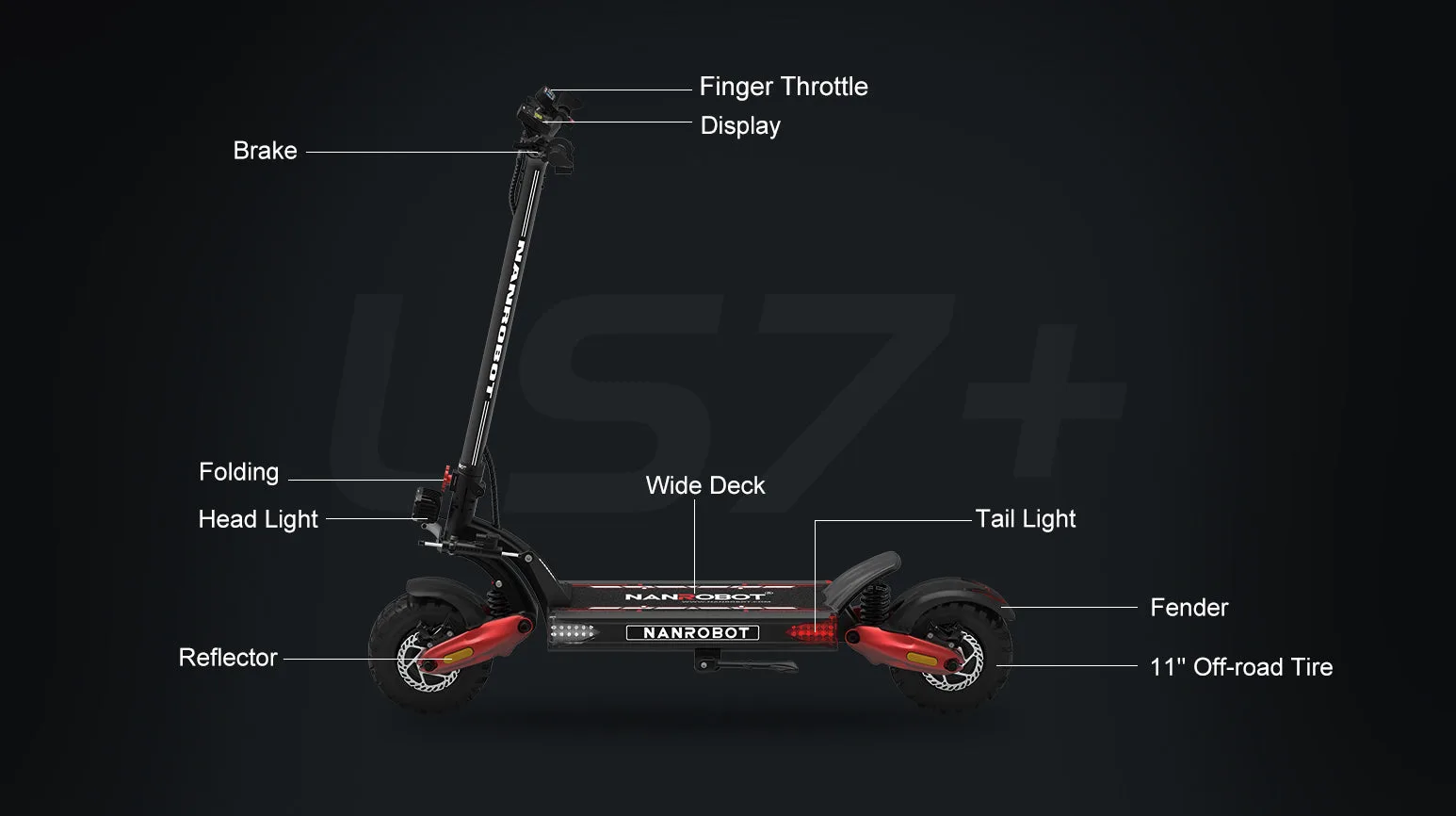
How Nanrobot scooters are built
Nanrobot holds ISO 9001 quality management certification, and the brand uses forged, not cast, frame materials for what it describes as better durability and weight capacity. Models are rated to a 330 lb max load with a claimed 10-year lifespan under regular use. The company also supplies original factory parts directly to owners, which supports longer-term repairs without hunting for third-party components.
The flagship-tier models (LS7+, N6, D6+MAX, D4+MAX) share a common hardware philosophy: adjustable KKE hydraulic suspension front and rear for absorbing rough pavement and light off-road terrain, paired with dual hydraulic NUTT brakes plus an electronic braking system (EBS) or electronic ABS. The LS7+ steps that up further with four-piston NUTT brakes for extra stopping power at higher speeds, and a free steering damper to reduce high-speed handlebar wobble.
Every model in the current lineup ships with a 12-month limited warranty covering manufacturing defects and a 15-day return window from delivery, provided the scooter is unused and in original packaging.
The Nanrobot lineup compared
Nanrobot's range spans a wide performance spectrum. Entry models like the C1 Pro use 500W motors (850W peak) with a 24.8 mph top speed, while the flagship line climbs all the way to 6,000W nominal power with a 10,000W peak rating. The table below compares the four flagship dual-motor models that define the Nanrobot electric scooters lineup today.
| Model | Motor power | Top speed | Max range | Best for |
|---|---|---|---|---|
| D4+MAX | 2,400W dual (1,200W ×2) | 42 mph (38–40 mph typical) | 40 miles | Lighter riders wanting entry into the flagship tier |
| D6+MAX | 3,000W dual (1,500W ×2) | 45 mph (38–42 mph typical) | 75 miles | All-terrain stability with tubeless 10-inch tires |
| N6 72V | 3,000W dual (1,500W ×2, 2,500W peak each) | 50 mph | 81 miles | Riders who want NFC unlock and ambient lighting extras |
| LS7+ 72V | 6,000W nominal (10,000W peak) | 74.5 mph (58–65 mph typical) | 81 miles | Experienced riders wanting the fastest Nanrobot model |
The D4+MAX is the outlier on capacity too. Its 265 lb max load is lower than the other three models, which are all rated to 330 lbs. Battery chemistry is consistent across the range: Samsung 21700 lithium cells, with the LS7+ using a 72V 35Ah pack (2,520Wh) and IP54 water resistance.
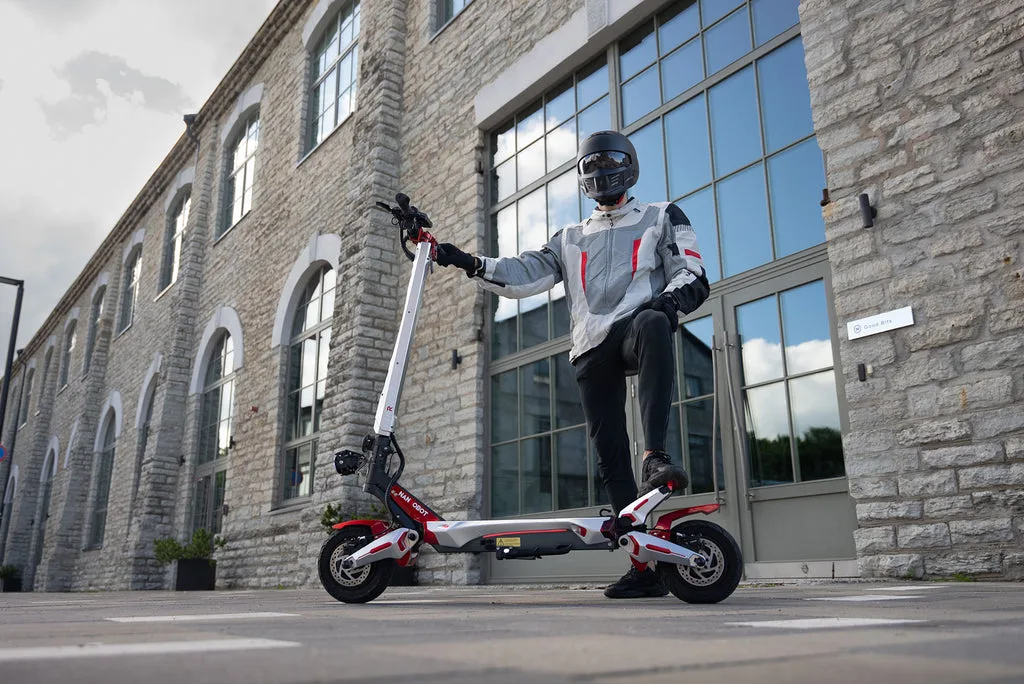
N6 72V and LS7+ 72V: the performance tier
The N6 72V pairs a 72V 30Ah Samsung 50S battery with dual hydraulic NUTT brakes, EBS, adjustable KKE suspension, and a 42 N·m torque rating. It also carries convenience features not found on the lower tiers: NFC unlock, a 64-color LED ambient lighting system with 36 modes, integrated turn signals and brake lights, and a claimed 3-second fold time.
The LS7+ 72V sits above it as Nanrobot's flagship: the numbers above make it the fastest and most powerful model the brand sells, and it's the only one with a four-piston brake upgrade and a 2,520Wh battery pack. This is a scooter built for experienced riders comfortable managing real motorcycle-adjacent speeds, not a first scooter.
Who Nanrobot scooters are for
Nanrobot positions itself toward high-performance mobility enthusiasts and commuters who prioritize durability, power and range over budget price. The brand's vertical integration, forged frame materials, ISO 9001 certification and long-lifespan claims are aimed at riders who want fewer trade-offs on reliability, even if the scooter itself is heavier and larger than a folding city commuter. The 500W-to-6,000W+ motor spread means the brand can serve both entry-level commuters on the C1 Pro tier and off-road, performance-focused riders on the LS7+ tier.
In practice, Nanrobot electric scooters make the most sense if you: commute longer distances and want range headroom rather than cutting it close every day; ride on mixed pavement, gravel or light off-road terrain where hydraulic suspension actually gets used; or want a scooter with hydraulic braking and dual-motor redundancy rather than a single small hub motor. If you mainly need something to fold into a backpack or carry up apartment stairs daily, a lighter commuter-class scooter will likely suit you better. See our guide to buying your first electric ride for a broader breakdown of what to prioritize.
Risks, trade-offs and common mistakes
The biggest trade-off with any dual-motor, large-battery scooter like the Nanrobot lineup is weight and footprint. A 75–81 mile max-range battery pack and dual 1,500W+ motors add real bulk. These are not scooters most riders will carry up multiple flights of stairs daily, and buyers coming from a lightweight commuter model should expect a heavier, larger machine.
Range figures are also worth reading carefully. Nanrobot's 81-mile N6 figure is tested at a 75kg rider load and a steady 25km/h. Real-world range on hillier terrain, colder weather, or with a heavier rider will come in lower. Treat manufacturer max-range numbers as a ceiling, not a guarantee.
Because Nanrobot sells direct-to-consumer with no third-party retail network, buyers should also plan around the brand's 15-day return window and 12-month warranty. Read the return and warranty terms on the official site before ordering, and confirm your local regulations around top-speed scooters like the LS7+, since a 74.5 mph rated top speed may not be street-legal in every jurisdiction.
Alternatives and related options
Nanrobot isn't the only brand building dual-motor, high-range scooters, if you're still comparing the category broadly, our Navee NT5 Max review and BOYUEDA off-road scooter comparison cover two other performance-oriented brands worth cross-shopping. If portability or budget matters more than raw power, our best budget e-bikes guide and SMLRO XDC600 PLUS review look at lighter-weight, lower-cost alternatives in the broader e-mobility space.
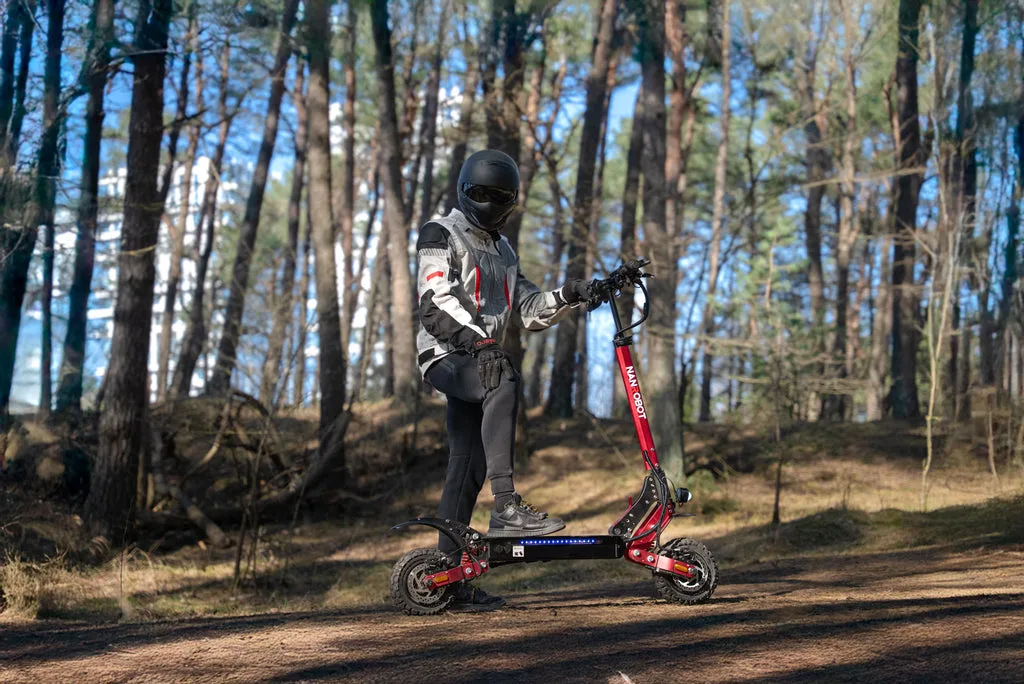
Getting started
Before buying any Nanrobot electric scooter, match the model to how you actually ride: the D4+MAX for lighter riders wanting entry into the dual-motor tier, the D6+MAX for all-terrain stability, the N6 72V for range plus convenience features, and the LS7+ 72V only if you want, and are comfortable managing, the fastest scooter in the lineup. Check current weight, local speed-limit rules for e-scooters, and the 15-day return window before ordering.
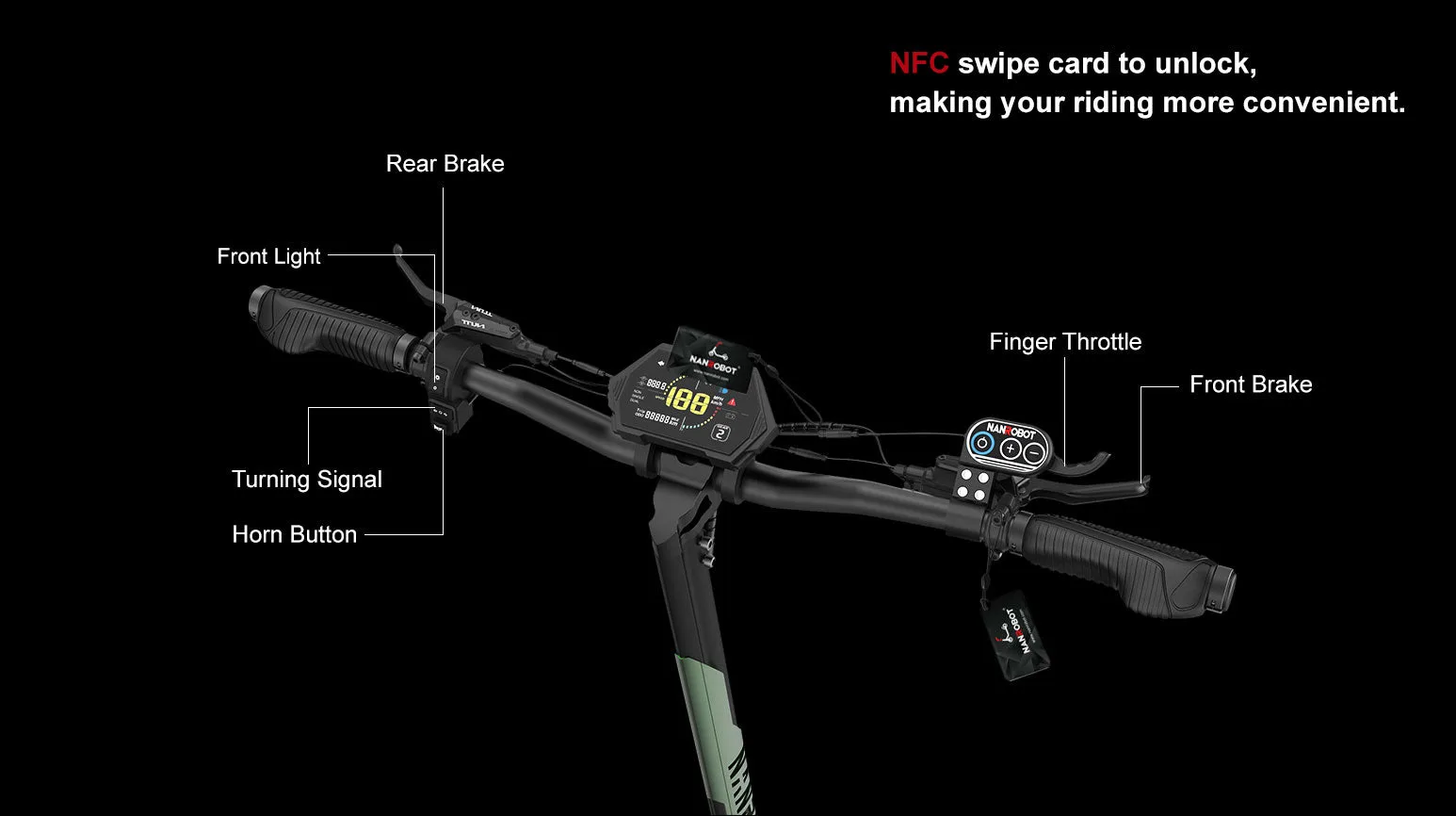
Nanrobot Electric Scooters: Official Lineup
Browse the full Nanrobot range direct from the manufacturer to compare current specs, availability and return terms before you decide.
Explore Nanrobot ScootersWhere to go next
Nanrobot electric scooters are built for riders who want dual-motor power, hydraulic suspension and real range over a lightweight folding design, a solid fit for performance commuters and off-road-curious riders, less so for anyone prioritizing portability. If you're ready to compare specific models side by side, our Navee NT5 Max review is a useful next stop; if you're just starting your research, the first e-bike buying guide covers the fundamentals that apply across brands.
Sources
This guide is for informational purposes only and reflects manufacturer-published specifications as of the last reviewed date. Electric scooter performance (range, speed, load capacity) varies with rider weight, terrain, temperature and maintenance. Check local laws on e-scooter speed limits and street legality before riding, and always wear appropriate safety gear.
More E-Bikes & Scooters guides
 Revibikes Models Compared: 5 Best Picks by Rider Type (2026)
 Varstrom E-Bike Conversion Battery: Voltage & Capacity Guide (2026)
 Asiwo MAKO Review 2026: Best Entry-Level Sea Scooter?
 Soleil Supplies Review 2026: Best Tuttio & Yozma Upgrade Parts
 KuKirin Electric Scooters: Safe Buyer's Guide to All 14 Models (2026)
 ONESPORT Ebike Review 2026: 8 Models Compared, Best Picks