Watermaker Maintenance and Buyer's Guide: Sizing, Membranes and Longevity
Sizing a marine or off-grid watermaker is only half the job. Watermaker maintenance is what decides whether the membrane lasts three years or seven. Here's how to choose the right output and keep it running.
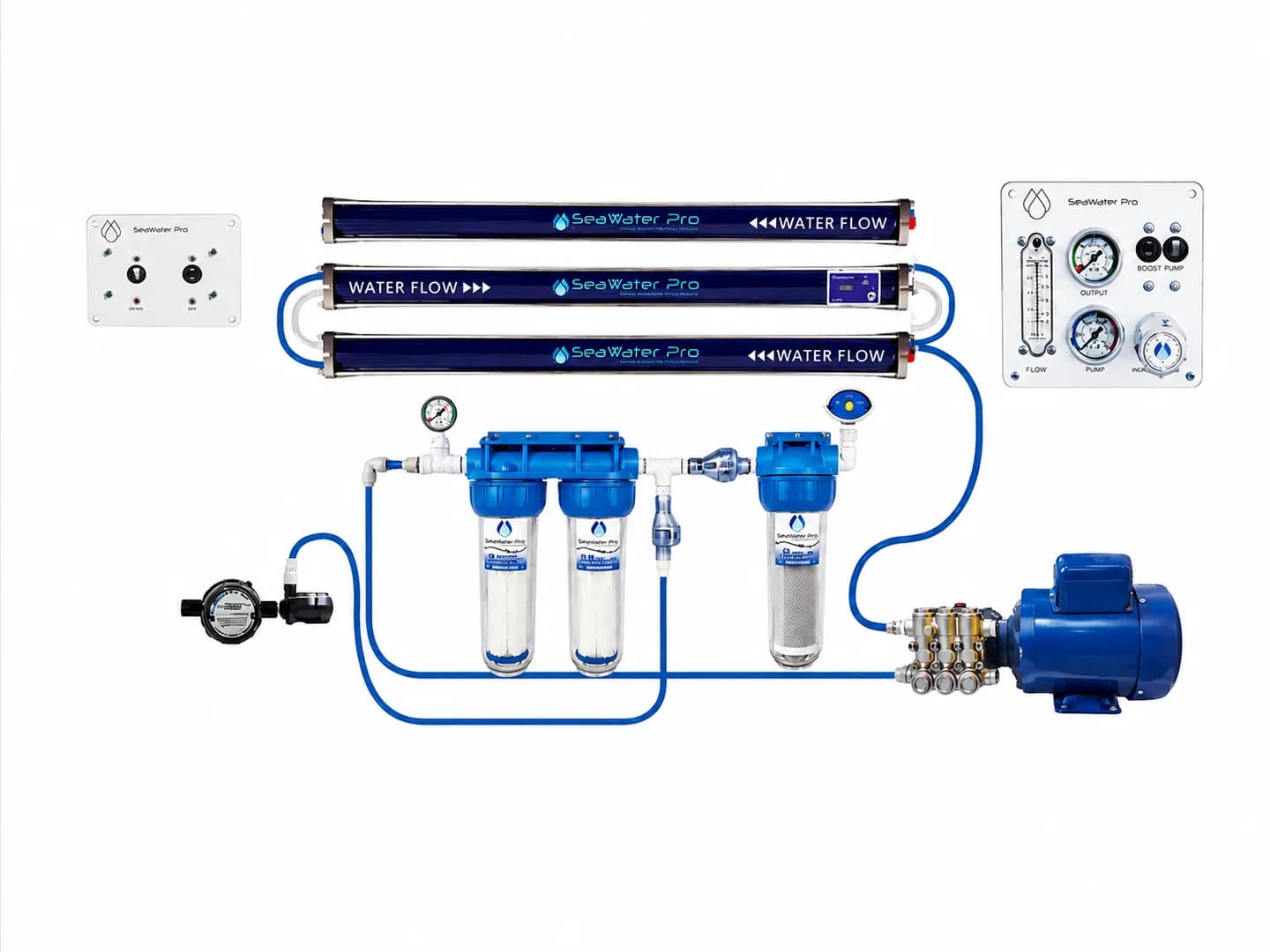
How reverse-osmosis watermakers work
- How reverse-osmosis watermakers work
- Sizing your watermaker: GPH and daily demand
- Choosing by use case: marine vs. off-grid land
- Watermaker maintenance: membranes, pre-filters, and pump care
- Pickling and winterizing your system
- Common mistakes that shorten membrane life
- Buying checklist: what to verify before you purchase
If you take away one idea from this guide, make it this: watermaker maintenance, not the machine itself, is what decides whether a reverse-osmosis system lasts three years or seven. Before you buy, you also need to size the unit correctly. Get either step wrong and you'll be replacing a membrane sooner than you should. This guide walks through sizing by gallons-per-hour (GPH), what actually wears a membrane out, and the maintenance routine that protects your investment, using Sea Water Pro's DC and AC lineup as the reference point.
Size by daily gallons, not by boat length: then commit to a maintenance routine before you buy
Watermaker maintenance is easiest when you match capacity to real daily demand rather than buying the biggest unit available. An oversized system just means more pre-filter changes and a bigger membrane to protect. Sea Water Pro's range runs from a 12–14 GPH portable AC unit up to a 60 GPH triple-membrane system, so most crews and off-grid households can size close to their actual usage.
Shop Sea Water Pro SystemsKey highlights
- RO membranes typically last 3–5 years with correct upkeep, up to 6–7 years under ideal conditions.
- Pre-filters need replacing every 3–6 months depending on water clarity. Skip this and the membrane fouls faster.
- A fouled membrane rarely recovers: roughly 90% of chemically cleaned membranes don't regain full performance.
- Sea Water Pro's DC lineup runs 17–40 GPH; the AC portable and triple-membrane units extend the range to 12–60 GPH.
- Idle more than 14–21 days? The membrane needs pickling, or it's at risk of biofouling.
How reverse-osmosis watermakers work
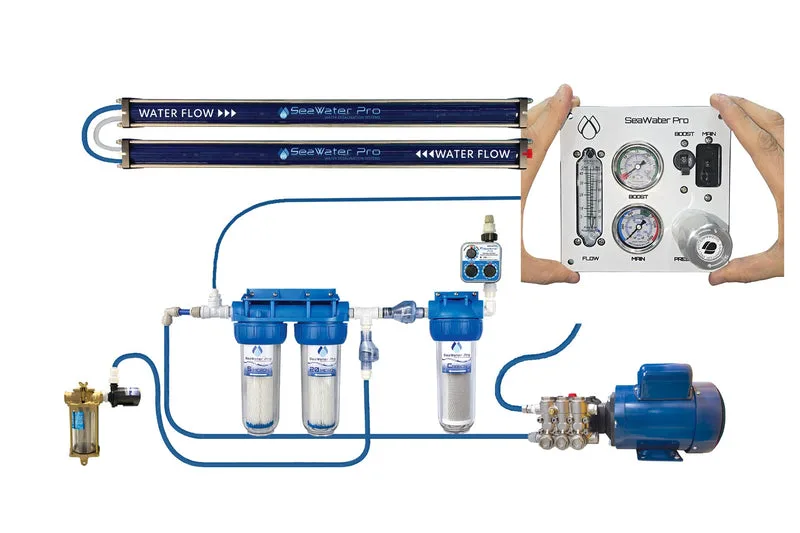
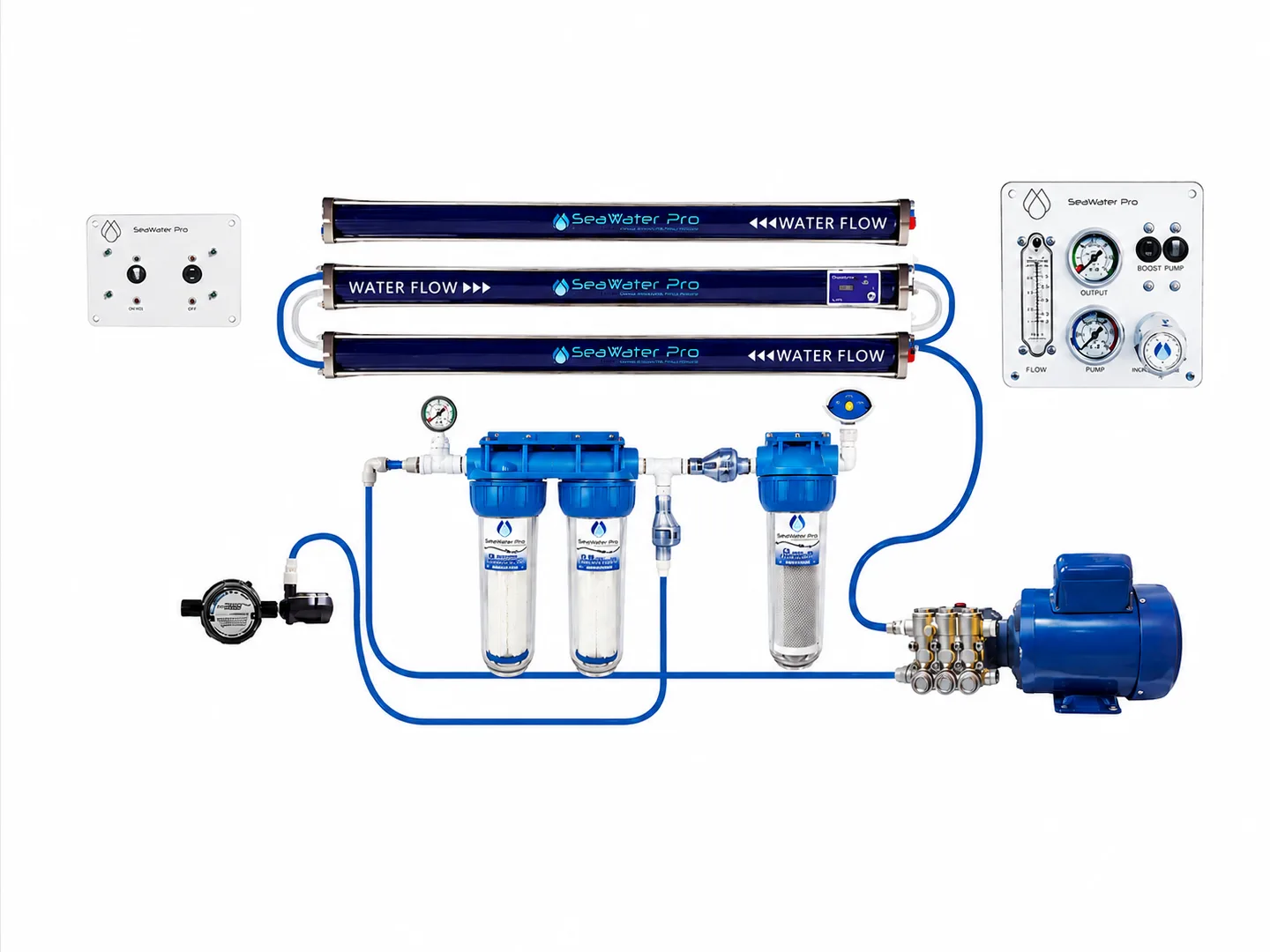
A watermaker draws in seawater below the waterline and pushes it through a pre-filtration stage to strip out sediment, plankton, and suspended organic matter. A high-pressure pump then pressurizes the pre-filtered water to roughly 600–1,000 psi and forces it through a semi-permeable RO membrane. Only water molecules pass through the membrane wall; salt and dissolved minerals are rejected into a concentrated brine stream that gets pumped back overboard. The result is typically 95–99% salt rejection, producing drinkable water straight from seawater.
Some modern marine systems add an energy-recovery device that captures hydraulic energy from the rejected brine stream and reuses it to help pressurize incoming water. This can cut total power consumption by 20–30%, which matters most on sailboats and off-grid installs running from a limited battery bank. Every stage in that chain (pre-filter, pump, membrane) has its own maintenance schedule, which is the part most first-time buyers underestimate.
Sizing your watermaker: GPH and daily demand
Watermakers are rated in gallons per hour (GPH) of fresh output, and sizing comes down to matching that number to how much water your crew or household actually uses per day, not to the size of your boat or property. Sailing yachts typically run systems producing 30–60 litres (about 8–16 gallons) per hour for multi-day offshore passages, while larger motor yachts and commercial vessels use systems generating several hundred litres per hour. Sea Water Pro's own range spans 12 GPH portable units up to 60 GPH triple-membrane systems, giving buyers room to size close to real demand instead of over-buying.
Compare Sea Water Pro Output OptionsChoosing by use case: marine vs. off-grid land
The right size depends on where and how the system runs. A single sailor or couple cruising offshore rarely needs more than a compact DC unit; a family living off-grid in a cabin or RV has steadier, higher daily demand; a larger yacht or commercial operation needs headroom for guests and crew.
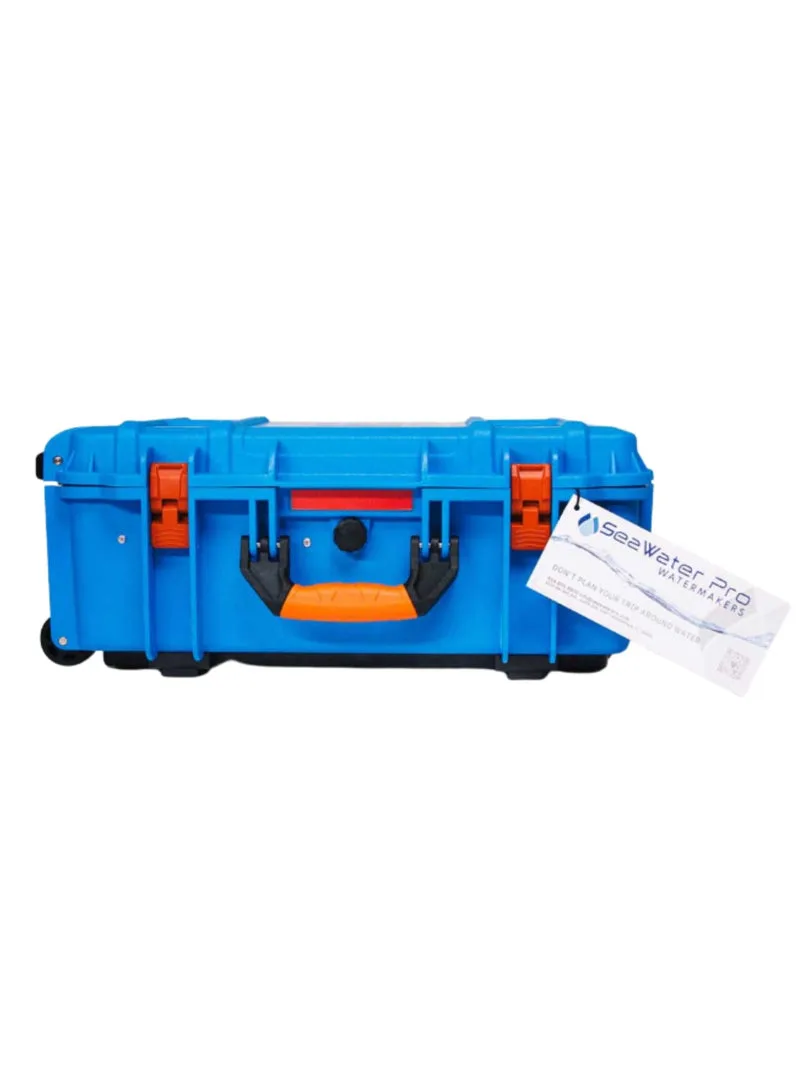
Watermaker manufacturer ECHOTec sizes a compact DC unit at about 10 amps for two hours a day, roughly 240 watt-hours of daily energy for water production alone, against the 1,600 watt-hours a 400W solar array yields in a region with four to five peak sun hours. That leaves a wide margin on a modest solar array and battery bank, useful for off-grid RVs, remote cabins, and permanent campgrounds without mains water. A portable AC unit, by contrast, is built for temporary deployment: set it up for a camping trip or sailing passage, producing roughly 12–14 GPH from open ocean or brackish sources, then pack it away.
| Model type | Output | Power | Best for |
|---|---|---|---|
| Mini Portable (AC) | 12–14 GPH | Standard AC | Camping, short offshore trips, occasional use |
| 12V DC Single-Membrane | 17 GPH | 600W | Sailboats, catamarans, solo/couple liveaboards |
| 24V DC Dual-Membrane | 40 GPH | 900W | Larger motor yachts, higher daily demand |
| Triple-Membrane (residential/commercial) | Up to 60 GPH | Higher draw | Off-grid homes, commercial marine use |
If you're stocking gear for a longer remote trip, water is only half the supply chain. See our comparison of insulated coolers for extended off-grid trips for keeping food cold once your fresh water is sorted.
Watermaker maintenance: membranes, pre-filters, and pump care
Watermaker maintenance comes down to three recurring jobs: protecting the pre-filter, protecting the membrane, and shutting the system down correctly when it's not in use. Get these right and a membrane can run for years; neglect them and you'll be buying a replacement long before its rated lifespan is up.
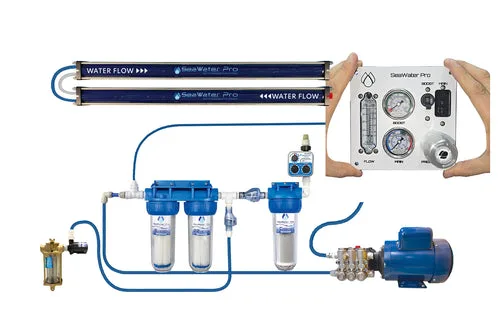
Pre-filters catch sediment, plankton, and suspended organic material before it reaches the pump and membrane, and need replacing every 3–6 months depending on water claritymurky brackish or high-plankton coastal water calls for the shorter end of that range, while clear offshore seawater can stretch toward six months. Skipping pre-filter changes forces the membrane to process unfiltered water, which accelerates fouling.
RO membranes used in marine and off-grid watermakers typically last 3–5 years with correct use and regular maintenance, reaching 6–7 years under ideal conditionsclean feed water, consistent pressure, and protection from fouling. Salt build-up, biofouling, chlorine exposure, and improper shutdown are the main factors that shorten that lifespan. Once a membrane is fouled, chemical cleaning is often not enough to restore it, around 90% of fouled membranes don't fully regain their original performance after cleaning, which is why prevention matters more than trying to rescue a failed membrane later.
Pickling and winterizing your system
Pickling is the standard way to preserve a membrane during any shutdown longer than 14–21 days. The process fills the membrane housing with a biocide chemical, typically sodium metabisulfite, that halts biological growth and prevents algae, bacteria, and mold from degrading the membrane while the system sits idle. A properly pickled membrane stays protected for up to six months; beyond that window, the system needs a full flush and a fresh pickling treatment. This step is critical for seasonal boats hauled out for winter, RVs in winter storage, and remote cabins that sit unused between visits.
Common mistakes that shorten membrane life
- Skipping the pre-filter schedule. Waiting until output drops before changing the cartridge means the membrane has already been absorbing extra debris load.
- Leaving the system idle without pickling. Even a few weeks of inactivity without biocide protection invites biofouling.
- Assuming a cleaned membrane is a fixed membrane. Chemical cleaning helps mild fouling, but severe fouling is usually permanent damage, not a maintenance step to reverse.
- Oversizing the system. A bigger unit than you need adds more filter changes and more membrane surface area to protect for no real benefit.
- Running in contaminated harbor water without extra pre-filtration. Marina fuel slicks and high-sediment water accelerate fouling far faster than open ocean intake.
Buying checklist: what to verify before you purchase
Before choosing a system, confirm these points against your actual use case rather than the manufacturer's headline output number:
- Daily water demand. Estimate gallons per person per day, then size to that, not to the largest available model.
- Power source. DC units integrate with existing battery/solar systems; AC portable units need a generator or shore power.
- Pressure vessel material. Marine-grade stainless steel pressure vessels hold up better to sustained saltwater exposure than lower-grade housings.
- Pre-filter availability. Confirm replacement pre-filter kits are sold directly by the manufacturer for ongoing watermaker maintenance.
- Storage plan. If the system will sit idle for more than a few weeks at a stretch, budget for pickling supplies from day one.
The verdict
There's no single "best" watermaker size: the right pick is whichever GPH output matches your real daily water use, paired with a maintenance routine you'll actually follow. For solo sailors and couples, a 12V DC single-membrane system in the 17 GPH range is usually enough; families and larger yachts should look toward the 24V dual-membrane 40 GPH tier; occasional campers and short offshore trips are well served by a portable AC unit. Whichever you choose, budget for pre-filter changes every 3–6 months and pickling supplies if the system will sit idle.
See the Full Sea Water Pro LineupSources
- Membrane Solutions: RO Membrane Lifespan
- Pure Ocean Marine: Marine RO Maintenance Guide: Flushing & Pickling
- Watermakers.com: Reverse Osmosis FAQ
- LEDI Watermakers: What Shortens Membrane Lifespan
- Schenker Watermakers: Reverse Osmosis Watermaker Output
- ECHOTec Watermakers: Off-Grid Boats & Remote Living Guide
This guide is for general buying and maintenance guidance only and is not a substitute for the manufacturer's installation and maintenance manual. Always follow the specific pickling, storage, and safety instructions supplied with your watermaker, and consult a marine systems professional for installation on board a vessel.
More Home & Outdoor Gear guides
 Space-Saving Home Gym Equipment: 5 Best Compact Picks (2026)
 Selk'bag SWYTCH Review 2026: Best Wearable Sleeping Bag?
 Wuben Flashlight Guide 2026: EDC, Tactical & Spotlight Models
 Jakiper Battery Guide: 6 LiFePO4 Systems Compared (2026)
 Crown Shades Canopy Guide 2026: Best Pop-Up Models Compared
 Kit Solare per Camper: Guida 2026 al Dimensionamento