Off-Grid Watermaker Guide: 12V DC and Portable Systems for RVs, Vans and Cabins
An off-grid watermaker turns brackish or surface water into drinking water without grid power. Here's how 12V DC and portable AC systems compare for RVs, vans, and cabins.
How an off-grid watermaker works on land
An off-grid watermaker lets RVers, van-lifers, and remote cabin owners turn brackish well water, surface water, or hauled seawater into safe drinking water without relying on a municipal line or a delivery truck. Land-based systems use the same reverse-osmosis principle as marine units, but sized, wired, and powered differently for 12V/24V DC solar-battery setups instead of a boat's engine-driven power.
A 12V DC watermaker paired with solar and a battery bank is the most self-sufficient way to make fresh water at a remote cabin, in a van, or from an RV parked near brackish or surface water.
If you already run solar and a battery bank and camp or live near a brackish or open water source, a 12V DC off-grid watermaker replaces hauled water almost entirely. If you're strictly on dry-camp sites with no water nearby, a portable AC unit for occasional top-ups (run off a generator or shore power) is the lighter-commitment option.
Check Current PriceKey Highlights
- 12V DC off-grid watermakers are designed to run on solar-charged battery banks, not shore power, per ECHOTec's off-grid guidance.
- Sea Water Pro sizes its lineup from a 12 GPH portable unit up to 60 GPH residential-class systems by household or crew demand.
- RO membranes typically last 3–5 years, and up to 6–7 years under ideal, well-maintained conditions.
- Pre-filters need replacement roughly every 3–6 months depending on raw-water quality.
How an off-grid watermaker works on land
An off-grid watermaker works the same way as any reverse-osmosis system: a pump pushes raw water through a semi-permeable membrane at pressure, forcing water molecules through while blocking dissolved salts and most contaminants, leaving fresh water on one side and concentrated brine on the other. On a boat, that raw water is seawater pumped straight from the hull. On land, the same RO core can process brackish well water, pond or river water, or hauled seawater from a nearby coast. The mechanism doesn't care about the source, only its salinity and clarity going in.
What changes for land use is the power train. ECHOTec's off-grid guidance notes that 12V DC watermakers built for remote living are specifically designed to run on solar-charged battery systems rather than an engine alternator or shore power, which is what makes them viable at a cabin, in a van, or on a dry-camp RV site with no hookups. Modern RO units also increasingly use energy recovery devices that reclaim pressure from the outgoing brine stream, cutting the electrical draw needed to hit target pressure, a meaningful factor when your power budget is a battery bank instead of the grid.
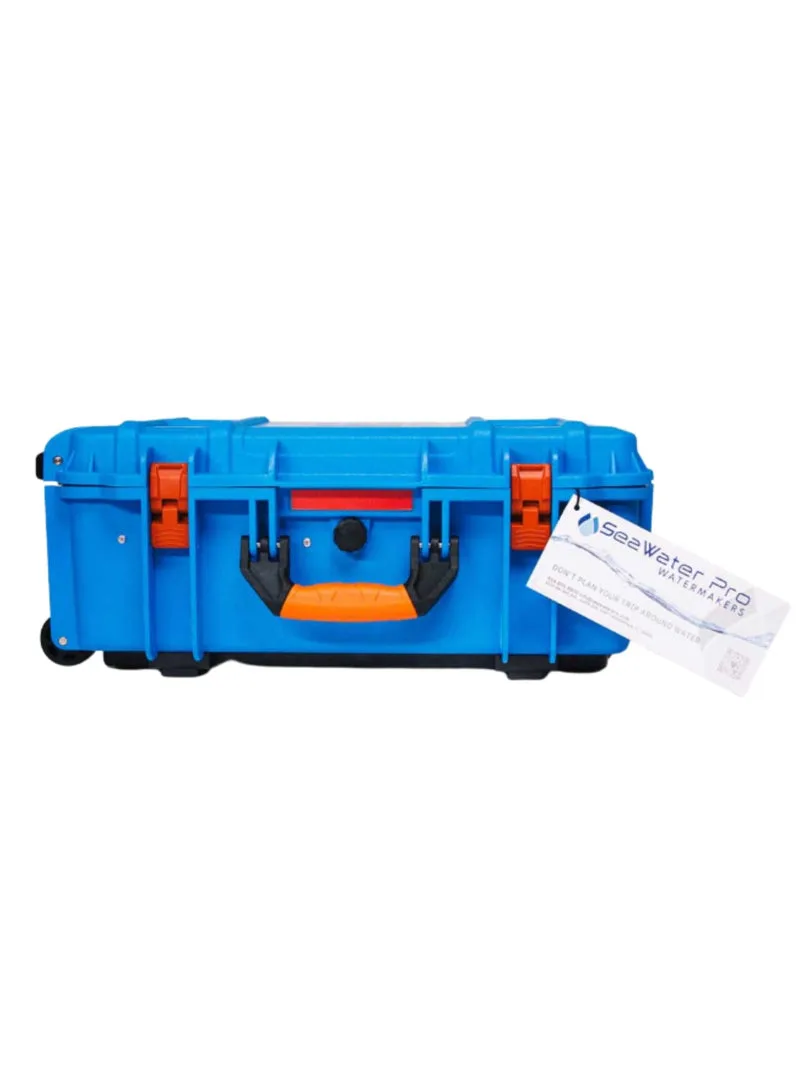
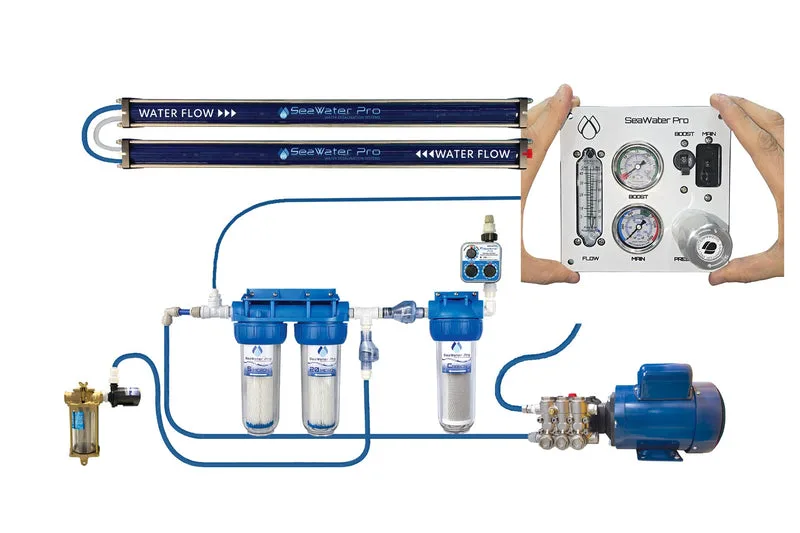
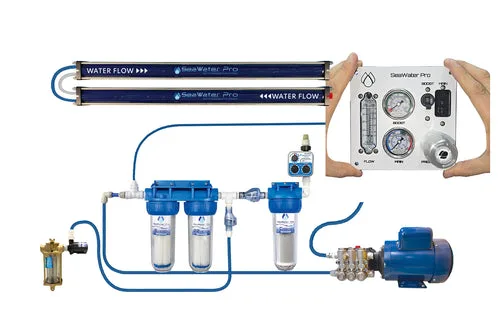
Sea Water Pro 12V DC Single Membrane
Rated around 17 GPH, built to run on a 12V DC solar-battery circuit rather than shore power.
Choosing the right system for your situation
The right off-grid watermaker depends less on brand and more on how you actually camp or live. Sea Water Pro's own sizing guidance spans a 12 GPH portable entry unit up to 60 GPH residential-class systems, matched to crew or household size and daily water demand. The same logic applies whether you're outfitting a solo van build or a year-round off-grid cabin.
RV and van life, dry-camping near water
If you regularly park near a brackish estuary, tidal river, or coastal pull-off, a 12V DC unit wired directly into your existing solar-battery system is the closest thing to unlimited water. You skip the weekly trip to a fill station and free up tank space you'd otherwise dedicate to fresh water storage.
Remote cabins with well or surface water
Cabins without municipal service often draw from a well, pond, or nearby stream. A fixed 12V or 24V DC installation tied to a solar array and battery bank can run on a schedule, filling a storage tank during peak sun hours, so you're not drawing down the battery bank overnight.
Occasional campers and backup water plans
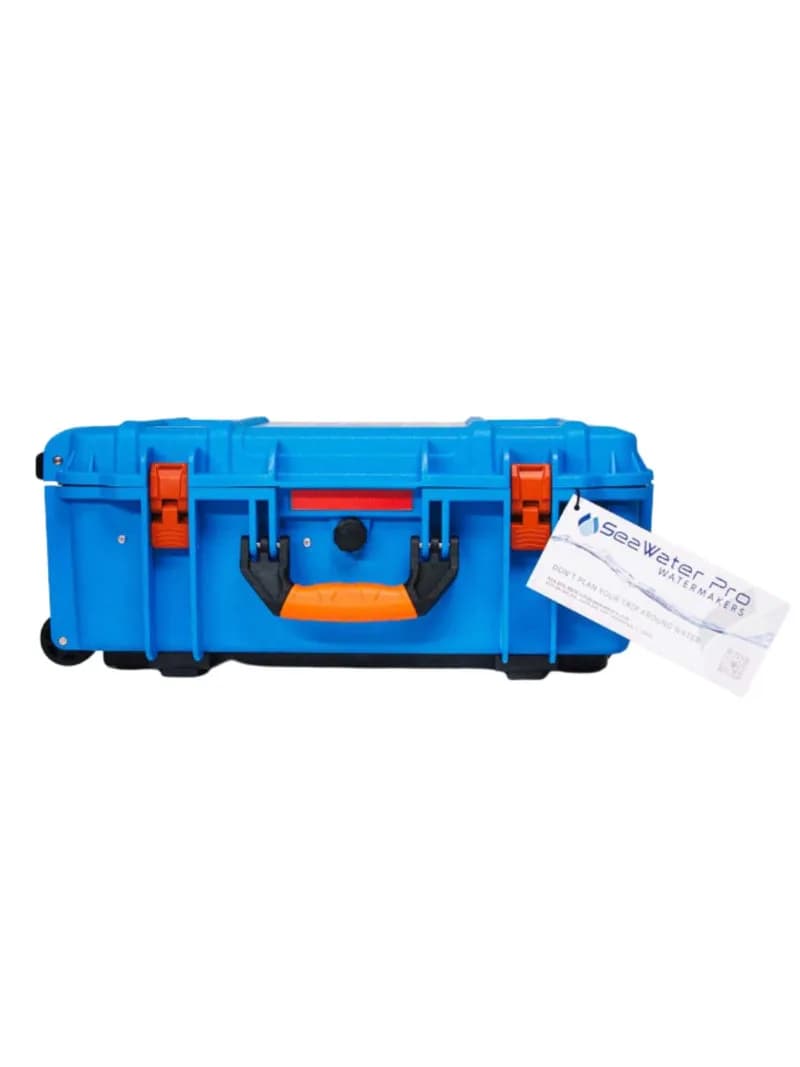
If your setup is a boat, truck bed, or occasional weekend trip rather than a permanent installation, the AC-powered Mini Portable Watermaker is built for camping and remote-adventure use where you just need a compact, packable unit for the trips you actually take, run off a generator or an inverter tied to your battery bank.
Sea Water Pro Mini Portable Watermaker
What We Like
- No permanent installation required
- Easy to move between a van, boat, or cabin
What to Consider
- Needs an AC power source such as a generator or inverter
- Lower output than a fixed 12V/24V DC system
Because it runs on AC rather than a direct 12V DC tie-in, this unit fits best as a backup or occasional-use system rather than a full-time replacement for hauled water at a permanent off-grid site.
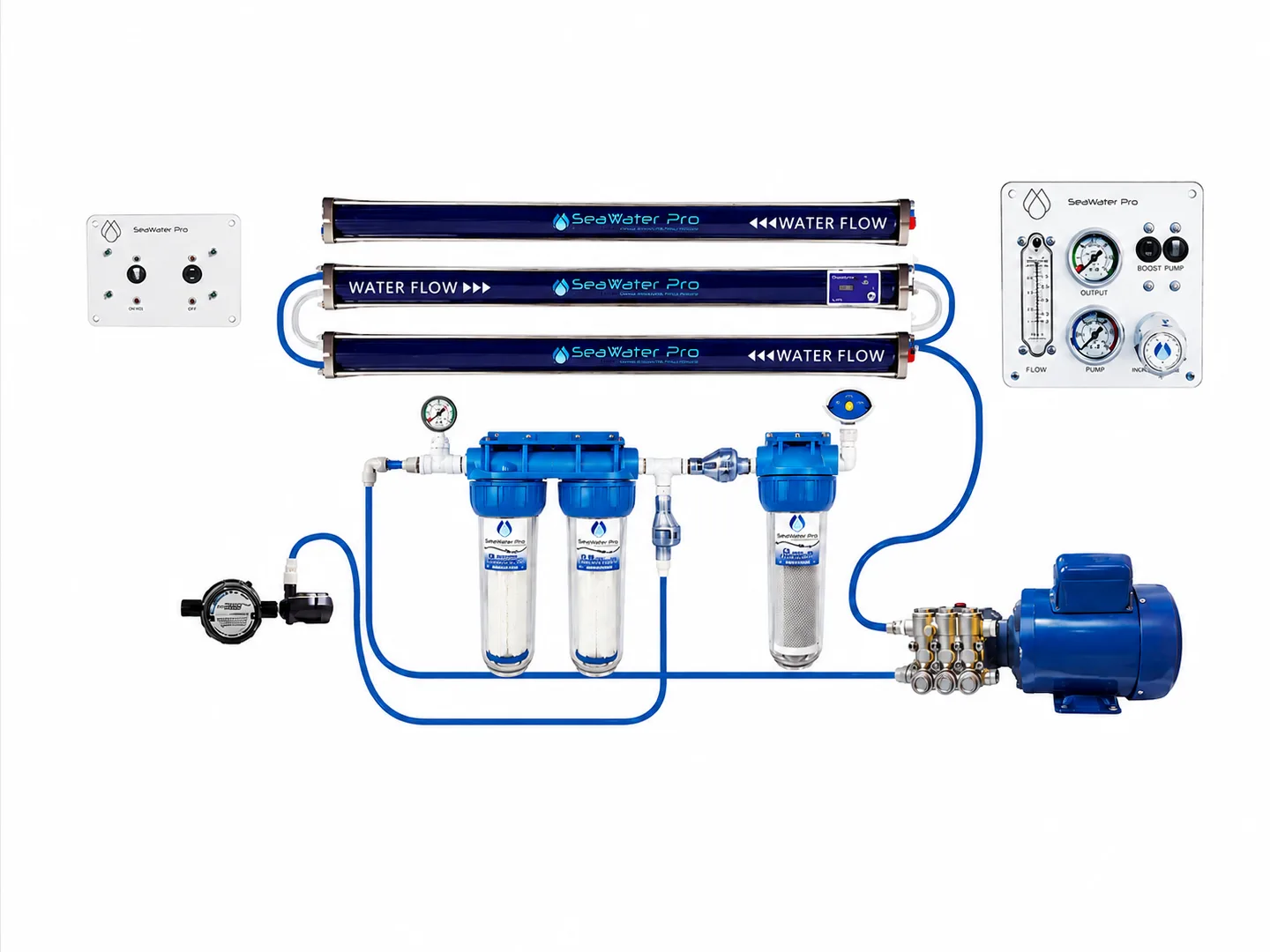
Sea Water Pro 24V Dual Membrane
What We Like
- Dual-membrane design roughly doubles single-membrane output
- Suits a bigger 24V battery bank setup
What to Consider
- Higher power draw needs a correspondingly larger solar array
- Sized for fixed installs, not a quick portable swap
This dual-membrane unit was originally spec'd for larger marine vessels but the same 24V DC output rating applies directly to bigger off-grid cabins or homes with more than one or two daily users.
12V DC vs. portable AC vs. 24V dual membrane
Here's how the three system types stack up for land-based off-grid use, from a lightweight backup unit to a fixed installation for a bigger household.
| System | Best For | Power Source |
|---|---|---|
| 12V DC Single Membrane | RV, van, small cabin near water | Solar + 12V battery bank |
| Mini Portable AC | Occasional camping, backup water | Generator or inverter (AC) |
| 24V DC Dual Membrane | Larger off-grid home, multi-person use | Solar + 24V battery bank |
Pairing an off-grid watermaker with solar and battery power
A DC watermaker is only as reliable as the power system behind it. Because these units are built to run directly off a solar-charged battery bank rather than shore power, sizing your solar array and battery capacity to the unit's draw is the difference between a system that runs whenever you need water and one that stalls out on a cloudy afternoon. Running the unit during peak solar hours, and letting it fill a storage tank rather than running continuously on demand, reduces how much you lean on stored battery capacity overnight.
Energy recovery technology in modern RO systems also works in your favor here: recovering pressure from the outgoing brine stream means the pump doesn't have to work as hard to hit target pressure, which translates directly into a lighter electrical load on your solar-battery setup.
Setting it up and using it safely
- Confirm your raw-water source. Brackish, seawater, or clean surface water all work; heavily silted or contaminated water needs additional pre-filtration.
- Size your power system first. Match panel wattage and battery capacity to the unit's rated draw before you buy, not after.
- Install pre-filters in line. These protect the RO membrane from sediment and need replacement roughly every 3–6 months depending on how clean your source water is.
- Run it during daylight when possible to draw directly from solar rather than depleting the battery bank.
- Flush after every use and follow the manufacturer's storage guidance if the unit will sit idle.
Common mistakes and how to avoid them
The most common failure point isn't the pump or the electronics. It's membrane neglect. RO membranes typically last 3–5 years with proper maintenance, and can reach 6–7 years under ideal conditions, but that lifespan depends entirely on consistent flushing and pre-filter changes. Skipping these steps is the single biggest reason units underperform early.
Letting a unit sit idle without proper storage is another frequent mistake. Watermakers that will go unused for a stretch should be pickled with a biocide treatment, which can preserve the membrane for up to six months of storage. Skipping this step lets biological growth foul the membrane while it sits.
Once a membrane fouls badly enough to need chemical cleaning, don't assume that restores it to full performance. Industry data shows roughly 90% of fouled membranes lose functionality even after chemical cleaning, so prevention through regular flushing beats trying to rescue a neglected one.
Alternatives and related off-grid gear
If your primary use case is actually a boat rather than land, a marine-specific installation has different mounting, through-hull, and sizing considerations worth reading up on separately. And if you're still narrowing down GPH sizing or want a deeper maintenance walkthrough before buying, a dedicated buyer's guide covers that in more depth.
A watermaker is one piece of a broader off-grid or van-life setup. Pairing it with lightweight camping gear: a packable camping chair and lounger for downtime, or a high-retention rotomolded cooler for keeping food fresh between supply runs: rounds out a self-sufficient camp or cabin kit without adding much bulk.
The Bottom Line
For most RVers, van-lifers, and cabin owners near a workable water source, a 12V DC off-grid watermaker paired with solar and a battery bank is the most self-sufficient setup. Save the portable AC unit for occasional trips or as a backup, and size up to the 24V dual-membrane system if you're supplying a larger household.
See Sea Water Pro SystemsReferences
- ECHOTec Watermakers. A Practical Guide for Off-Grid Boats and Remote Living.
- Membrane Solutions. How Often Should an RO Membrane Be Replaced?
- Watermakers.com. Reverse Osmosis FAQ.
- Pure Ocean Marine. The Ultimate Maintenance Guide for Marine RO Systems: Flushing & Pickling.
- LEDI Watermakers. Watermaker Membrane Lifespan: What Shortens It and How to Make Yours Last.
- Yachtmate. How Reverse Osmosis Works: Seawater to Fresh Drinking Water.
More Home & Outdoor Gear guides
 Space-Saving Home Gym Equipment: 5 Best Compact Picks (2026)
 Selk'bag SWYTCH Review 2026: Best Wearable Sleeping Bag?
 Wuben Flashlight Guide 2026: EDC, Tactical & Spotlight Models
 Jakiper Battery Guide: 6 LiFePO4 Systems Compared (2026)
 Crown Shades Canopy Guide 2026: Best Pop-Up Models Compared
 Kit Solare per Camper: Guida 2026 al Dimensionamento