Off-Road Electric Scooter Buying Guide: What Makes One Truly All-Terrain
A marketing label doesn't make a scooter all-terrain. Here are the 6 engineering criteria (dual-motor power, suspension, tires, hill-climb rating, IP rating, and brakes) that actually determine whether an off-road electric scooter can handle rough ground.
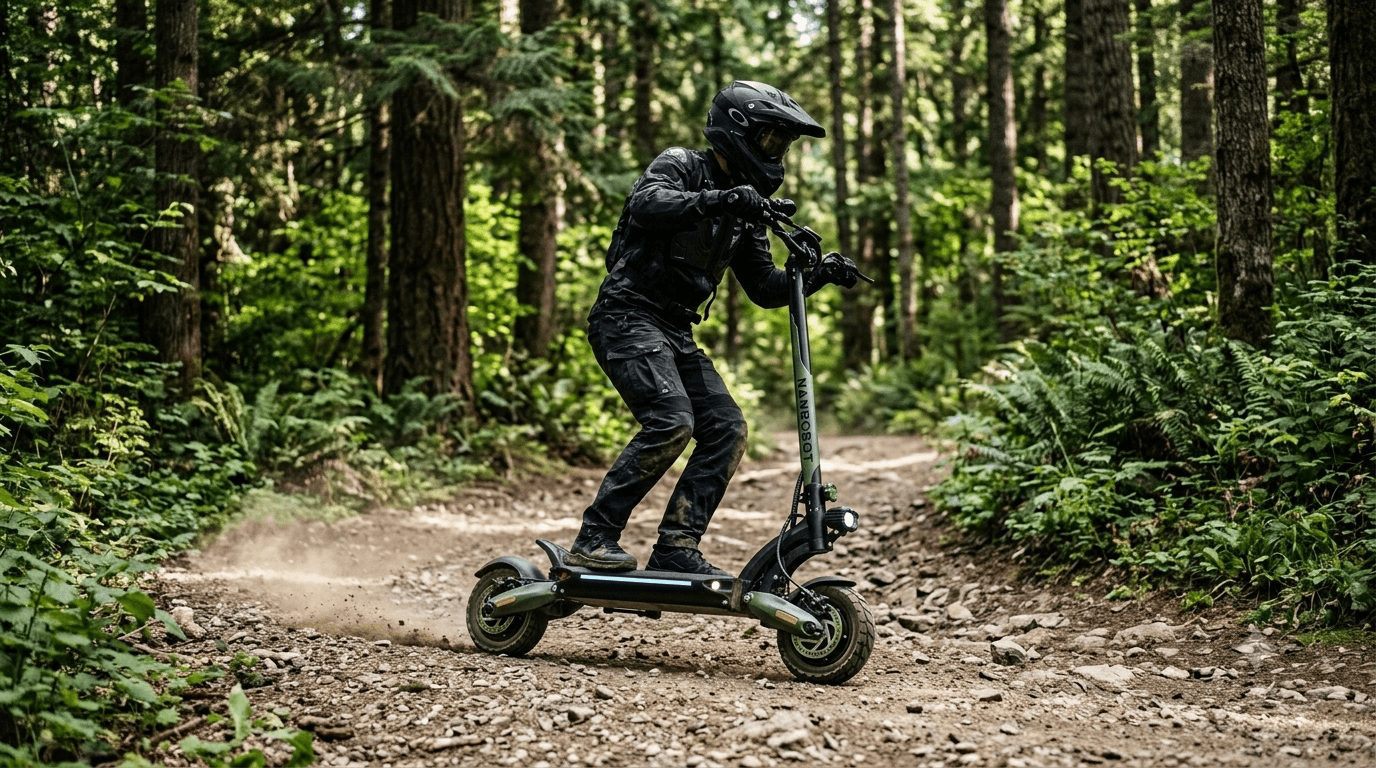
What actually makes an off-road electric scooter off-road capable
- What actually makes an off-road electric scooter off-road capable
- Dual-motor power and torque
- Suspension, tires, and ground clearance
- Hill-climb rating, IP rating, and braking
- How to choose an off-road electric scooter for your terrain
- Criteria comparison: three dual-motor Nanrobot models
- Common mistakes when buying an off-road electric scooter
An off-road electric scooter is only as capable as its weakest component, and a lot of scooters wear the "all-terrain" label without the hardware to back it up. Before you spend money on a scooter for gravel trails, dirt paths, or hilly commutes, it helps to know exactly what separates a genuinely off-road-capable machine from a street scooter with knobby tires bolted on. This guide breaks down the six engineering criteria that matter, then uses Nanrobot's dual-motor, fat-tire models as real-world examples of what each criterion looks like in practice.
A true off-road electric scooter needs dual motors, adjustable suspension, wide low-pressure tires, and hydraulic brakes working together: not any single spec in isolation.
If you only remember one thing: dual motors and suspension solve different problems (traction/power vs. shock absorption), and you generally need both for rough ground, not just one.
See Nanrobot all-terrain models- Dual motors add redundant traction on loose surfaces, not just top speed.
- Adjustable hydraulic suspension matters as much as tire width for rough-terrain comfort.
- A hill-climb percentage from the manufacturer is a useful (if self-reported) signal of real-world grade capability.
- An IP54 rating covers light rain and splashes, not submersion or heavy downpours.
- Hydraulic brakes with an electronic braking system (EBS) matter more off-road, where stopping distances are longer.
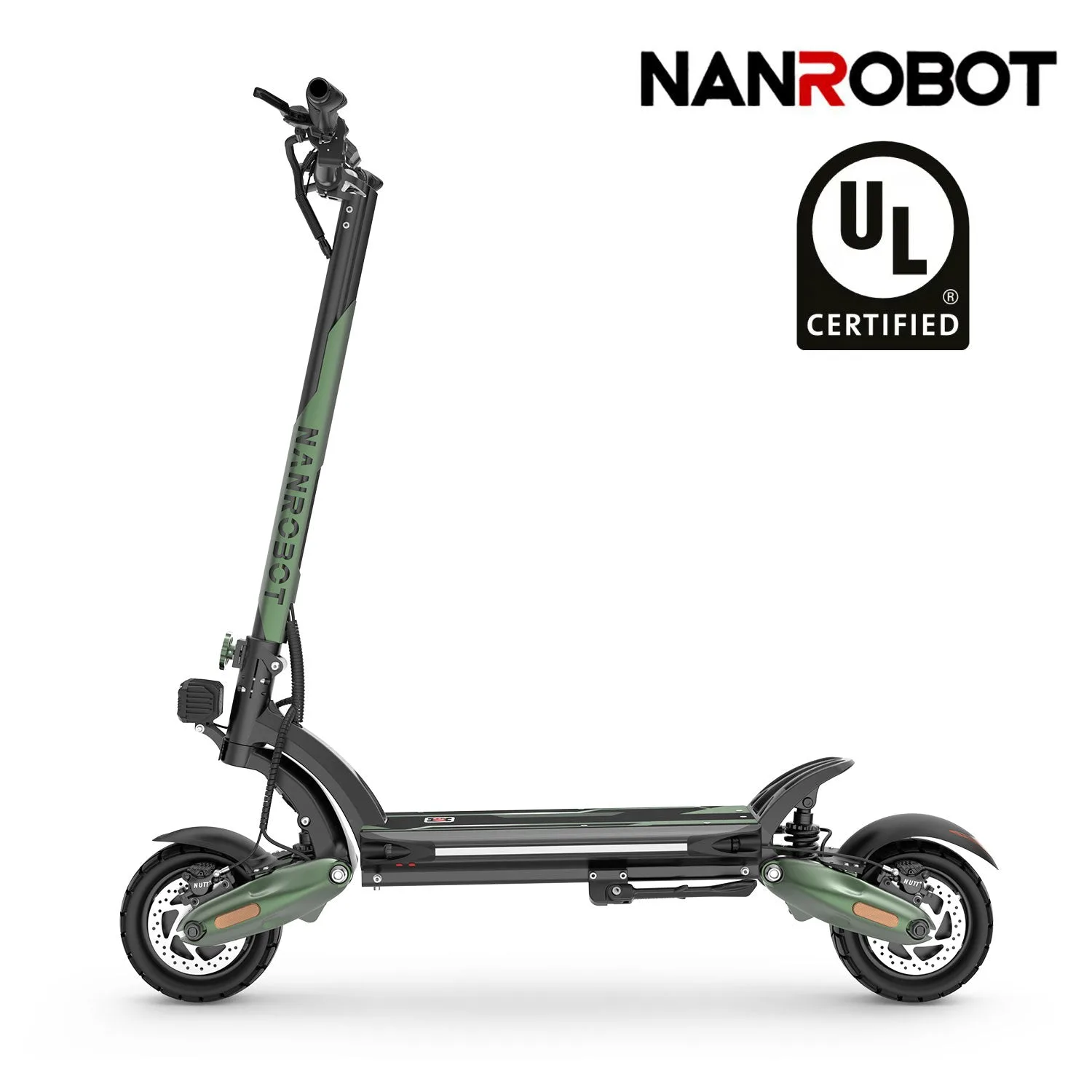
What actually makes an off-road electric scooter off-road capable
A scooter earns "off-road" or "all-terrain" branding through a combination of hardware, not a single headline spec. Six factors do most of the work: motor configuration and torque, suspension design, tire width and tread, hill-climb rating, water/dust resistance, and braking system. A scooter that's strong in one area but weak in another (say, powerful motors on hard, unsprung wheels) will still struggle on loose gravel or washboard trails. The rest of this guide walks through each factor and shows what it looks like on a real dual-motor, fat-tire model.
Dual-motor power and torque
Single-motor scooters are built for smooth pavement, where one wheel doing all the work is fine. Off-road, a second motor changes the equation: with power split across both wheels, the scooter keeps traction even when one tire loses grip on loose dirt, sand, or wet grass. Dual motors also mean more usable torque for climbing grades without bogging down.
Nanrobot's dual-motor lineup spans a wide power range built around this principle. The D6+MAX runs dual 1500W brushless motors for a 3000W combined dual-drive system, while the flagship LS7+ steps up to twin 3000W brushless motors rated at 6000W nominal power, with a 10,000W peak output under load. The N6 sits in between, with dual 1500W brushless motors reaching a 5000W peak combined output and 42 Nm of torque. All figures are manufacturer specifications, not independently verified test results.
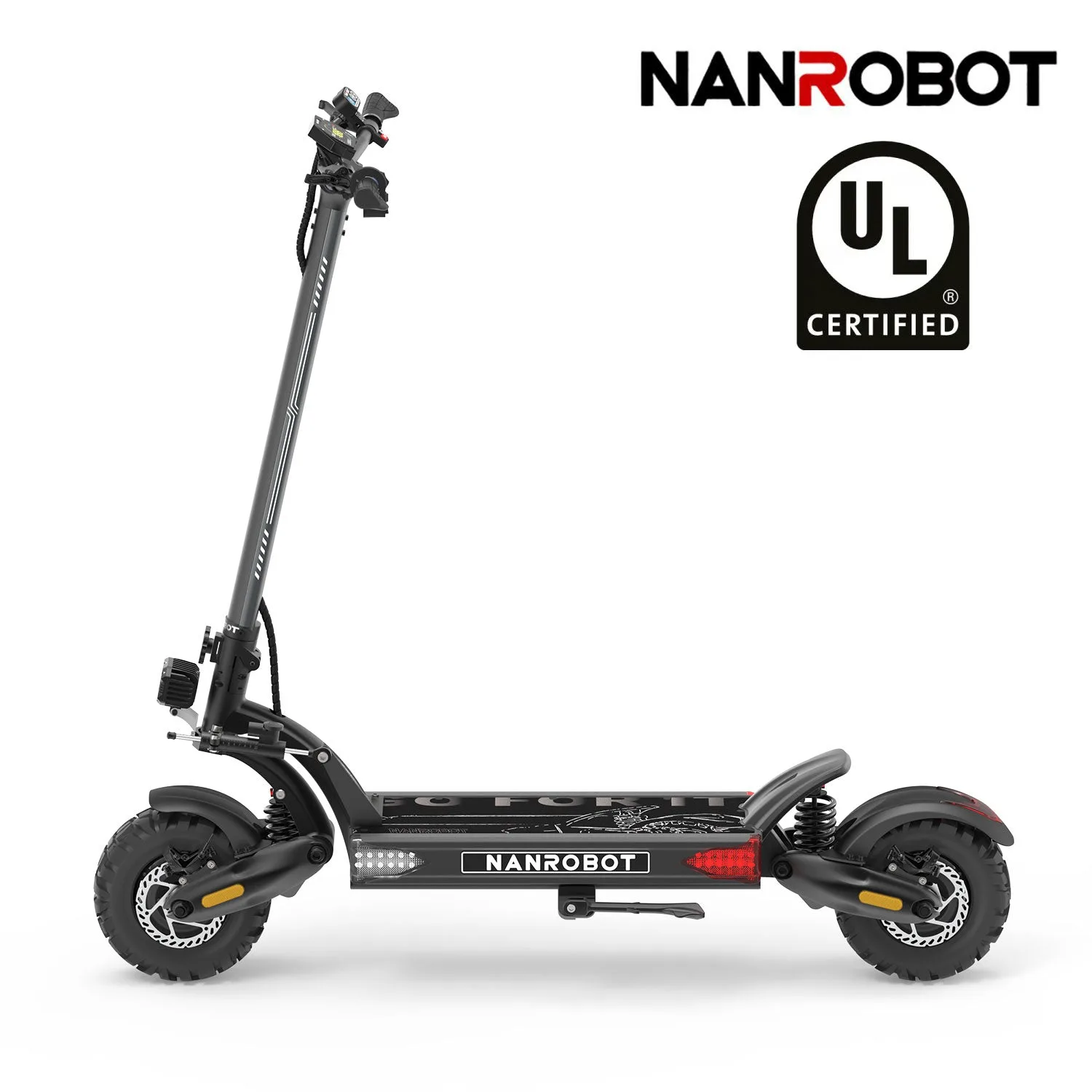
Nanrobot D6+MAX
Dual 1500W motors, wide off-road tires, hydraulic suspension, and a manufacturer-rated 30% slope capability: a mid-flagship example of the criteria below working together.
View D6+MAX detailsSuspension, tires, and ground clearance
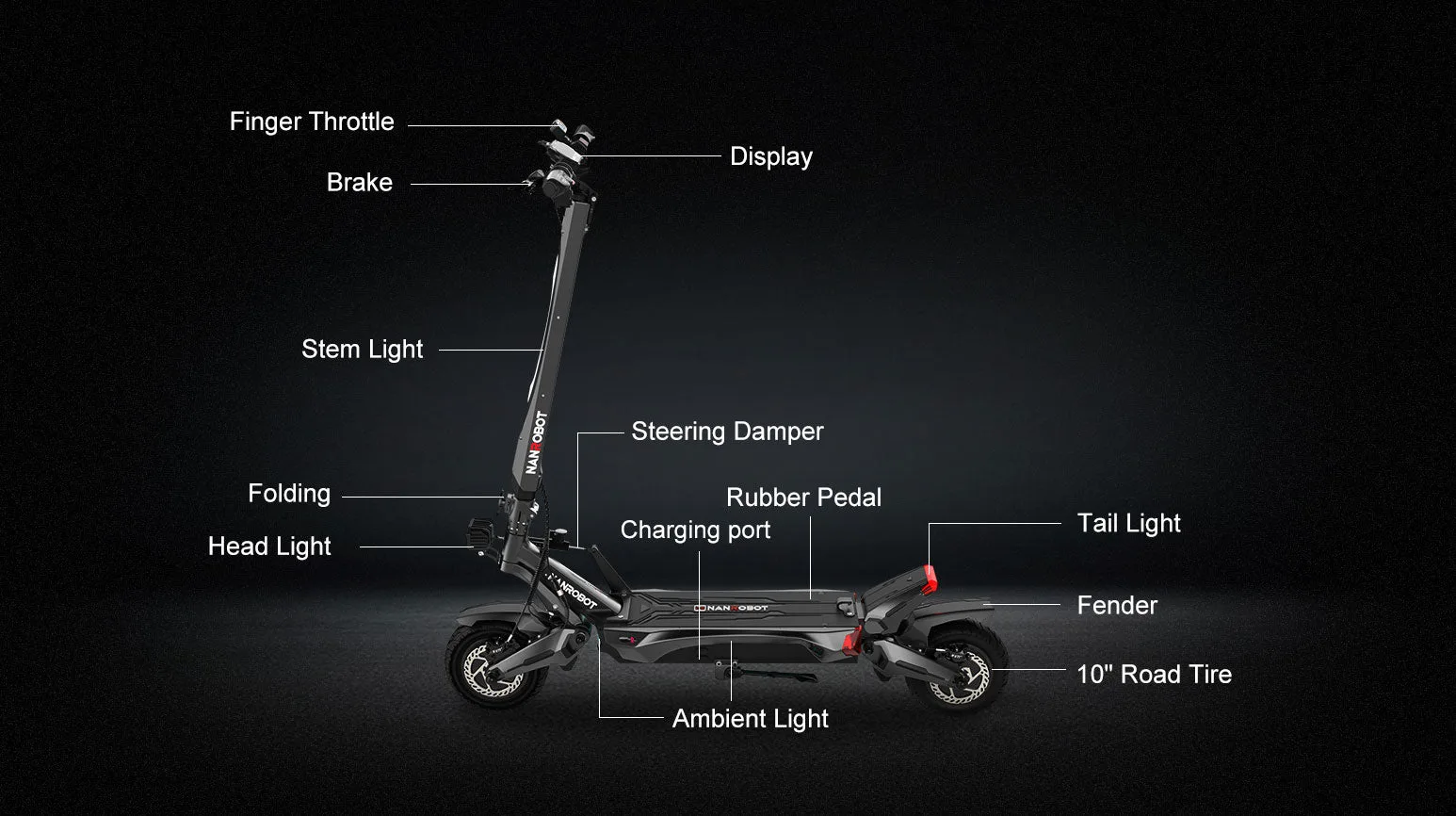
Power alone doesn't absorb a rock, root, or pothole: that's the suspension's job. Rigid-fork scooters transmit every impact straight into the rider's wrists and spine, which becomes exhausting and eventually unsafe off pavement. Nanrobot equips its flagship commuter models with KKE adjustable hydraulic suspension, letting riders tune compression and damping for their weight, terrain, and comfort preference, paired with a steering damper for high-speed stability.
Tire choice matters just as much. Narrow, high-pressure tires designed for smooth asphalt lose grip quickly on loose surfaces. The D6+MAX instead uses 10-inch wide off-road tires, wider than the street-focused N6, for better grip and stability on rough terrain, backed by dual NUTT hydraulic brakes for reliable stopping. Wider, lower-pressure tires deform more over bumps, effectively acting as a second layer of suspension.
Why tire width changes handling on loose ground
A wider tire footprint spreads the scooter's weight over more surface area, which reduces how deep it sinks into sand, mud, or gravel. That translates directly into better traction and a more predictable ride when the surface underneath isn't flat asphalt. It's one reason fat-tire designs have become the visual shorthand for "off-road" across scooter and e-bike brands alike.
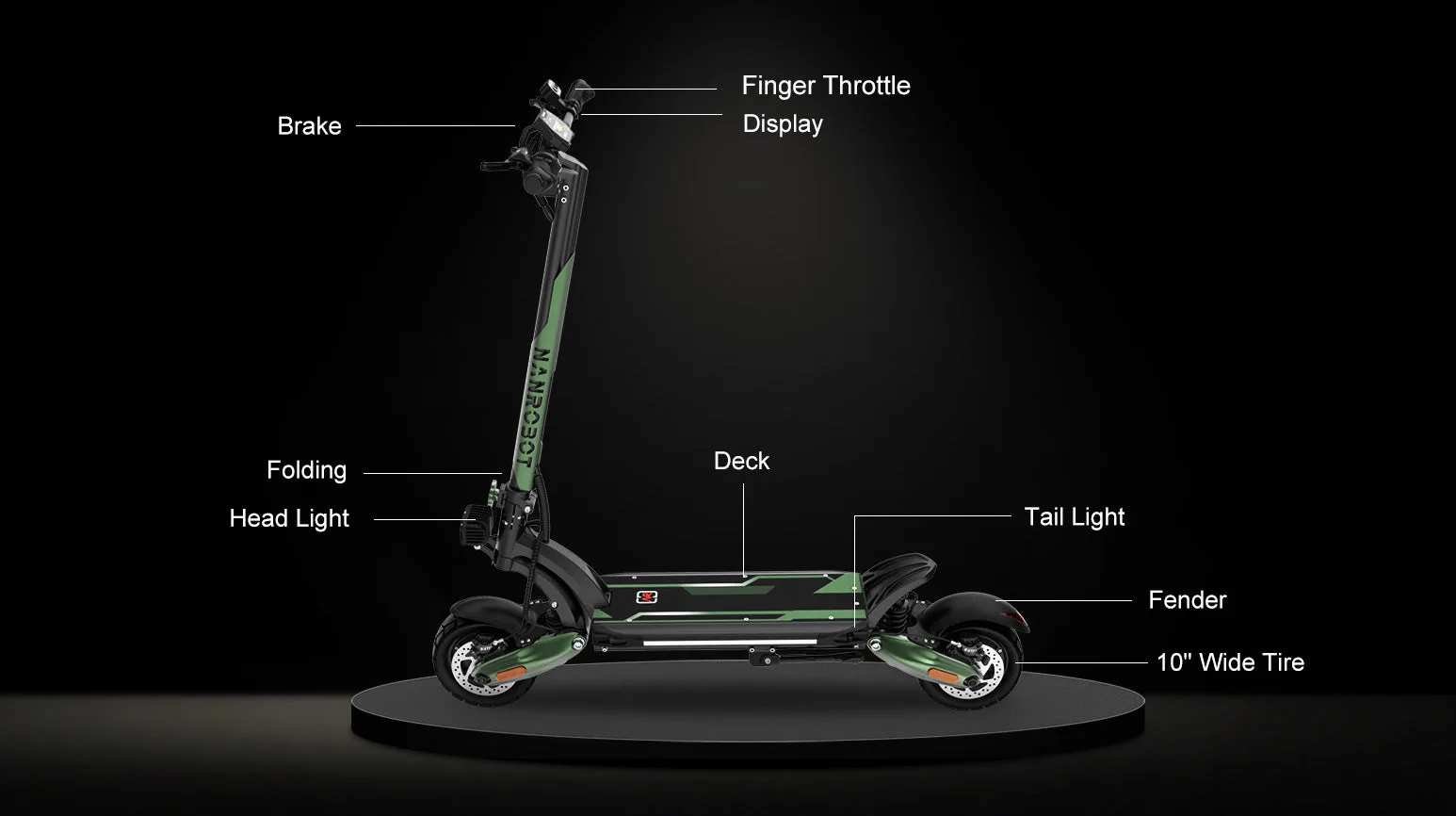
Hill-climb rating, IP rating, and braking
Three more specs round out a genuine off-road package. First, a hill-climb percentage: Nanrobot's D6+MAX aggressive tread lets it handle 30% slopes, according to the manufacturera useful, if self-reported, benchmark for grade capability that most street-only scooters don't publish at all. Second, water and dust resistance: the D6+MAX carries an IP54 waterproof rating, providing protection against light rain and splashesnot submersion, and not sustained heavy rain. Third, braking: Nanrobot's dual four-piston NUTT hydraulic brakes paired with regenerative braking (EBS) are standard across the high-performance lineup, giving hydraulic heat dissipation and energy recovery that simple mechanical drum brakes can't match at speed.
Off-road stopping distances are longer than on dry pavement, so the combination of hydraulic brakes and EBS isn't a nice-to-have. It's what keeps a 45+ mph dual-motor scooter controllable when the surface underfoot is loose or wet.
How to choose an off-road electric scooter for your terrain
Not every rider needs the same combination of specs. Match your typical terrain to the criteria that matter most:
- Gravel paths and light trails: prioritize wide tires and adjustable suspension over raw motor power. Comfort and grip matter more than top speed here.
- Steep, hilly commutes: look for a published hill-climb percentage and dual-motor torque; single-motor scooters bog down on sustained grades.
- Mixed wet-weather riding: confirm an IP rating (IP54 or higher) and hydraulic, not mechanical, brakes for consistent stopping power.
- Longer off-grid rides: weigh battery capacity and manufacturer-rated range alongside terrain hardware; a capable chassis with a short range still limits how far off-pavement you can go.
If you're comparing multiple dual-motor models, cross-check each of the six criteria individually rather than trusting a single "all-terrain" badge on a spec sheet.
Criteria comparison: three dual-motor Nanrobot models
The table below lines up three Nanrobot dual-motor models against the criteria covered above. All figures are manufacturer specifications.
| Criterion | D6+MAX | N6 | LS7+ |
|---|---|---|---|
| Motor power | 3000W dual-drive | 5000W peak combined | 6000W nominal / 10,000W peak |
| Tires | 10-inch wide off-road, tubeless | 10-inch pneumatic road | 11-inch |
| Suspension | Adjustable KKE hydraulic, front/rear | Adjustable KKE hydraulic, front/rear | Adjustable KKE hydraulic, front/rear |
| Braking | Dual NUTT hydraulic + EBS | Dual NUTT hydraulic + EBS | Four-piston NUTT hydraulic + EBS |
| IP rating | IP54 | Not published | IP54 |
| Hill-climb | 30% slopes (manufacturer claim) | Not published | Not published |
| Manufacturer-rated range | Up to 75 miles | Up to 81 miles | Up to 81 miles |
Common mistakes when buying an off-road electric scooter
Two mistakes come up repeatedly. The first is judging capability by tire tread alone. Knobby-looking tires on a rigid, single-motor frame still ride harshly and lose traction quickly on loose ground; tread pattern is cosmetic without the suspension and motor configuration to back it up. The second is treating an IP rating as full weatherproofing: an IP54 rating protects against light rain and splashes, not sustained downpours or water crossings, and riding through standing water can still cause damage regardless of the rating on the spec sheet.
A third, quieter mistake is ignoring weight and load capacity. Off-road hardware (dual motors, larger batteries, hydraulic suspension) adds bulk. A scooter built for genuine all-terrain use will typically weigh more and carry a higher rated load capacity than a lightweight commuter model; that's a reasonable trade-off for the added capability, not a design flaw.
Verdict: look at the whole system, not one spec
A genuinely capable off-road electric scooter needs dual motors, adjustable hydraulic suspension, wide low-pressure tires, a real IP rating, and hydraulic brakes with EBS working together, not any one of these in isolation. Nanrobot's dual-motor, fat-tire models like the D6+MAX, N6, and LS7+ illustrate how these criteria come together in a single build, from wide off-road tires and KKE hydraulic suspension to NUTT hydraulic brakes across the lineup. For the full model-by-model breakdown, see our complete Nanrobot lineup comparison.
Check current Nanrobot pricingSources
Performance figures (top speed, range, hill-climb percentage, load capacity) are manufacturer specifications and may vary with rider weight, terrain, weather, tire pressure, and riding mode. Higher-power scooters can reach speeds where local regulations, protective gear, and rider experience become safety considerations. Check local laws before riding.
More E-Bikes & Scooters guides
 Revibikes Models Compared: 5 Best Picks by Rider Type (2026)
 Varstrom E-Bike Conversion Battery: Voltage & Capacity Guide (2026)
 Asiwo MAKO Review 2026: Best Entry-Level Sea Scooter?
 Soleil Supplies Review 2026: Best Tuttio & Yozma Upgrade Parts
 KuKirin Electric Scooters: Safe Buyer's Guide to All 14 Models (2026)
 ONESPORT Ebike Review 2026: 8 Models Compared, Best Picks