Tuttio Electric Bikes: Family E-Bikes and Electric Dirt Bikes Compared
Every Tuttio electric bike compared: the street-legal-spec ARC-I kids' bike versus the high-wattage Soleil01, ICT, and Adria26 electric dirt bikes, with what US e-bike law actually requires before you ride.
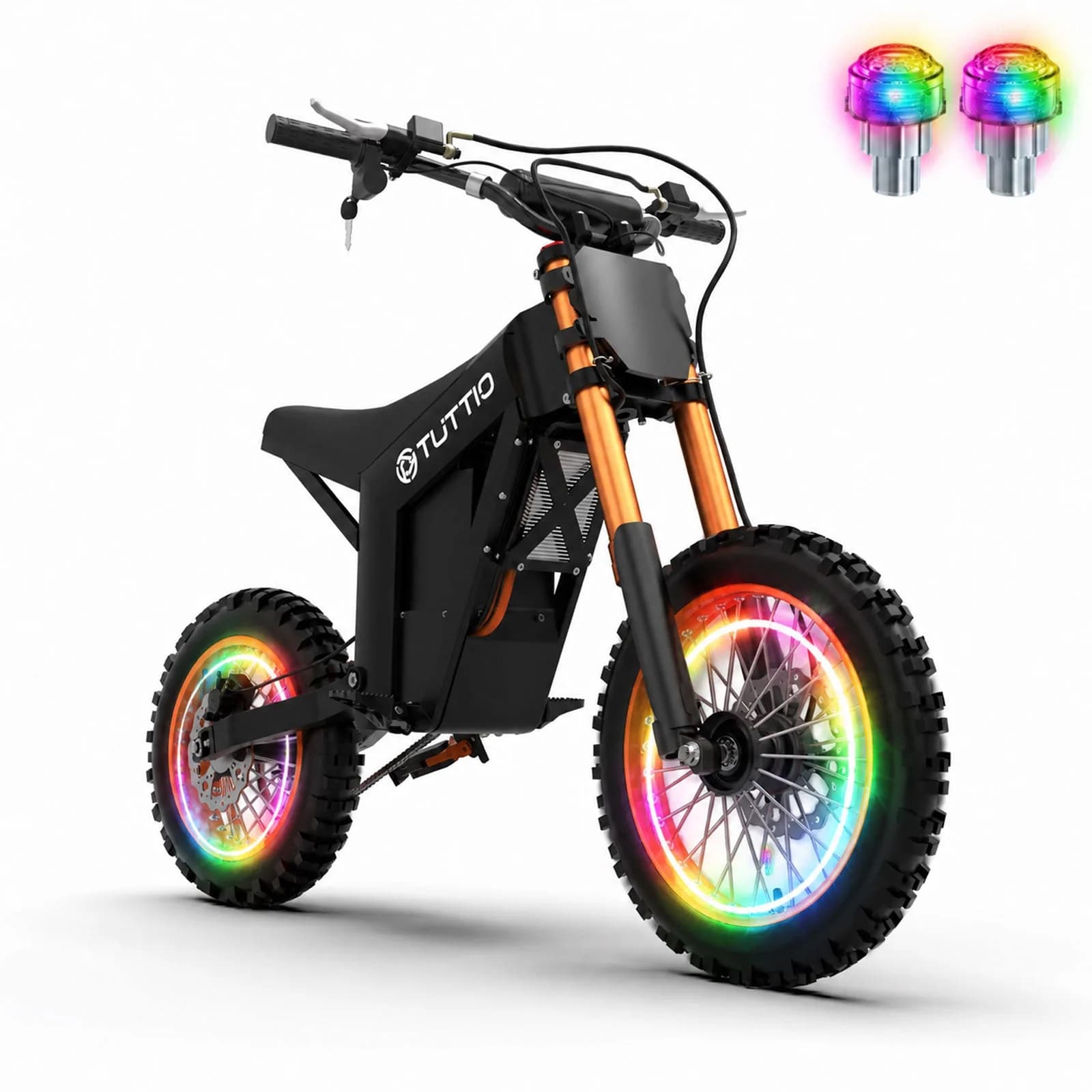
What is Tuttio?
Shopping for a Tuttio electric bike means choosing between two very different worlds: a street-legal kids' model built for the driveway and neighborhood path, and a lineup of high-wattage electric dirt bikes built for private land and off-road trails. Tuttio (tuttiosport.com) sells both, and picking the wrong one for where you actually ride is the single biggest mistake buyers make. This guide breaks down every current Tuttio model, what US law actually says about high-wattage e-bikes, and how to match a model to your family.
Tuttio's lineup splits cleanly into a street-legal kids' bike and three high-wattage off-road machines: match the model to where you'll actually ride.
The ARC-I is the only Tuttio model built to the federal 750W Class 2 definition, so it's the one that's realistically street-legal for a supervised young rider. The Soleil01, ICT, and Adria26 are marketed with 2,000–6,000W motors, well above the legal e-bike threshold, great for private trails, not for public roads without registering them as off-highway vehicles.
See the Tuttio lineup- Only the Tuttio ARC-I kids' bike (750W hub motor) fits the federal Class 2 definition of a street-legal e-bike.
- The Soleil01, ICT, and Adria26 are electric dirt bikes with 2,000–6,000W motors, positioned by Tuttio for off-road and private-land riding.
- Tuttio does not publish a UL 2849 or UL 2271 certification claim on any model. Ask before you buy.
- Mid-drive motors (Soleil01, ICT) deliver more torque for hill climbs than hub motors of similar wattage.
- All four models ship with hydraulic disc brakes, which stop meaningfully faster than mechanical discs.
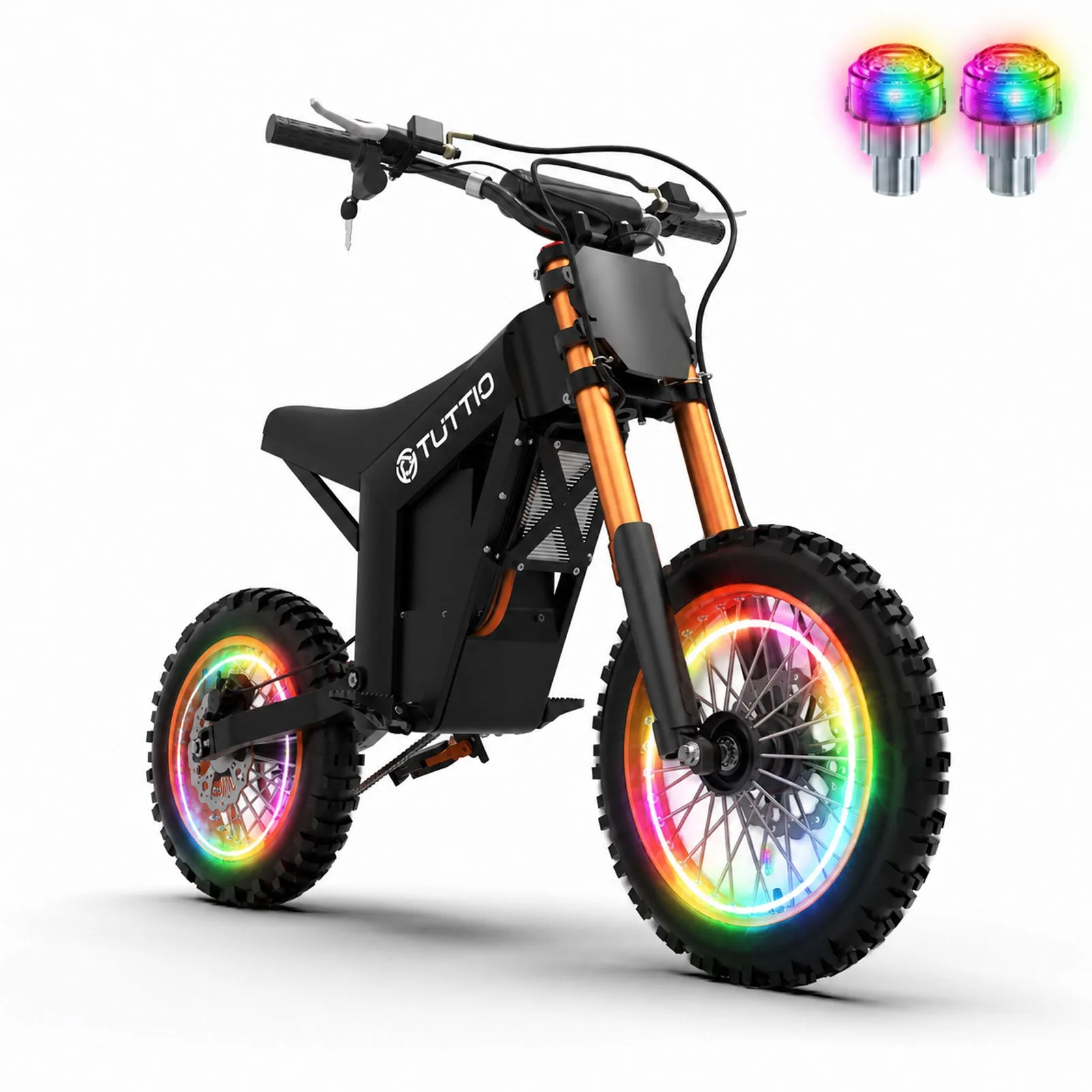
What is Tuttio?
Tuttio (tuttiosport.com) is a direct-to-consumer electric bike and electric dirt bike brand selling four core models: a kids' e-bike (ARC-I) and three progressively higher-wattage adult/off-road machines (Soleil01, ICT, and Adria26). Tuttio publishes a 2-year warranty on its e-bikes covering manufacturing and motor/battery defects, a 30-day return window, and ships from six US warehouses. Customer review scores cited on the brand's own site include a 5.0 BBB rating, 4.7 on Trustpilot, and 4.85 on Judge.me, figures Tuttio reports itself, so treat them as a starting point rather than independent verification.
Every model ships with hydraulic disc brakes and some form of front suspension, which matters once you understand how much power these bikes actually put out.
Street-legal vs. off-road: how e-bike classification works
US federal law (15 U.S.C. §2085) defines a "low-speed electric bicycle" as a two-or-three-wheeled vehicle with working pedals and a motor under 750W continuous power, capped at 20 mph on motor power alone. Most states have layered a three-class system on top of that federal baseline: Class 1 is pedal-assist only up to 20 mph, Class 2 adds a throttle up to 20 mph, and Class 3 is pedal-assist only up to 28 mph. As of 2026, 36 states plus DC use this three-class framework, though helmet rules, age minimums, and trail access still vary by state and city.
Anything above 750W continuous power, regardless of what a listing calls it, falls outside that federal e-bike definition. Depending on the state, a bike like that gets treated as a motorcycle, moped, or off-highway vehicle, which can mean registration, insurance, and title paperwork before it's legal on public roads. These higher-wattage machines are built for off-road use: designated OHV areas, private land with the owner's permission, or closed-course events, not the street. Marketing "peak power" numbers (3000W, 4000W, 5000W) are not the same as continuous power, but bikes rated that high for peak output are effectively never street-legal e-bikes.
Which Tuttio electric bike fits your family?
Tuttio's four models split cleanly by wattage and intended use. The table below compares them on the specs that actually change how, and where, you can ride each one.
| Model | Motor | Battery / torque | Intended use |
|---|---|---|---|
| ARC-I (kids) | 750W hub motor | 36V 13Ah (468 Wh) | Street-legal Class 2 spec; ages 8–13, adult supervision required |
| Soleil01 | 2,000–3,000W mid-drive | 48V 21Ah (1,008 Wh); 200 Nm torque | Off-road / private-land dirt bike, riders 5.5 ft+ |
| ICT | 4,000W mid-drive | 60V system, moped-style seating | Off-road; not a street-legal commuter despite the seated riding position |
| Adria26 | 5,000–6,000W dual motor | 52V system; 210 Nm combined torque | Off-road / all-terrain; battery Wh, tire size, and brake specs not publicly listed by Tuttio |
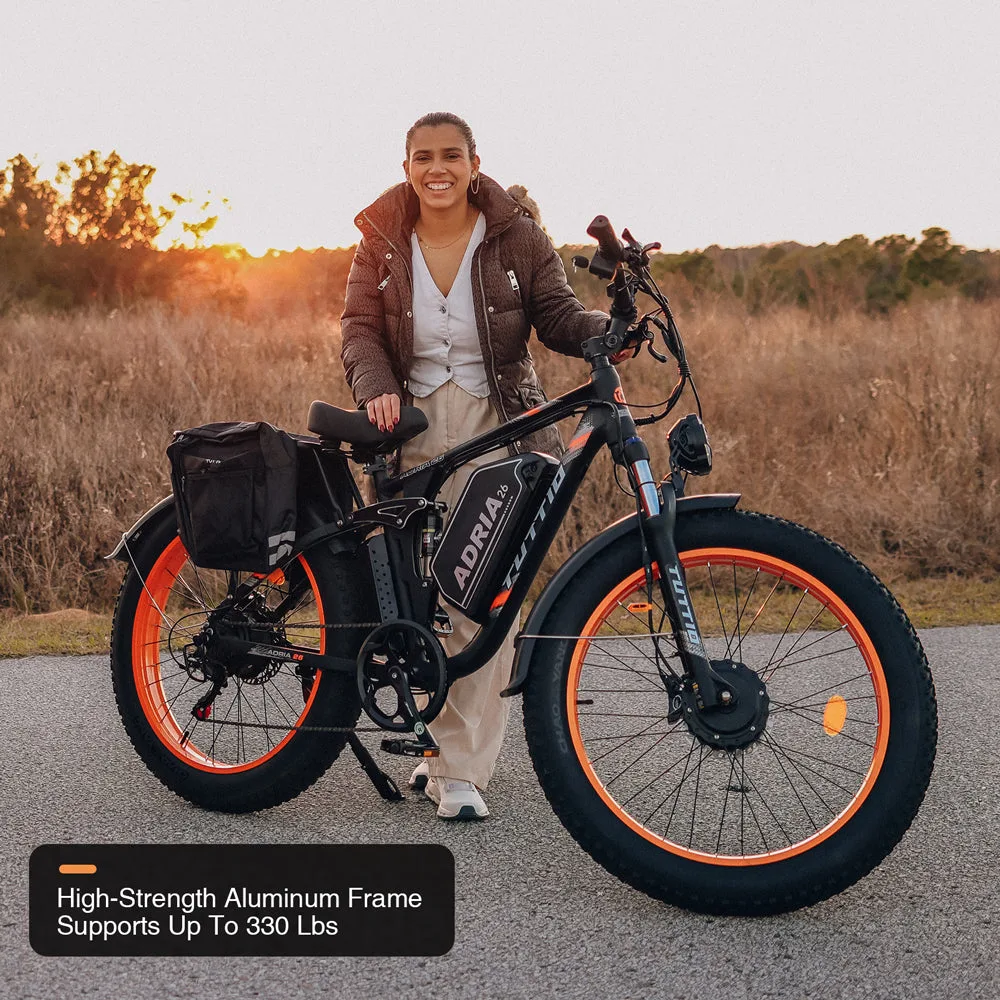
Soleil01: entry-level electric dirt bike
The Soleil01 pairs a 2,000–3,000W brushless mid-drive motor with a 48V 21Ah (1,008 Wh) battery and 200 Nm of torque, plus a 40mm hydraulic fork with roughly 6 inches of travel and hydraulic disc brakes front and rear. Tuttio also sells a "GB PRO" upgrade with a larger 48V 27Ah pack. It's built around a 6061 aluminum frame for riders roughly 5.5 ft and taller.
Because it's a mid-drive motor rather than a hub motor, the Soleil01 can use the bike's gearing to multiply torque on steep climbs. Mid-drive systems typically deliver 80–120 Nm at the wheel versus 40–60 Nm for a comparable hub motor, and the Soleil01's rated 200 Nm figure is roughly double that typical mid-drive range. That gearing advantage is the main reason mid-drive is preferred for hilly or technical trail riding over a hub-motor bike of similar wattage.
ICT: the 60V flagship
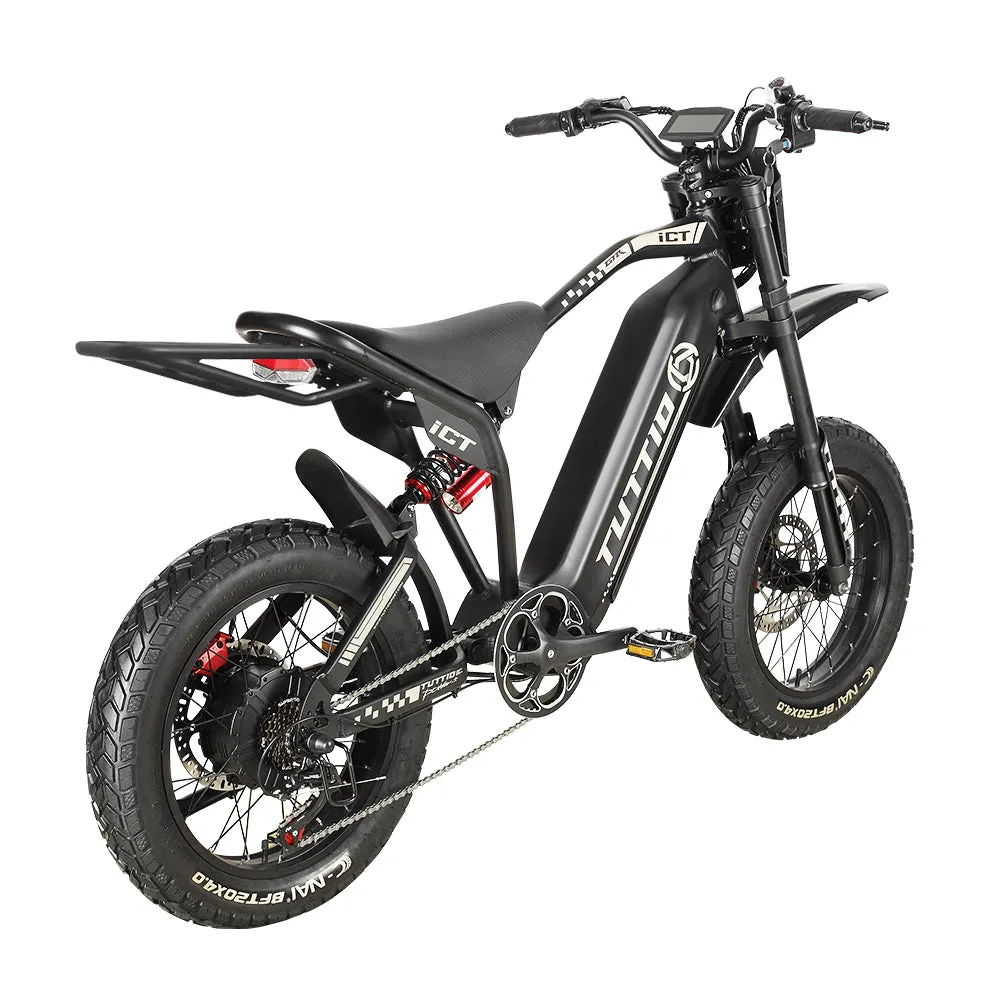
The ICT steps up to a 60V system and a 4,000W motor, with moped-style seating, forward footpegs, and an extended wheelbase aimed at adult riders roughly 5.2–6.6 ft tall. Tuttio positions it as its flagship adult "commuter and leisure" bike, but at 4,000W it is nowhere near the 750W continuous limit that defines a street-legal e-bike. The seated, moped-like ergonomics don't change its legal classification.
High-wattage models: off-road only, and why that matters
It's worth being blunt here: the Soleil01, ICT, and Adria26 are not Class 1, 2, or 3 e-bikes under US law, no matter how they're styled or marketed. They're high-wattage electric dirt bikes intended for private land, OHV parks, or closed courses. Riding one on a public road or bike path without proper registration, insurance, and (in most states) a valid license risks fines and, in a crash, potential liability and insurance gaps. Before buying any 2,000W+ model, check your state and city rules, and never assume a bike is street-legal just because it looks like a regular e-bike.
None of Tuttio's models carry a published UL 2849 (whole-system) or UL 2271 (battery-only) certification claim. UL 2271 tests a lithium-ion battery pack in isolation for overheating, short circuits, and fire risk; UL 2849 goes further and certifies the entire electrical system (motor, controller, charger, wiring, and battery) as one unit. Neither is federally mandated in the US, and most manufacturers skip them because of the cost, so a missing certification claim isn't unusual, but it is worth asking about directly. The CPSC has urged riders to stop using one brand's e-bike batteries after 31 reported fires, some of them while the bike was in storage, and a separate 2025 recall covered roughly 24,000 batteries after overheating incidents. We're not asserting Tuttio batteries are unsafe, only that the brand doesn't make a UL claim, so it's a fair question to put to their support team before you buy, especially for a battery you'll store indoors.
Battery, range, and braking basics
Battery capacity is measured in watt-hours (Wh): voltage multiplied by amp-hours. A typical e-bike uses roughly 15–20 Wh per mile on flat ground, so the ARC-I's 468 Wh pack works out to an estimated 23–31 miles, while the Soleil01's 1,008 Wh pack estimates to roughly 32–45 miles under similar conditions. Hillier terrain, a heavier rider, or headwinds can cut that estimate by 30–50%, so treat any range figure as a best-case number, not a guarantee.
All four Tuttio models use hydraulic disc brakes rather than mechanical discs. Hydraulic systems deliver roughly 20–30% more stopping force with more progressive modulation, which matters more as bike weight and motor power climb. A heavier, more powerful bike needs brakes that can actually stop it. That's a genuine safety plus across the whole lineup, kids' bike included.
The ARC-I and kids' e-bike safety
The ARC-I is Tuttio's dedicated kids' model: a 36V 13Ah (468 Wh) battery, a 750W hub motor that sits within the federal Class 2 threshold, 16×3.0-inch knobby tires, inverted front fork suspension, and hydraulic disc brakes front and rear. It offers five selectable speed modes (7, 10, 13, 17, and 22 mph), defaulting to a 15 mph cap that a parent can adjust. Tuttio recommends it for ages 8–13, up to 150 lbs, and 3.9–4.9 ft tall.
Helmet requirements for young e-bike riders vary sharply by state: at least seven states require helmets for riders under 18, three require them for riders under 21 (including Utah and New York), and eight require helmets for all Class 3 riders regardless of age. California's under-18 helmet requirement took effect January 1, 2026. Because rules differ by state and even city, check local ordinances before letting a child ride, and treat a helmet as non-negotiable regardless of what the law technically requires. Adult supervision is essential any time a child under 13 is riding a motorized bike, even one capped at a lower speed mode.
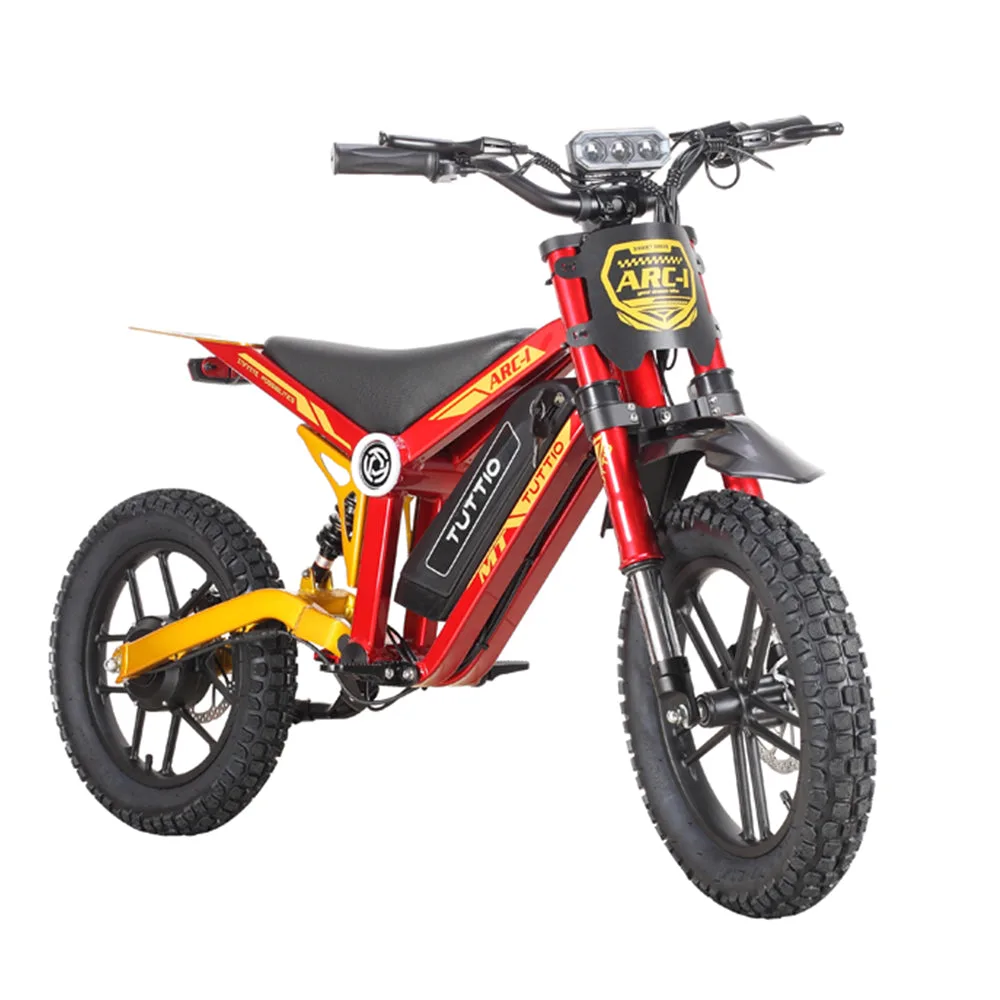
Tuttio ARC-I
What We Like
- Only Tuttio model built to a street-legal wattage spec
- Parent-adjustable speed cap and hydraulic disc brakes
- Front suspension and knobby tires for mixed terrain
What to Consider
- No published UL 2849/2271 certification claim
- Local helmet and age rules still apply: verify before riding
- Adult supervision required regardless of speed mode
For a first powered bike, the ARC-I's combination of a legally sized motor, adjustable top speed, and hydraulic brakes is the most defensible pick in the Tuttio lineup, provided you pair it with a proper helmet and supervision every ride.
How to choose the right model
Start with where you'll actually ride, not how a bike looks. If any riding happens on public roads, sidewalks, or shared bike paths, the ARC-I is the only Tuttio model built to a street-legal wattage spec, and even then, confirm your state's age and helmet rules first. If you have private land, a membership at an OHV park, or access to a closed trail system, the Soleil01, ICT, or Adria26 open up meaningfully more power and torque, with the trade-off of needing to verify registration rules if you ever want to cross onto public roads.
Within the off-road tier, torque and terrain matter more than top wattage numbers. The Soleil01's mid-drive layout suits hilly, technical trails where gearing helps; the ICT's higher voltage and moped-style ergonomics suit longer, flatter off-road routes; the Adria26's dual-motor 210 Nm combined torque suits steep, loaded climbs, though you'll want to confirm battery and brake specs directly with Tuttio since they aren't published. New to e-bikes generally? Our guide to buying an electric bike walks through the fit, motor, and battery basics before you narrow down a specific brand, and our roundup of budget-friendly electric bikes for 2026 is a useful comparison point if you want a Class 1–3 commuter instead of an off-road machine.
Bottom line
A Tuttio electric bike works well if you're clear-eyed about which category you're buying into: the ARC-I is a genuinely street-legal-spec kids' bike with a sensible safety feature set, while the Soleil01, ICT, and Adria26 are capable, well-braked off-road machines that should stay off public roads unless properly registered. Ask Tuttio directly about battery certification before you buy, and match speed and torque to your terrain rather than the biggest wattage number on the page.
Shop the Tuttio lineupSources
This article is for informational purposes and reflects publicly available manufacturer specifications and regulatory sources as of the last-reviewed date above. E-bike classification, registration, helmet, and age laws vary by state and city and change over time. Verify current rules with your local DMV or municipality before riding, especially for any model above 750W. Gearova is an independent affiliate publisher; we do not manufacture or sell Tuttio products, and some links in this article are affiliate links.
More E-Bikes & Scooters guides
 Electric Dirt Bike Upgrades: Safest Build Order (2026 Guide)
 Revibikes Models Compared: 5 Best Picks by Rider Type (2026)
 Varstrom E-Bike Conversion Battery: Voltage & Capacity Guide (2026)
 Asiwo MAKO Review 2026: Best Entry-Level Sea Scooter?
 Soleil Supplies Review 2026: Best Tuttio & Yozma Upgrade Parts
 KuKirin Electric Scooters: Safe Buyer's Guide to All 14 Models (2026)