NIU KQi vs BQi: Which NIU Electric Scooter or E-Bike Should You Buy?
NIU sells two very different product lines: KQi folding scooters and BQi pedal-assist e-bikes. Here's how to match distance, terrain, and portability needs to the right NIU electric scooter or e-bike.
How NIU's KQi and BQi lines differ
- How NIU's KQi and BQi lines differ
- Is a NIU electric scooter or a NIU e-bike right for your commute?
- How to choose between KQi and BQi for your situation
- NIU KQi vs BQi comparison table
- Riding a NIU electric scooter or e-bike safely and within the law
- Common mistakes when choosing a NIU model
- Alternatives worth a look
Picking a NIU electric scooter over a NIU e-bike (or the other way around) comes down to one question: how far do you actually ride, and over what terrain? NIU sells two distinct product lines, the folding KQi scooters and the pedal-assist BQi e-bikes, and each is built for a different commute profile. This guide breaks down the real specs, the trade-offs manufacturers rarely spell out, and how to match a model to your situation.
Under 15 miles and mostly flat: pick a KQi scooter. Longer, hillier, or with cargo: pick a BQi e-bike.
NIU positions KQi scooters for micro-mobility and BQi e-bikes for longer, all-weather commuting, and that split holds up against the spec sheets below.
Browse the NIU lineupKey takeaways
- NIU's KQi scooters range from an entry-level folding model to an all-terrain flagship rated 500W with 1000W peak power, with claimed range from 14.3 to 37.3 miles.
- NIU's BQi e-bikes reach Class 3-range speeds but ship with a throttle as well as pedal assist, so check how your state classifies them; the BQi-C3 Pro claims up to 90 miles from swappable twin batteries, while the BQi Fat Tire 300 claims up to 50 miles with hydraulic disc brakes.
- Real-world range typically lands around 60–70% of any manufacturer's claimed figure, NIU included.
- Every NIU scooter and e-bike carries a 2-year unlimited-mileage warranty against manufacturing defects.
How NIU's KQi and BQi lines differ
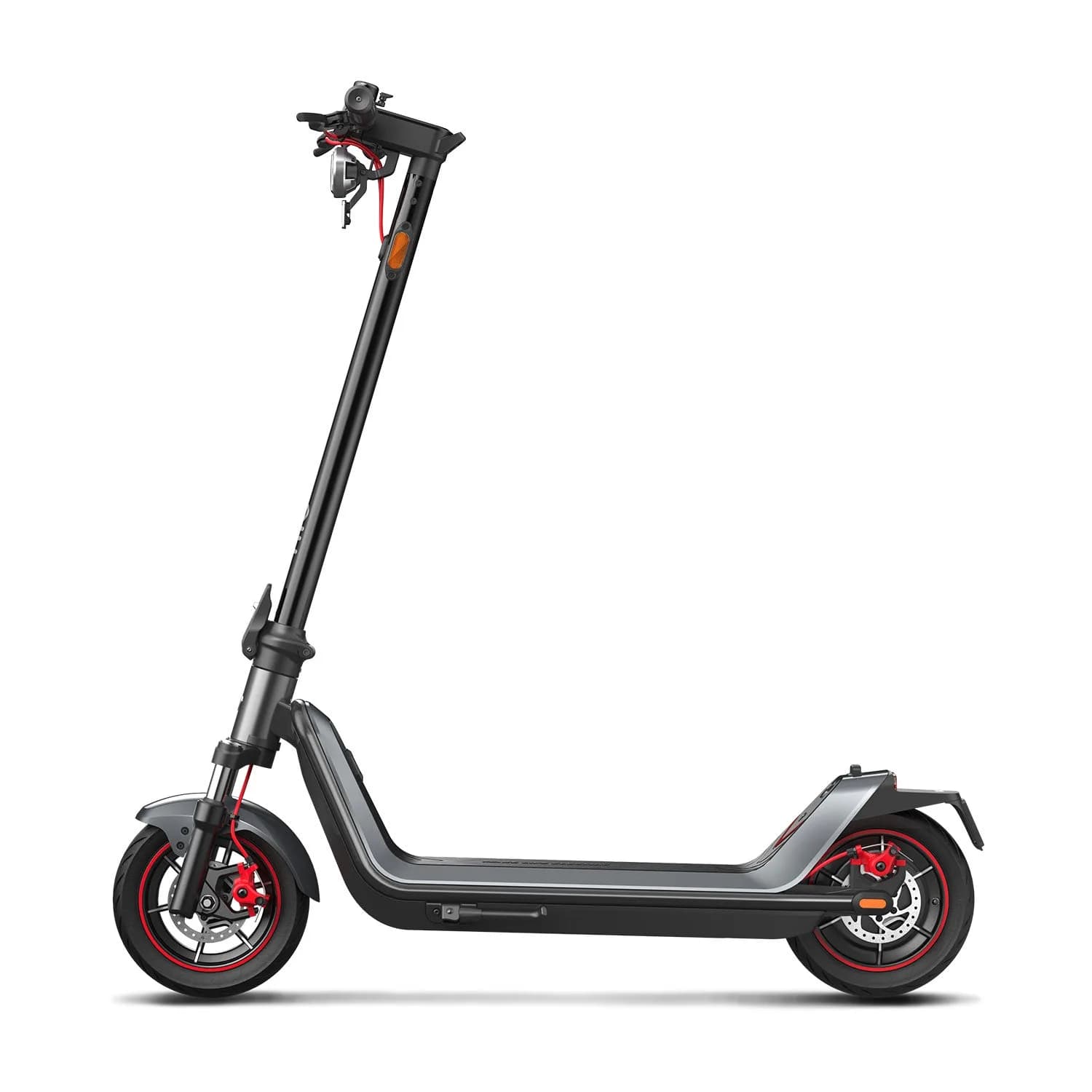
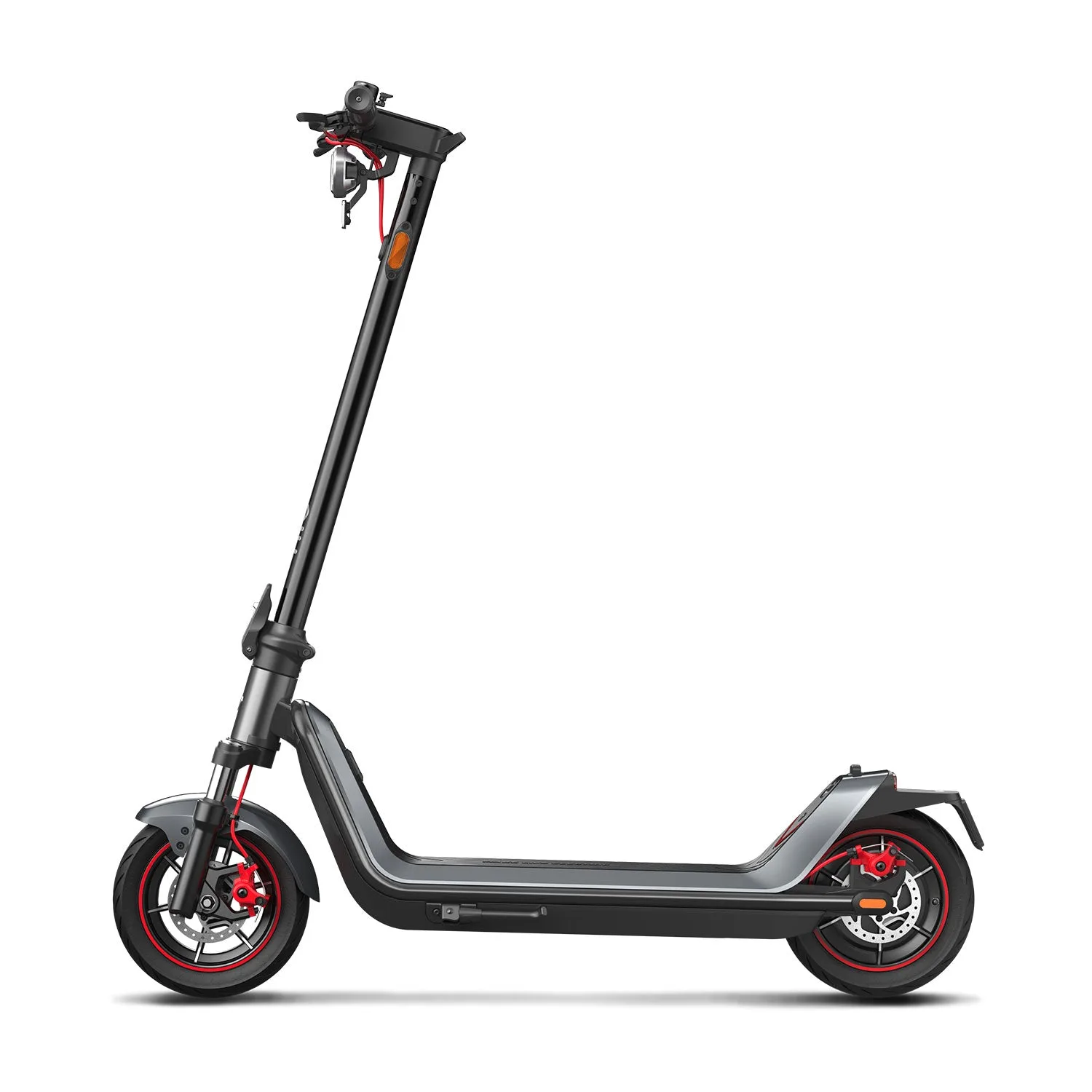
NIU is an e-mobility brand that sells two separate product families through shop.niu.com: the KQi electric scooters and the BQi electric bikes. The KQi line spans an entry-level folding scooter up to a premium model rated 500W with 1000W peak power, all designed to fold down for storage and carrying. The BQi line consists of pedal-assist e-bikes built for longer distances, seated comfort, and, in the case of the Fat Tire 300, mixed-terrain riding.
Every model across both lines is backed by the same 2-year, unlimited-mileage warranty covering manufacturing defects in materials and workmanship, though wear items like tires, brake pads, and drive belts are excluded, as with most e-mobility brands.
NIU KQi Air
What We Like
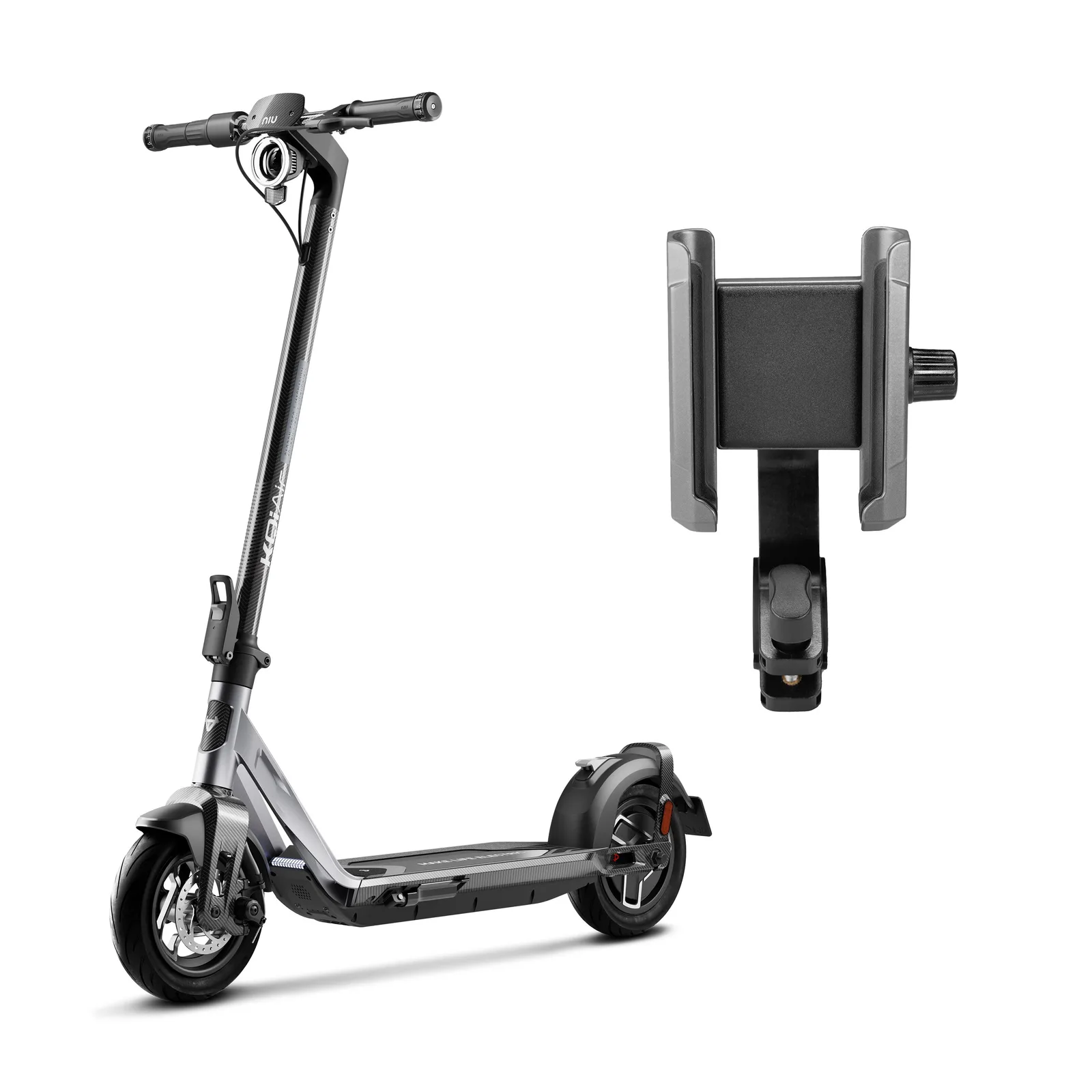
- Carbon fiber build keeps it under 26 lbs, genuinely one-hand portable
- Pneumatic tires trade some maintenance-free convenience for a smoother ride
What to Consider
- 31 miles is the manufacturer's claim; expect closer to 20–22 miles in mixed real-world riding
This is NIU's lightest scooter with pneumatic tires, aimed at riders who carry their scooter up stairs or onto transit daily and don't want to compromise ride comfort for weight.
Is a NIU electric scooter or a NIU e-bike right for your commute?
The core split is distance and terrain. NIU recommends a KQi scooter for commutes under 15 miles where portability, folding size, and quick on-demand trips matter most; it recommends a BQi e-bike once a commute exceeds 15 miles, involves hills, or needs cargo capacity via racks and panniers. That lines up with independent guidance: electric scooters typically deliver 10–30 miles per charge with smaller, lighter batteries, while folding e-bikes typically reach 20–40+ miles and add seated comfort plus carrying capacity for groceries or a child seat.
NIU KQi1 Pro
A 500W, 35.7 lb entry-level folding scooter built for commutes under 10 miles and easy transit carrying.
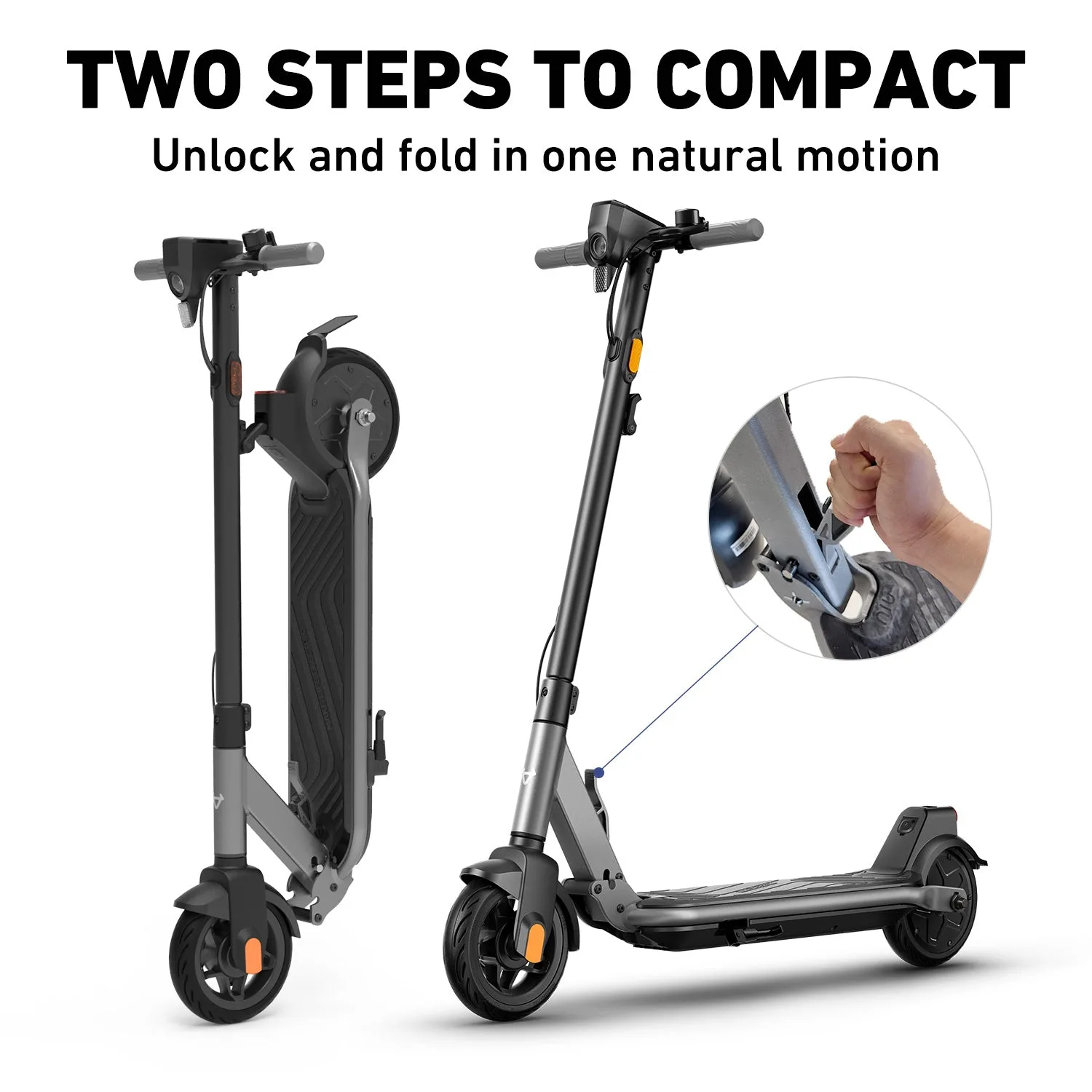
Check current priceWeight matters more than folded size once you're actually carrying the thing. Scooters under 26 lbs are genuinely one-hand portable up stairs; models in the 26–35 lb range are manageable but you'll feel it; anything heavier is realistically an elevator-and-flat-ground device. Folding only reduces height and width: a 48-lb scooter is still 48 lbs folded. Within NIU's own lineup, that spans the 25.8 lb KQi Air (easy stairs) to the 48.7 lb KQi 300X (fine with an elevator, a slog on a walk-up).
How to choose between KQi and BQi for your situation
Match the model to how you'll actually use it, not the spec sheet in isolation.
- Flat, sub-10-mile commute, stairs at home or work: a light KQi model like the KQi1 Pro or KQi Air keeps daily carrying manageable.
- 10–20 mile commute with some hills: the KQi 300X's 500W rated motor (1000W peak) and 25% claimed climb rating give it the most headroom in the scooter line, or step up to a BQi e-bike if elevation gain is frequent.
- Long commute, want to arrive without being winded: the BQi-C3 Pro's swappable twin batteries and 28 mph pedal-assist top speed suit multi-mile, multi-day riding without daily full recharges.
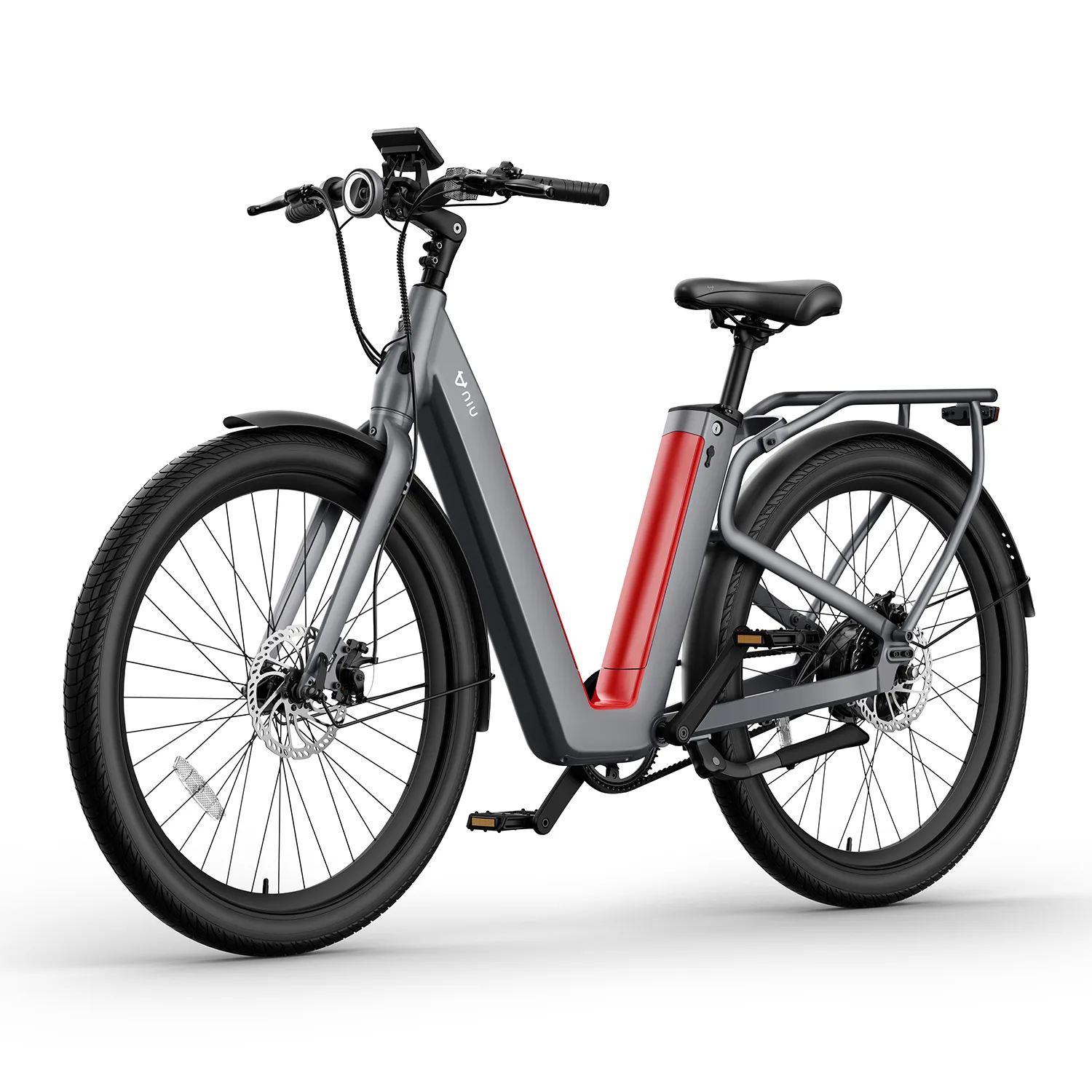
- Mixed pavement, gravel, or unpaved trail sections: the BQi Fat Tire 300 pairs fat tires with hydraulic disc brakes and a lockable suspension fork for stability off smooth asphalt.
- Carrying cargo or a passenger seat: BQi e-bikes accept racks and panniers in a way folding scooters don't; the Fat Tire 300 ships with a rear rack.
NIU KQi vs BQi comparison table
| Model | Motor | Claimed range | Weight | Best for |
|---|---|---|---|---|
| KQi1 Pro | 500W | 14.3 mi | 35.7 lbs | Short flat commutes, budget entry point |
| KQi Air | 350W (700W peak) | 31 mi | 26.2 lbs | Lightest carry, daily stair/transit use |
| KQi 200P | 350W (700W peak) | 33.6 mi | 43.4 lbs | Comfort via pneumatic tires, moderate hills |
| KQi 300X | 500W (1000W peak) | 37.3 mi | 48.7 lbs | Longest KQi range, steepest hills, triple brakes |
| BQi-C3 Pro | 750W | 90 mi | 70.5 lbs | Longest total distance, swappable batteries |
| BQi Fat Tire 300 | 750W | 50 mi | ~79 lbs | Off-road capability, hydraulic disc brakes |
Specs above are manufacturer claims. Treat every range figure as a ceiling, not an expectation. See the real-world math below.
Riding a NIU electric scooter or e-bike safely and within the law
Understand the numbers on the spec sheet before you buy. Manufacturers, NIU included, test range under close-to-ideal conditions: a light rider, flat ground, steady moderate speed, mild weather. Independent testing shows electric scooters typically deliver an average of 71% of their claimed range in real-world riding, and e-bikes show similar variance. A practical rule of thumb is to multiply any claimed range by roughly 0.7 when planning a commute.
Motor wattage claims can also mislead. Nominal (continuous) power is what a motor can sustain for the whole ride and is the figure that governs legal compliance in most jurisdictions; peak power is a short burst rating, often 2–5 times higher, used mainly for marketing. When comparing NIU's listed wattages to competitors, compare nominal to nominal.
Legally, electric scooters are permitted in 48 US states as of 2026, generally treated like bicycles under a low-speed electric vehicle category (max 20 mph, 750W or less), though helmet rules, minimum age, and sidewalk riding vary by state and city. E-bikes follow the federal three-class system: Class 1 is pedal-assist only to 20 mph, Class 2 adds throttle to 20 mph, and Class 3 is pedal-assist to 28 mph and is often restricted from multi-use trails. All three classes cap continuous motor power at 750W. E-bikes above that continuous rating are legally motorcycles or off-highway vehicles in most states and require registration, insurance, and off-road use only.
Certification matters too. UL 2272 governs e-scooter battery and electrical systems, including a drop-test requirement; UL 2849 covers the whole e-bike electrical system rather than just the battery pack. New York City has already made UL certification mandatory for e-bike and e-scooter battery packs, and that trend is spreading to other cities. Ask any brand you're considering whether their batteries carry the relevant UL certification before you buy.
Braking systems also differ meaningfully in stopping power. Mechanical disc brakes are the strongest standalone option and can stop from 15 mph in under 10 feet; drum brakes need 20+ feet from the same speed; regenerative braking alone needs 30–40 feet. Hydraulic disc brakes, used on the BQi Fat Tire 300, deliver 20–30% more stopping force than mechanical discs and are considered the safety standard for heavier e-bikes ridden above 20 mph. NIU's KQi 300X pairs front and rear disc brakes with rear regenerative braking, a hybrid setup that's generally the strongest combination available on a folding scooter.
Common mistakes when choosing a NIU model
A few patterns come up repeatedly when riders pick the wrong NIU model for their situation:
- Buying for max claimed range instead of realistic range. Apply the roughly 60–70% real-world rule before comparing models, not the headline number.
- Ignoring folded weight. A scooter that folds small but weighs 48+ lbs is still a workout on stairs; check weight, not just folded dimensions.
- Choosing a scooter for a hilly, multi-mile commute. Scooters top out around 20–25% climb grade in NIU's lineup; a BQi e-bike's pedal assist and higher torque handle sustained hills more comfortably.
- Overlooking tire type. Solid tires need no maintenance but transmit every bump; pneumatic tires ride smoother and grip better but need occasional pressure checks and can puncture.
- Not checking local class/wattage rules. A model that's street-legal in one city may be restricted in another; confirm your state and city's e-bike class and e-scooter rules before riding on the road or a shared path.
Alternatives worth a look
If you're still weighing scooter brands broadly, our Navee electric scooter guide covers a different lineup with its own suspension and range trade-offs. If you're new to e-bikes generally and want the fundamentals before comparing brands, start with our how to buy an electric bike guide. And if timing your purchase around current offers matters to you, see our dedicated NIU scooter deal-timing guide for how to track pricing windows.
The bottom line
For most riders, the decision comes down to distance and terrain, not brand loyalty within NIU's own catalog. If your ride is under 15 miles, mostly flat, and portability matters (stairs, transit, small apartment storage), a KQi scooter, the KQi Air for lightest carry or the KQi 300X for the longest range and strongest brakes, is the better fit. If your commute runs longer, includes real hills, or you need to haul cargo, the BQi-C3 Pro's long claimed range or the BQi Fat Tire 300's off-road hardware will serve you better than any scooter in the lineup.
Shop the NIU lineupReferences
This article is for informational purposes only and does not constitute legal, safety, or medical advice. E-scooter and e-bike laws vary by state and city and change over time. Verify current local regulations, age minimums, and helmet requirements before riding. Manufacturer range, weight, and performance figures are self-reported by NIU and are not independently lab-tested by Gearova; expect real-world results to vary with rider weight, terrain, and weather.
More E-Bikes & Scooters guides
 Electric Dirt Bike Upgrades: Safest Build Order (2026 Guide)
 Revibikes Models Compared: 5 Best Picks by Rider Type (2026)
 Varstrom E-Bike Conversion Battery: Voltage & Capacity Guide (2026)
 Asiwo MAKO Review 2026: Best Entry-Level Sea Scooter?
 Soleil Supplies Review 2026: Best Tuttio & Yozma Upgrade Parts
 KuKirin Electric Scooters: Safe Buyer's Guide to All 14 Models (2026)