Asiwo U1 Review 2026: Turn Any SUP or Kayak Into a Motor Board
Asiwo U1 review for 2026: a 1100W thruster with 17 kgf and 12 km/h that mounts to SUPs and kayaks and dives to 50 m. Specs, use cases, and who should buy it.
Asiwo U1 Review: The Core Specs
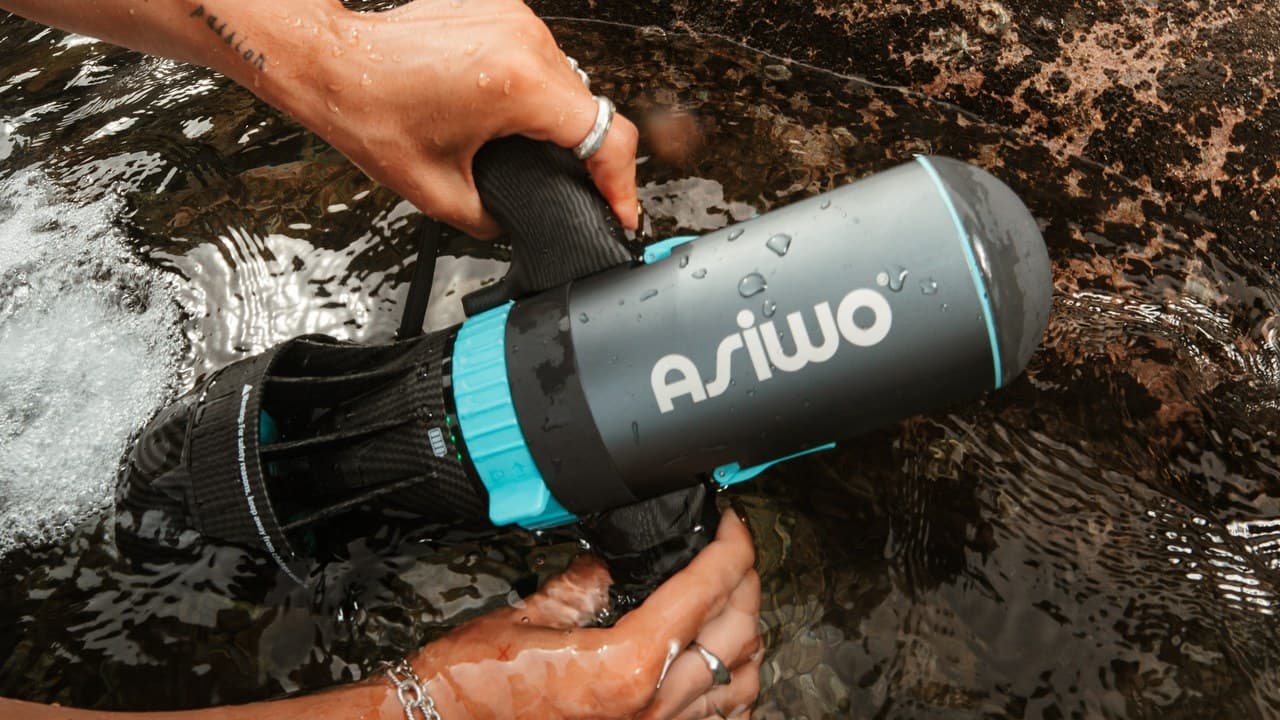
Most underwater scooters do one thing: pull a diver through the water. The Asiwo U1 does something most of its category cannot - it bolts onto a paddleboard or kayak and turns it into a motorized craft, then detaches and works as a 50-meter dive scooter when you want to go under. That dual identity is the whole reason the U1 exists, and it is why it sits at the top of Asiwo’s range.
This Asiwo U1 review focuses on what the U1 actually is - a high-thrust surface propulsion system that happens to also dive - and who should spend roughly $956 on it instead of a cheaper single-purpose scooter. If you only ever dive, this is not your model. If your weekends mix paddling, kayaking, and the occasional dive, the U1 may replace two or three separate purchases.
Asiwo U1 Review: The Core Specs
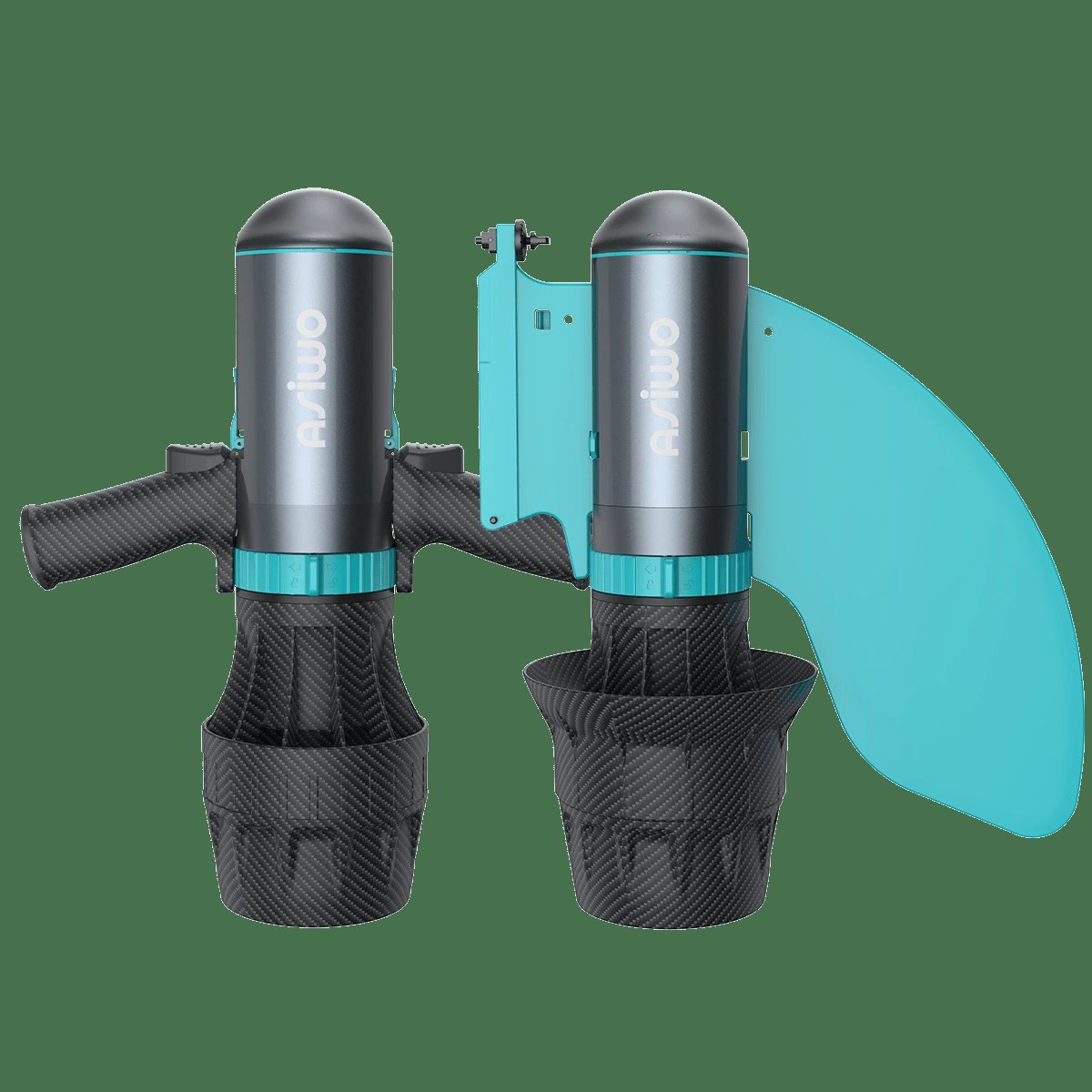
The U1 is built around a far larger motor than the rest of the Asiwo lineup. Here is what drives it:
| Spec | Asiwo U1 |
|---|---|
| Motor power | 1100 W |
| Max thrust | ~17 kgf |
| Top speed | 12 km/h |
| Runtime | up to 80 minutes |
| Max depth | 50 m |
| Weight | 13.2 lbs |
| Price | ~$956 |
| SUP/kayak compatibility | ~99% of boards |
The headline number is the 1100 W motor producing roughly 17 kgf of thrust. For context, that is dramatically more pull than the MANTA or MANTA 2, whose motors are tuned for the lower drag of a streamlined submerged diver, not for pushing a wide, high-drag paddleboard across the surface. Moving a SUP and rider needs real thrust, and the U1 is the only Asiwo model engineered for it.
The 12 km/h top speed is the fastest in the lineup, again because surface propulsion against wind and chop demands more than underwater gliding. The 80-minute runtime is strong given how much power the motor draws, and the 50 m depth rating means the U1 is not a compromise underwater either - it dives deeper than the MANTA series.
Asiwo U1 Review: The Paddleboard and Kayak Use Case
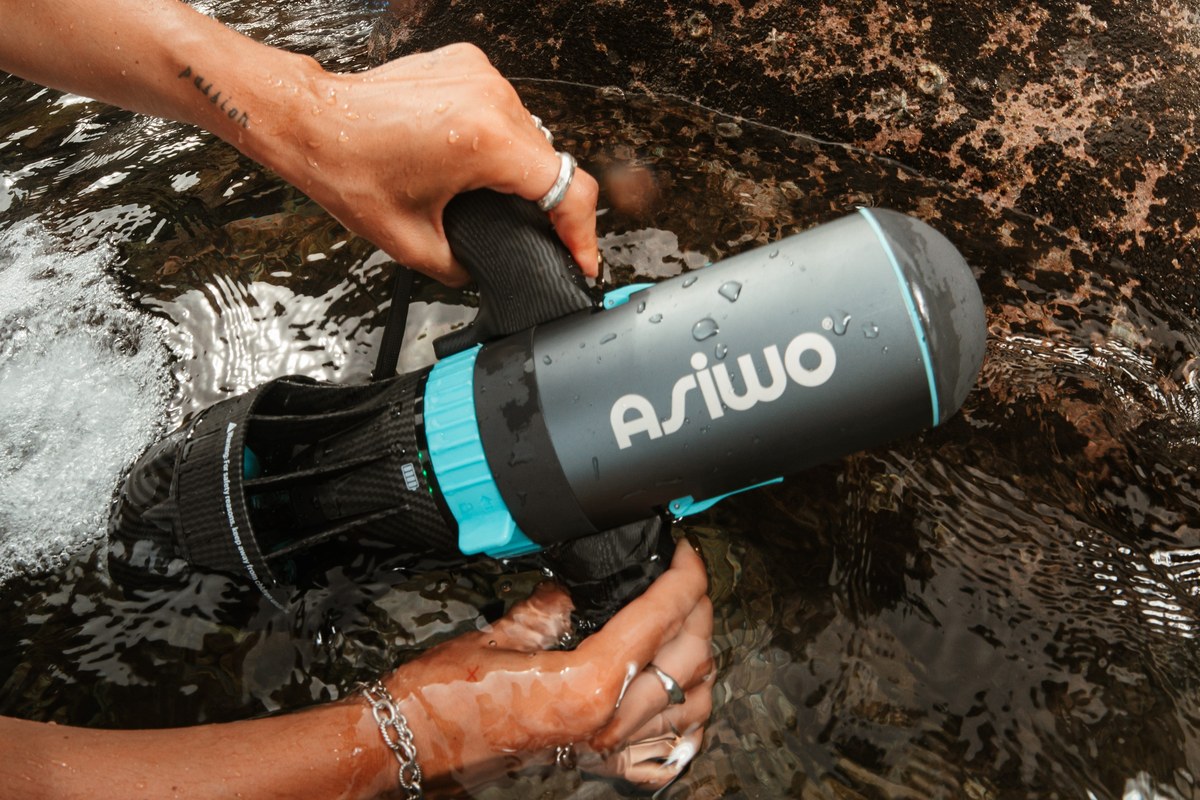
This is where the U1 earns its price. Mounted to the rear of a paddleboard or kayak, it converts a human-powered craft into a motorized one. Compatibility is broad - Asiwo lists roughly 99% of SUPs as supported - so you are not locked into a single proprietary board.
What does that change in practice? Several things:
- Range without exhaustion. Paddling out a mile and back is a workout; doing it under power lets you explore far more water without arriving worn out.
- Wind and current insurance. A SUP caught in an offshore wind or a kayak fighting a tidal current is a genuine safety concern. 17 kgf of thrust gives you a powered way home.
- Towing and assist. The thrust is enough to help tow a second craft or assist a tired paddler back to shore.
- Fishing positioning. Kayak anglers can hold position or reposition quietly without constantly setting down the rod to paddle.
The U1 is, functionally, a trolling-motor-class thruster sized for personal watercraft. That is a different product than a dive scooter, and it is the reason a buyer who paddles would choose the U1 over a MANTA 2 despite the higher price.
Asiwo U1 Review: Underwater Performance
Detach the U1 from the board and it becomes a sea scooter rated to 50 m - deeper than the 40 m (131 ft) of the MANTA and MANTA 2. The high thrust that pushes a paddleboard also makes it a powerful underwater puller, though the U1’s 13.2 lbs make it the heaviest scooter in the lineup to handle on a boat or shore.
For a diver, the practical question is whether the U1’s underwater mode is a true substitute for a dedicated dive scooter. The answer: it is capable and deep-rated, but it is heavier and was designed surface-first. A diver whose primary activity is diving will be better served by the lighter, dive-optimized MANTA 2. The U1’s underwater capability is best understood as a strong bonus on top of its surface role, not its main job.
For the full diving-first comparison, see our Asiwo MANTA 2 review and the lineup-wide Asiwo sea scooter comparison, which rank all four models by depth, runtime, and use case.
Who Should Buy the Asiwo U1
The U1 is a specialist’s tool aimed at a specific buyer:
- Paddleboarders who want range and a safety margin against wind and current
- Kayak anglers who need quiet, hands-free positioning and powered return trips
- Multi-sport water users who paddle, kayak, and dive and want one device instead of three
- Explorers covering large stretches of coastline or lake who would otherwise be limited by paddling endurance
It is the wrong purchase for one group: divers who never paddle. If you will never mount the U1 to a board, you are paying roughly $600 more than a MANTA 2 for thrust and surface speed you will never use. Be honest about your activities before choosing the most expensive model in the range.
Asiwo U1 Review: Practical Considerations
A few real-world notes worth weighing before purchase:
Weight and transport. At 13.2 lbs, the U1 is noticeably heavier than the rest of the lineup. Combined with a board and paddle, factor in how you will carry everything to the water.
Battery and air travel. High-capacity lithium batteries face airline restrictions. As with the MANTA 2, anyone planning to fly with the U1 should verify the battery’s watt-hour rating against their airline’s carry-on limits before booking - high-Wh packs often require approval or cannot fly at all.
Mounting and setup. Broad SUP compatibility is a strength, but confirm the mount works with your specific board before buying, and budget a few minutes for attaching and detaching at the launch.
Maintenance. Like all saltwater equipment, the U1 needs a fresh-water rinse after every sea session, and the seals and O-rings benefit from periodic inspection given the 50 m depth rating.
Asiwo U1 Review: Is It Worth the Price?
At roughly $956, the U1 is a serious purchase, and the value question only resolves one way: by counting how many activities it covers. As a single-purpose dive scooter it is poor value - heavier and pricier than a MANTA 2 that dives nearly as deep and handles better underwater. As a do-everything water-mobility platform, the math flips.
Consider what the U1 replaces for a multi-sport user. A dedicated SUP electric motor, a kayak trolling thruster, and a dive scooter would each cost several hundred dollars on their own; bought separately, the trio easily exceeds the U1’s price while cluttering the garage with three devices to charge and maintain. The U1 folds all three roles into one body with a single battery and a single charging routine. For someone who genuinely paddles, kayaks, and dives, that consolidation is where the value lives.
The break-even logic is simple. If you will use the U1 for two or more of its roles regularly, it is the best-value option in the lineup. If you will use it for one, a cheaper specialist model wins. The U1 punishes single-purpose buyers and rewards versatile ones - price it against your whole calendar of water activities, not against any one of them.
Frequently Asked Questions
Is the Asiwo U1 a dive scooter or a paddleboard motor?
Both. It is primarily a 1100 W surface thruster (~17 kgf) that mounts to SUPs and kayaks, and it also functions as an underwater scooter rated to 50 m. Its main design intent is surface propulsion, with diving as a capable secondary mode.
How fast does the Asiwo U1 go?
Up to 12 km/h, the fastest in Asiwo’s lineup. Surface propulsion against wind and chop requires more speed and thrust than underwater gliding, which is why the U1 outpaces the MANTA models.
Will the U1 fit my paddleboard?
Asiwo lists compatibility with roughly 99% of SUPs, so most boards are supported. Confirm the mount fits your specific board before purchasing.
Is the U1 worth it compared to the MANTA 2?
Only if you paddle or kayak. For diving alone, the lighter, dive-optimized MANTA 2 is the better and cheaper choice. The U1 justifies its price for multi-sport users who want one device for surface and underwater use.
What is the runtime of the Asiwo U1?
Up to 80 minutes, which is strong given the 1100 W motor’s power draw. Real runtime depends on speed, load, and water conditions.
Final Verdict
The Asiwo U1 is the most versatile and most expensive model in the range, and both of those facts come from the same source: a 1100 W motor built to push a paddleboard, not just pull a diver. For the multi-sport buyer who paddles, kayaks, and dives, it consolidates several devices into one capable platform with strong thrust, 12 km/h surface speed, and a 50 m depth rating. For a diver who never paddles, it is more scooter than the job needs - the MANTA 2 is the smarter buy. Match the U1 to a genuinely multi-sport life on the water and it delivers exactly what its price promises.
More E-Bikes & Scooters guides
 ONECNA GT7 Review 2026: Specs, Range and Real Repairability
 Tuttio Electric Bike Guide: 4 Models Compared Safely (2026)
 NIU Electric Scooter vs E-Bike: Best Model Guide (2026)
 A-Spadz CAVET Review: Moped-Style Electric Bike
 A-Spadz CAVET Buying Guide: 3 Models Compared for 2026
 Off-Road Electric Scooter: 6 Best Buying Criteria (2026 Guide)