Helical Cutterhead Upgrade Guide: Retrofitting Your Planer or Jointer in 2026
A helical cutterhead upgrade swaps a planer's or jointer's straight knives for a spiral carbide-insert head. See which DeWalt, RIDGID, Jet, Grizzly and Makita machines have a drop-in retrofit kit, how to read the spec sheet, and how to verify compatibility before you order.
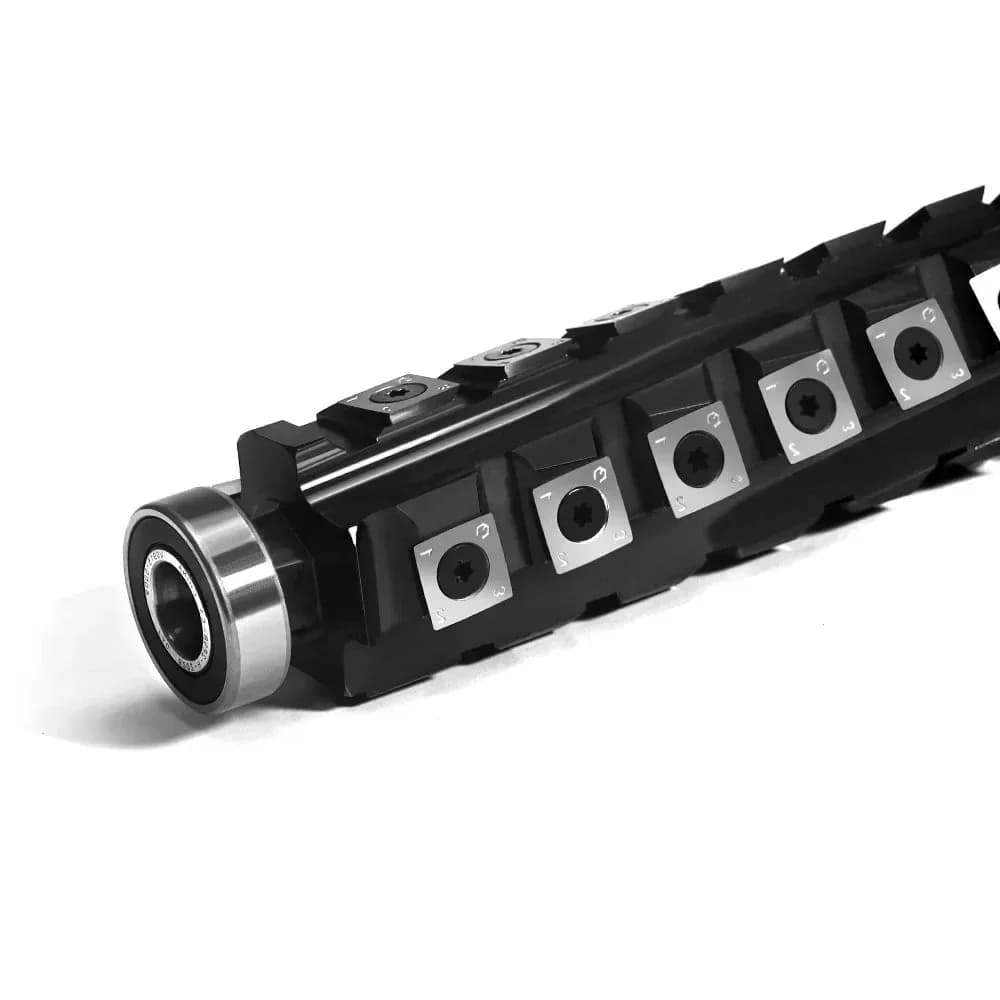
How a helical cutterhead upgrade works
- How a helical cutterhead upgrade works
- Which planers and jointers have a drop-in kit
- How to read a cutterhead spec sheet
- Performance gains: noise, tearout, motor load, sanding time
- Installing a helical cutterhead retrofit kit
- Verify compatibility before you order
- Common retrofit mistakes
- Retrofit kit vs. buying a new helical-head machine
A helical cutterhead upgrade replaces a planer's or jointer's straight knives with a spiral head of indexable carbide inserts, cutting tearout and noise while extending blade life far beyond steel knives — without buying a new machine.
A helical cutterhead upgrade is a drop-in retrofit kit that swaps a factory straight-knife cutterhead for a cylindrical head studded with rows of small carbide inserts set at a shear angle. Unlike buying an entirely new planer or jointer, it reuses the machine's existing motor, frame, feed rollers and dust hood — only the cutting mechanism changes. This guide covers how the geometry works, which benchtop planers and 6-inch jointers already have a matching drop-in kit, how to read a cutterhead spec sheet, and exactly what to verify before you order one.
A helical cutterhead upgrade is worth it if your straight-knife planer or jointer already tears out figured wood and you plan to keep the machine.
If your planer or jointer model has a listed drop-in kit and you mainly work figured or dense hardwood, a helical cutterhead upgrade is usually the faster payoff than replacing the whole machine. Skip it if your machine has no listed kit or you only plane softwood where straight knives already perform fine.
Key Highlights
- Retrofit kits exist for popular benchtop planers (DeWalt DW735, DW734/DW733, Makita 2012NB) and 6-inch jointers (RIDGID, Jet, Grizzly).
- Carbide inserts run 5-10 times longer than high-speed-steel straight knives, and each insert has 4 usable cutting edges.
- Independent testing puts noise reduction at roughly 50% and tearout reduction at roughly 90% versus straight knives.
- Compatibility is model-specific — verify exact machine model, cutterhead diameter, and bearing setup before ordering.
How a helical cutterhead upgrade works
A straight-knife cutterhead runs one to three long, full-width blades that strike the board in a single synchronized chop each rotation. A helical cutterhead upgrade replaces that head with a cylinder carrying multiple staggered rows of small square carbide inserts, each set at an incline of roughly 14 degrees to the cutting direction. That angled geometry produces a shear cut rather than a perpendicular chop — the insert slices through wood fibers progressively instead of striking the whole width of the board at once.

Because only a small fraction of each insert contacts the wood at any instant, the cutting load is spread out over the rotation instead of concentrated into periodic impacts. That single geometric change is the reason a helical cutterhead upgrade runs quieter, tears out less on figured grain, and pulls less peak current from the motor than the straight-knife head it replaces.
Which planers and jointers have a drop-in kit
Retrofit availability is model-specific, not brand-wide — a kit is machined to match one machine's exact cutterhead diameter and bearing spacing. The table below lists benchtop planers and 6-inch jointers with a published drop-in kit and how their insert counts compare.
| Machine | Rows | Carbide Inserts | Cutterhead Diameter |
|---|---|---|---|
| DeWalt DW735 / DW735X / DW735-XE | 4 | 56 inserts | 48.8mm |
| DeWalt DW734 / DW733 / DW733-QS | 4 | 54 active inserts | — |
| Makita 2012NB (12-inch planer) | 4 | 52 inserts | — |
| RIDGID 6-inch jointer (JP0610, JP06101, JP6101, JP06000) | 4 | 30 inserts | 63mm |
| Jet 6-inch jointer (JJ-6, JJ-60S, JJ-6CS, JJ-6CSX, JJ-6CSDX, JJ-6HHDX) | 4 | 28 active inserts | 63mm |
| Grizzly 6-inch jointer (G1182, G0654, G0452, G0526, G0813, G0814) | 4 | 30 inserts | 63mm |


Helical Cutterhead for DeWalt DW735 / DW735X / DW735-XE
4-row head with 56 carbide inserts sized for the most widely owned benchtop planer.
How to read a cutterhead spec sheet
Every retrofit kit listing publishes a handful of numbers that actually matter for fit and performance. Learning what each one means keeps you from ordering the wrong head or misjudging how it will perform.
Insert count and rows
Entry-level cutterheads typically run 24-30 carbide inserts total, while premium heads scale up to 40-72 inserts. More inserts generally produce finer cuts-per-inch and a smoother surface, but they also add weight to the head. Benchtop planer kits from FindBuyTool sit in the 52-56 range, while their 6-inch jointer kits use 28-30 inserts — the insert count scales with the width of the cut, not the brand.
Insert dimensions and edges
Most retrofit inserts across this brand's planer and jointer lineup share a 15x15x2.5mm carbide square set at a 30° mounting angle. Each insert is indexable, meaning it has 4 usable cutting edges — when one edge dulls, you loosen the screw, rotate the insert 90°, and expose a fresh edge instead of replacing the whole piece.
Cutterhead diameter and bearings
Diameter has to match the original head almost exactly, or the new head won't clear the housing or align with the pulley. 6-inch jointer kits in this lineup run a 63mm cutterhead diameter, and the DW735 planer kit runs 48.8mm. Most kits ship with pre-installed bearings sized for the target machine, which removes one variable from the swap.
Performance gains: noise, tearout, motor load, sanding time
The numbers below come from independent testing of helical versus straight-knife cutterheads rather than brand marketing copy, so treat them as directional ranges rather than guarantees for any specific board.
- Noise: helical heads run roughly 50% quieter than straight-knife heads, with one tested benchtop planer measured around 68 decibels.
- Tearout: the shear-cut geometry reduces tearout by roughly 90% on figured woods like curly maple and quilted mahogany, where straight knives tend to lift and fracture grain.
- Blade life: carbide inserts last 5-10 times longer than high-speed-steel straight knives before replacement, and the 4-edge rotation system multiplies usable life further.
- Motor load: peak amperage draw drops roughly 10-20% after a helical upgrade, since cutting force is distributed continuously instead of concentrated in periodic strikes.
- Sanding time: professional woodworkers report 40-60% less hand-sanding time on hardwood after switching, because the cleaner shear cut needs less surface correction.
A helical cutterhead upgrade also produces smaller, more uniform chips than a straight-knife head, which helps dust collection: the smaller particles move through hoses and collection ducts more easily and clog the system less often, an advantage that shows up most on planers with under-table dust ports.

Helical Cutterhead for RIDGID 6-inch Jointer
What We Like
- Pre-installed bearing pair reduces the parts you need to reuse from the original head.
- 3-year limited warranty on the cutterhead per the vendor's warranty policy.
What to Consider
- Only fits the specific RIDGID jointer models listed — confirm your model number first.
This is a machine-specific helical cutterhead upgrade rather than a universal fit, built to the 63mm cutterhead diameter used across RIDGID's 6-inch jointer line. Because the width of cut on a 6-inch jointer is smaller than a benchtop planer, the insert count runs lower — 30 versus the 52-56 used on wider planer heads — while keeping the same 4-row, shear-cut geometry.
Installing a helical cutterhead retrofit kit
Installation is a mechanical swap, not a rewiring job, but it does require care around torque specs and alignment. The general sequence below is drawn from retrofit compatibility guides rather than any single manufacturer's manual — always follow the instructions included with your specific kit.

- Unplug the machine and remove the cutter guard, feed rollers, or any panel blocking access to the cutterhead, following your machine's service manual.
- Remove the original straight-knife cutterhead and set the knives, gib bars, and any spacers aside — some are reused, some are not, depending on the kit.
- Install the new helical cutterhead, seating it on the spindle and confirming the pre-installed bearings line up with the original mounting points.
- Reinstall the drive pulley, belt, and guard, and check that the head spins freely by hand before powering on.
- Torque each insert screw to roughly 6 Newton-meters using a calibrated torque wrench — over-tightening can crack the brittle carbide, and under-tightening risks the insert rotating loose during a cut.
- Run the planer or jointer empty first, listening for rubbing or vibration, then feed a scrap board before committing to a real project.
Verify compatibility before you order
Retrofit mismatches happen at the model-number level, not the brand level, so this is the step most worth double-checking before you spend money on a helical cutterhead upgrade.
Three things to confirm
- Exact machine model and serial number. Brands release multiple variants of the same base machine — DeWalt DW735 vs. DW735X vs. DW735-XE — with different bearing spacing between them.
- Cutterhead mounting diameter and length. The new head has to match your original spindle taper and pulley alignment or it won't seat correctly.
- Bearing compatibility. Confirm whether the kit ships with pre-installed bearings matched to your spindle, or whether you need to reuse the original bearings.

Common retrofit mistakes
Most helical cutterhead upgrade problems trace back to skipping the verification step above, not to the hardware itself.
- Ordering by brand instead of exact model. A kit built for the DW735 will not fit a DW734 — check the specific model and revision, not just the machine family.
- Guessing on torque. Hand-tightening insert screws by feel risks either cracking a carbide insert or leaving it loose enough to chatter mid-cut; use a calibrated torque wrench set near 6 Newton-meters.
- Ignoring bearing reuse instructions. Reusing worn original bearings on a kit designed to ship with its own pre-installed set can introduce vibration that a brand-new cutterhead shouldn't have.
- Skipping the dry run. Spinning the head by hand and running the machine empty before feeding a board catches misalignment before it damages a workpiece or the new inserts.
Retrofit kit vs. buying a new helical-head machine
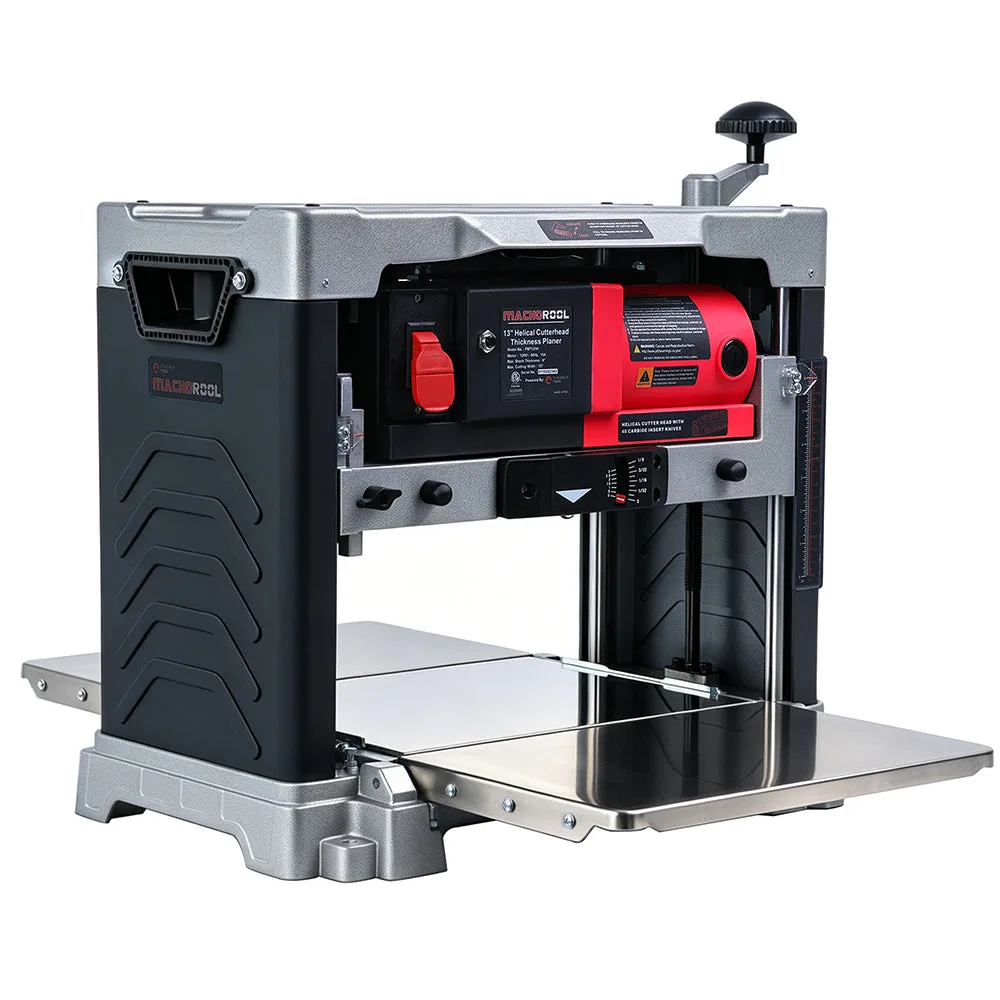
A helical cutterhead upgrade makes the most sense when your existing planer or jointer is otherwise in good shape — solid motor, tight bed, no worn bearings elsewhere — and the only complaint is tearout or noise from the straight-knife head. If the machine has other mechanical issues, or you're shopping from scratch, it may be worth comparing the retrofit cost against a machine that ships with a helical head from the factory. For a closer look at machines that come with a helical cutterhead already installed, see our full FindBuyTool review of the Machorool FB131H and FB132H planers.
How We Chose These Kits
We compared published spec sheets across benchtop planer and 6-inch jointer retrofit kits, cross-checked insert counts and torque specs against independent performance testing, and prioritized kits with clear model-specific fitment over generic listings.
The Bottom Line
If your DeWalt, RIDGID, Jet, Grizzly, or Makita planer or jointer has a matching kit, a helical cutterhead upgrade is one of the highest-value retrofits in a home shop — quieter runs, cleaner cuts on figured wood, and inserts that outlast straight knives many times over.
Browse Helical Cutterhead KitsReferences
More Tools & Workshop guides
 20ft vs 40ft Shipping Container: Complete 2026 Buying Guide
 Shipping Container Accessories: 10 Best Upgrades (2026)
 Pichi Design EDC Gear: Best Modular Tools Guide 2026
 Evolution Power Tools Review 2026: Best Multi-Material Saws
 Ssimder Review 2026: 5 Best Multiprocess Welders (Guide)
 FindBuyTool Review 2026: Best Machorool Woodworking Tools