USA Containers: Shipping Container Accessories for Storage and Workshop Builds
A problem-solution guide to shipping container accessories for storage and workshop conversions — condensation and ventilation, vertical shelving, door repair, power, mobility, and security hardware, mapped to the accessory category built for each.
Why Do Shipping Containers Need Extra Ventilation?
Shipping container accessories solve the specific problems that come with converting a steel shipping container into a workshop or storage unit — condensation, wasted vertical space, stiff doors, no onboard power, and weak security, addressed with dedicated ventilation, shelving, door, and lock kits.
Shipping container accessories are aftermarket hardware kits built to retrofit an ISO shipping container into workable space, covering ventilation, storage, door repair, power, mobility, and security. Unlike a full container conversion service, each kit targets one specific problem and installs on a container you already own.
This guide breaks those problems down one at a time and matches each to the accessory category built for it, using USA Containers' product line as the reference point.
Start a DIY container-to-workshop conversion with a ventilation kit and shelving brackets, then layer in door hardware and security last.
None of these kits require you to buy a new container — they retrofit an existing 20-foot or 40-foot unit for airflow, storage, access, and security, one problem at a time.
View accessories at USA ContainersKey Highlights
- Factory container vents move only 5 to 10 CFM — far short of what a converted workshop or storage unit needs.
- Shelving brackets hang from existing container D-rings, so no drilling into the steel is required.
- Magnetic hooks hold up to 160 lbs per hook on any bare steel wall or ceiling.
- Door, security, mobility, and power upgrades are sold as standalone kits or bundled into one complete package.
Why Do Shipping Containers Need Extra Ventilation?
Condensation, often called "container rain," is the top complaint from anyone storing goods or working inside a converted container. Shipping container accessories built for airflow exist specifically to interrupt this cycle before it damages what's inside.
Container rain forms when warm, moist air trapped inside a sealed container touches the cold steel walls or ceiling and condenses back into liquid water. For every 10°C (18°F) rise in temperature, air can hold roughly twice as much water vapor, so the daily heat-up-and-cool-down cycle of a metal box is exactly the kind of swing that drives condensation.

The trigger point is the dew point — the temperature at which air is fully saturated with water vapor; once surface temperature drops below it, condensation forms. The bigger the gap between inside and outside temperature, the less that surface has to cool before water starts beading.
Built-in factory vents were never designed to solve this. Standard ISO container vents are small passive valves that move only 5 to 10 CFM (cubic feet per minute) — enough to relieve pressure during ocean transport, not enough to dry out a workshop or storage conversion. That gap is the reason aftermarket ventilation kits exist.
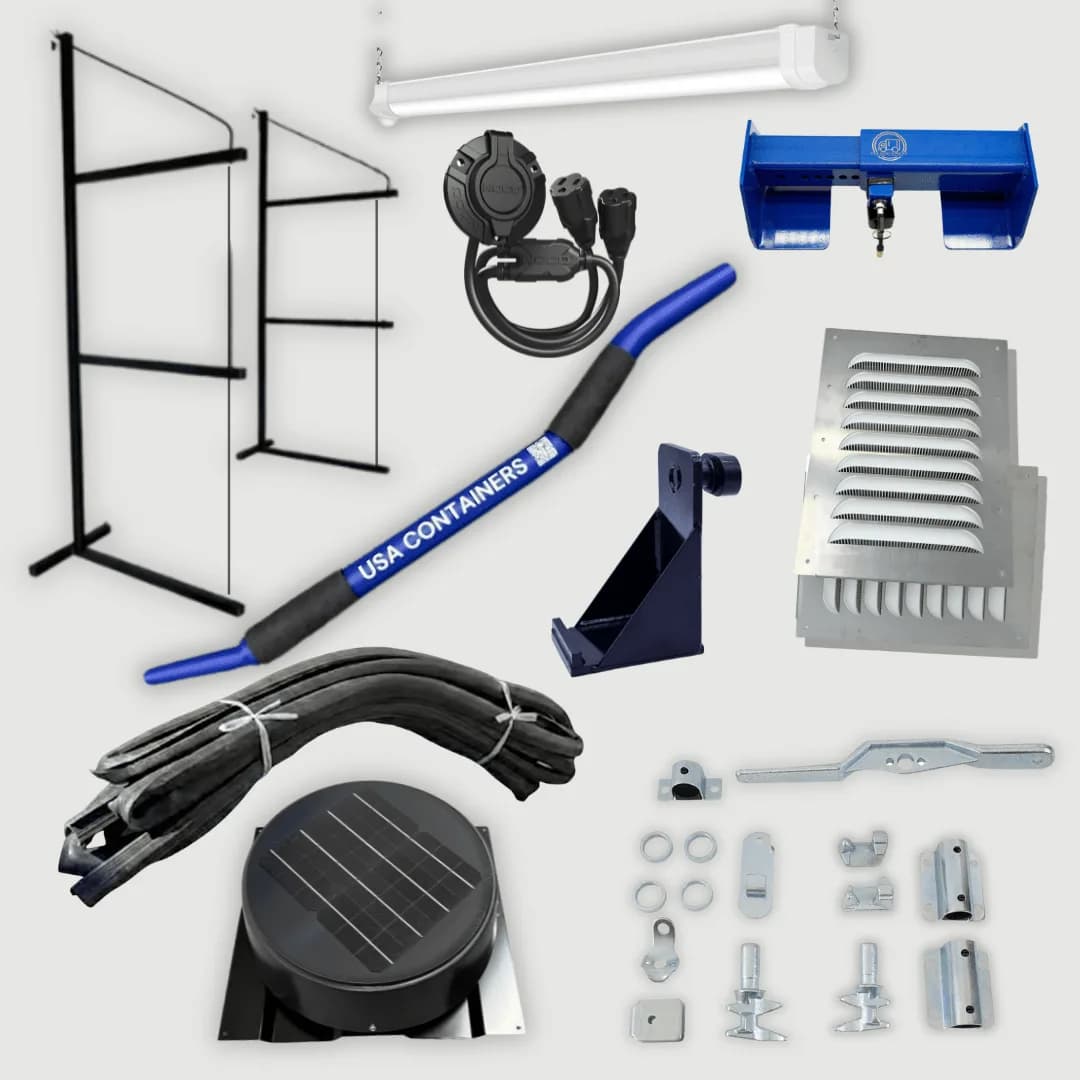
The fix recommended across container-conversion guidance is cross-flow ventilation: pairing passive intake vents that draw in fresh air with a powered exhaust fan that actively pushes humid air back out, so the interior air is continuously replaced instead of sitting still. USA Containers' Ventilation Kit follows that exact pairing — two louvered gable intake vents plus one powered exhaust vent, available in solar-only or solar-plus-electric configurations.

Powered Wall Vent
Rated up to 120 CFM of active exhaust airflow, run by a 10-watt monocrystalline solar panel and a brushless DC motor built for 5+ years of service.
Shelving and storage
A shipping container has plenty of floor area but almost no vertical organization out of the box. Shipping container accessories for storage exist to reclaim that ceiling-to-floor space without cutting or welding into the steel shell.

The 4-Level Shelving Brackets hang directly from the container's existing D-rings, so no drilling is required. Each bracket arm is rated to hold up to 550 lbs, and multiple arms stack on a single bracket pair, with 2-pack through 8-pack configurations scaling from a small side project to a full commercial workshop.
For a lighter storage-plus-power build, the Power & Utility Starter Pack pairs a 3-tier D-ring-compatible pipe rack with solar workshop lighting and a power outlet splitter — useful if you want basic shelving and a way to plug in tools without running any new electrical wiring.
Doors and seals
Stiff, misaligned, or leaking doors are a common problem on containers that have sat outdoors for years. Shipping container accessories for door repair replace the parts that wear out first, without structural modification to the door frame.

The Door Parts Kit covers the three components that fail most often: an easy-open leverage bar that adds mechanical advantage to a stuck handle, a replacement door gasket sized for standard or high-cube doors, and a door lock hardware kit for worn or corroded parts. All three are designed as drop-in replacements for standard ISO container doors.
Container dimensions matter here because gasket sizing isn't universal. Shipping containers follow the ISO 668 standard, which fixes external dimensions for every size class — a standard 20-foot container measures 6.058 m (19'10") long by 2.591 m (8'6") tall, while high-cube units are taller. That's why replacement gaskets and door hardware are sold by size class rather than as one universal fit.
Power, light and mobility
Once airflow, storage, and doors are handled, the remaining gaps in a container conversion are usually power, lighting, and getting the container into position in the first place.

The Mobility Starter Kit is built for repositioning and leveling a container already on site: a wheel movement kit, a leveler booster bracket for height adjustment, a 2-pack of lifting hooks, and heavy-duty ratchet straps for securing the load during a move. A second, upgraded version adds the wheels and tires themselves for easier rolling.
For power and light, the Power & Utility Starter Pack's solar workshop lighting and outlet splitter cover basic interior illumination and device charging without any permanent electrical wiring — a reasonable starting point before committing to a full electrical install.
Container security
A converted container is a visible, stationary target, and the last category of shipping container accessories is dedicated to keeping it that way in name only — locked.

Magnetic hooks aren't a security product, but they take advantage of the same steel construction that makes containers secure in the first place. Shipping containers are built from corrosion-resistant Corten steel, with corrugated walls typically 1.6 mm to 2 mm thick — a ferrous surface that neodymium magnets grip firmly. USA Containers' hooks hold up to 160 lbs of horizontal force per hook and install with no tools or drilling, in 6-pack or 10-pack quantities.

For the door itself, the closed-shackle padlocks use a rotating shackle design that shields the shackle pin from bolt cutters, paired with an anti-drill, anti-saw hardened steel body and 4 keys per lock. The Puck Lock Box goes a step further, enclosing the lock mechanism entirely in a steel housing that mounts bolt-on (no welding needed) or weld-on for a permanent install, removing the exposed shackle altogether.
| Problem | Recommended accessory | What it solves |
|---|---|---|
| Condensation / poor airflow | Ventilation Kit or Powered Wall Vent | Cross-flow airflow up to 120 CFM to replace stale, humid interior air |
| No vertical storage | 4-Level Shelving Brackets | D-ring mounted shelving rated to 550 lbs per arm, no drilling |
| Stiff or leaking doors | Door Parts Kit | Leverage bar, sized gasket, and door lock hardware |
| No power or light | Power & Utility Starter Pack | Solar lighting plus a power outlet splitter, no wiring |
| Repositioning the unit | Mobility Starter Kit | Wheel kit, leveler bracket, lifting hooks, ratchet straps |
| Theft risk | Closed-shackle padlock or Puck Lock Box | Anti-drill, anti-saw hardware that shields the shackle |
| Multiple problems at once | Complete Upgrade Bundle | Ventilation, doors, security, shelving, power and lighting in one kit |
Which Shipping Container Accessories Fit Your Build?
If you only have budget or time for one upgrade, start with airflow — condensation damages everything stored inside a container, and it's the hardest problem to fix after the fact. Storage and security can be added incrementally; ventilation is easiest to get right on day one.
How We Chose
Accessory categories in this guide were grouped by the physical problem they solve — condensation, storage, doors, power, mobility, and security — using manufacturer product specifications cross-checked against published container-ventilation and container-engineering sources.
Planning your upgrade
Diagnosing which shipping container accessories to buy first is straightforward when you work through the problem in order rather than shopping by category name.
- Identify the specific problem first — moisture on the walls, no shelving, a door that won't latch, or an unlocked unit — rather than buying accessories generically.
- Match the problem to the accessory category above; a single kit rarely fixes two unrelated issues well.
- Check that your container is a standard or high-cube unit before ordering door gaskets or hardware, since sizing differs between the two.
- Install non-structural components first — magnetic hooks, shelving brackets, lock boxes — before committing to anything that requires a cut opening, such as a powered vent.
- If more than two or three problem areas apply, compare the individual kits against the Complete Upgrade Bundle before ordering piece by piece.
Common mistakes to avoid
- Relying on the factory vent alone — it moves only 5 to 10 CFM, which will not prevent condensation in a converted unit.
- Buying a door gasket without confirming standard vs. high-cube sizing first.
- Mounting heavy shelving loads without checking the D-ring and bracket-arm rating for the total weight planned.
- Treating magnetic hooks as a security feature — they organize tools, they don't lock anything.
If you're also outfitting the workshop itself
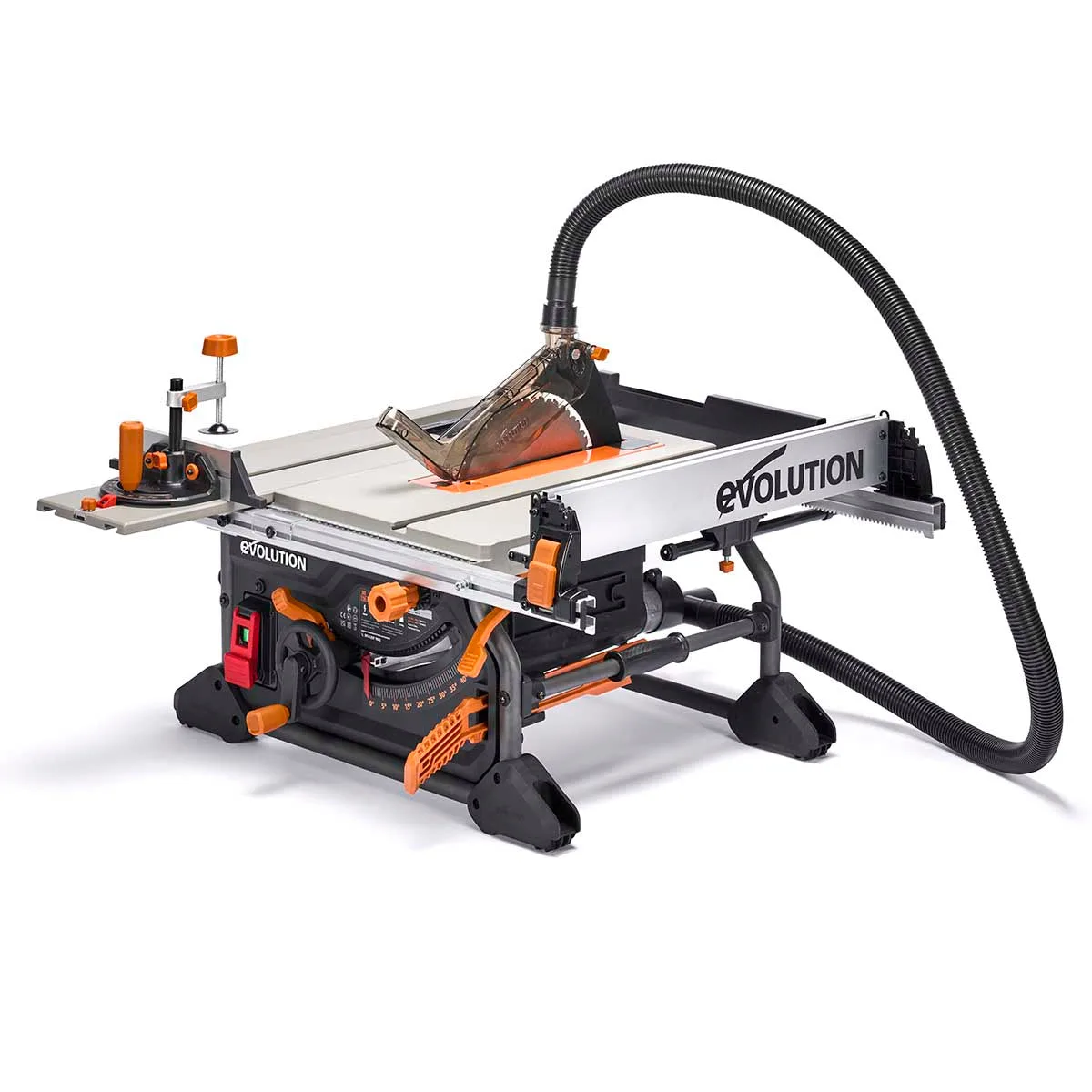
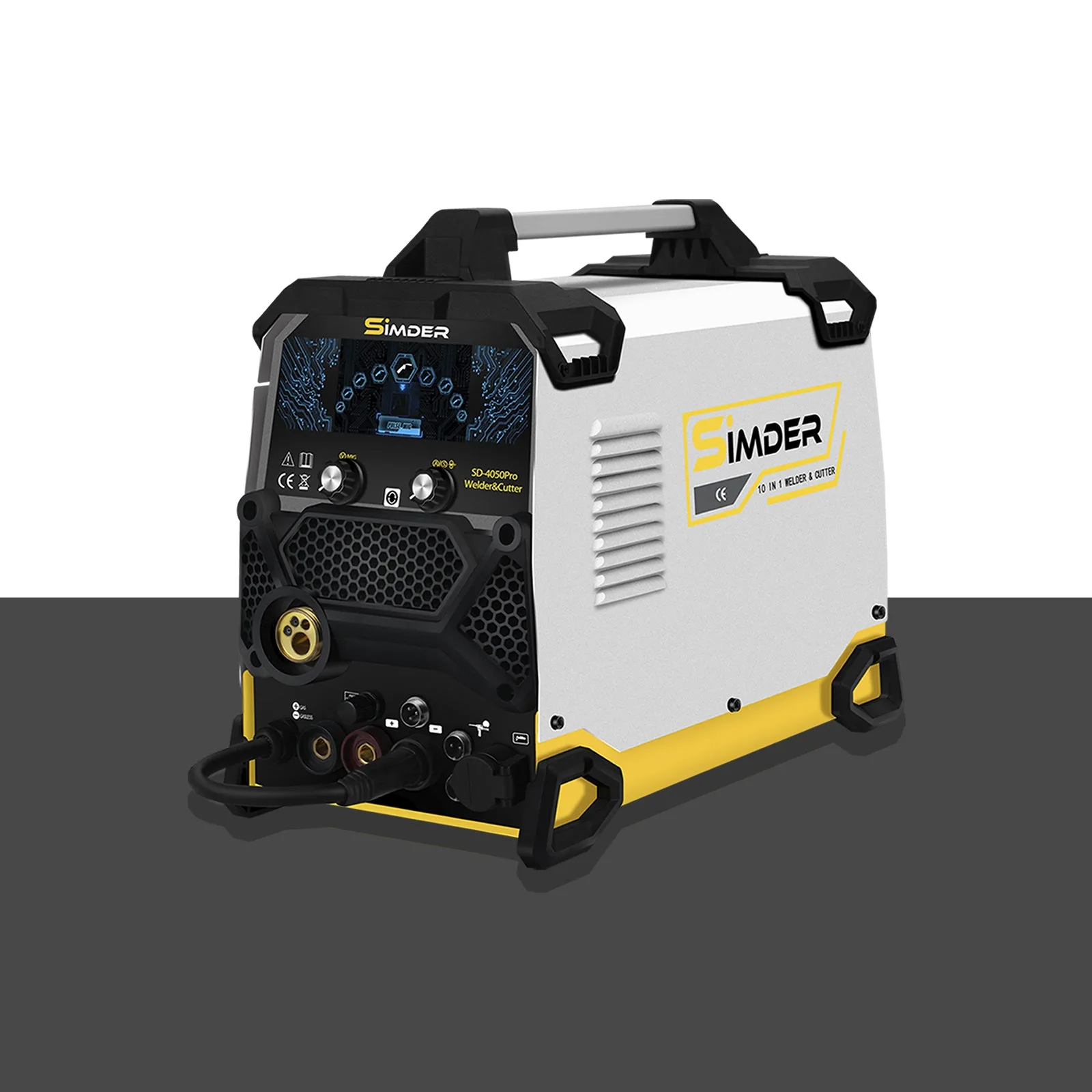
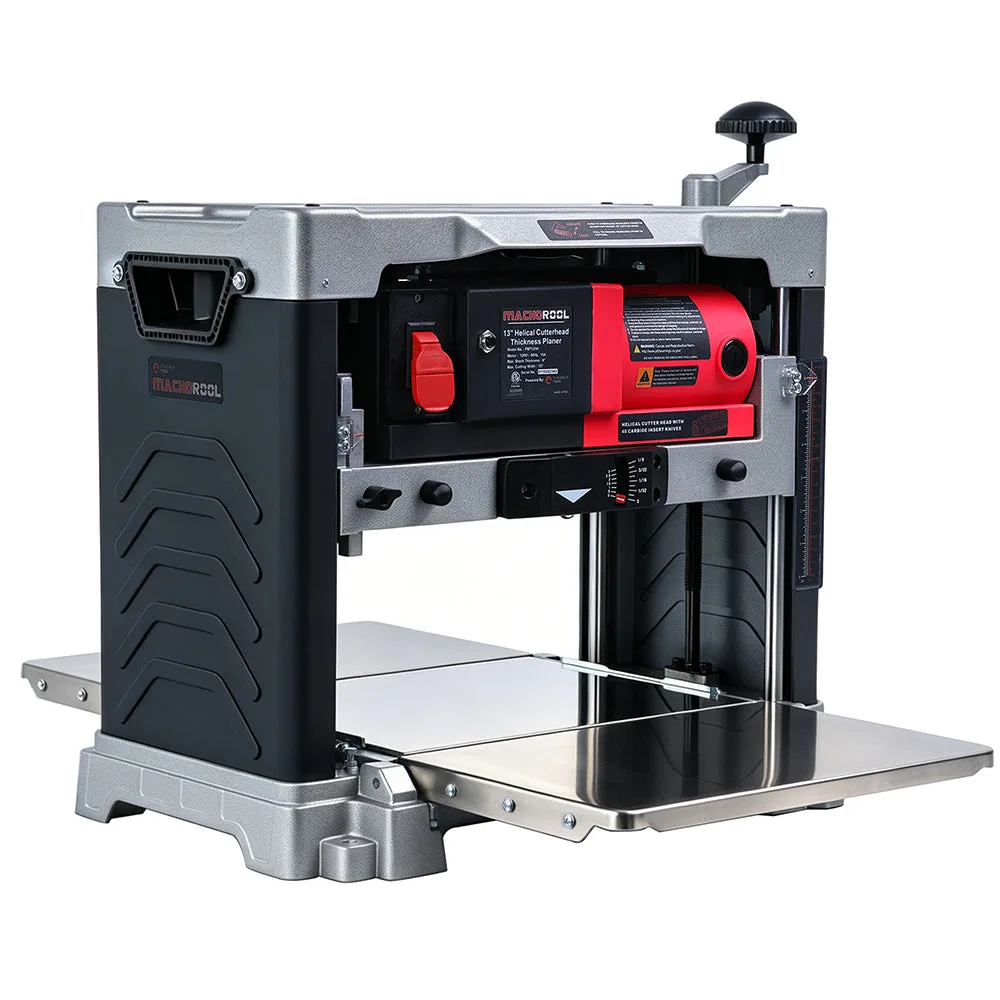
Accessories solve the container's structure, but a workshop conversion usually needs tools too. For woodworking setups, see our FindBuyTool planer and table saw comparison; for cutting and joining metal container components, our Evolution Power Tools saw range review and Ssimder multiprocess welder comparison cover the power equipment side.

Complete Upgrade Bundle
What We Like
- Covers ventilation, doors, security, storage, power, and lighting in one order
- Components are designed to work together instead of being sourced piecemeal
What to Consider
- A bundle makes less sense if you only have one specific problem to solve
For a full ground-up conversion — turning an empty container into a functional workshop or storage unit — sourcing every category individually adds up in time even before cost. The bundle addresses the ten most common conversion pain points as a single package, which is worth it once three or more categories from the table above apply to your build.
The Bottom Line
Fix airflow first, add storage and door hardware next, and finish with security — or skip the sequencing and start with the Complete Upgrade Bundle if your conversion touches most of these problem areas at once.
Shop shipping container accessoriesReferences
More Tools & Workshop guides